
TL;DR

Get garden gear delivered free with Prime
- Fast, free delivery on millions of items
- Prime Video, Amazon Music and more included
- Member-only deals all year
A keiki, or baby orchid, growing on a flower spike does not by itself mean the parent plant is dying. Gardening Know How says a basal keiki beside a soft, dark crown can be a warning sign, so growers should check the orchid’s leaves and roots before changing its care.
A keiki—a small plant that grows from an orchid’s dormant bud—can be a normal way for an orchid to reproduce, but a keiki at the plant’s base may warrant a closer health check. Gardening Know How reports that the growth alone cannot show whether an orchid is failing; the parent’s crown, leaves and roots provide more useful clues.
On moth orchids, or Phalaenopsis, dormant buds sit at nodes along the flower spike, beneath small papery coverings. Sometimes a bud produces leaves and roots, forming a miniature copy of the parent. The Hawaiian word keiki means “baby.” The report describes keikis as a form of reproduction, not a disease or parasite, and says they do not spread to other plants.
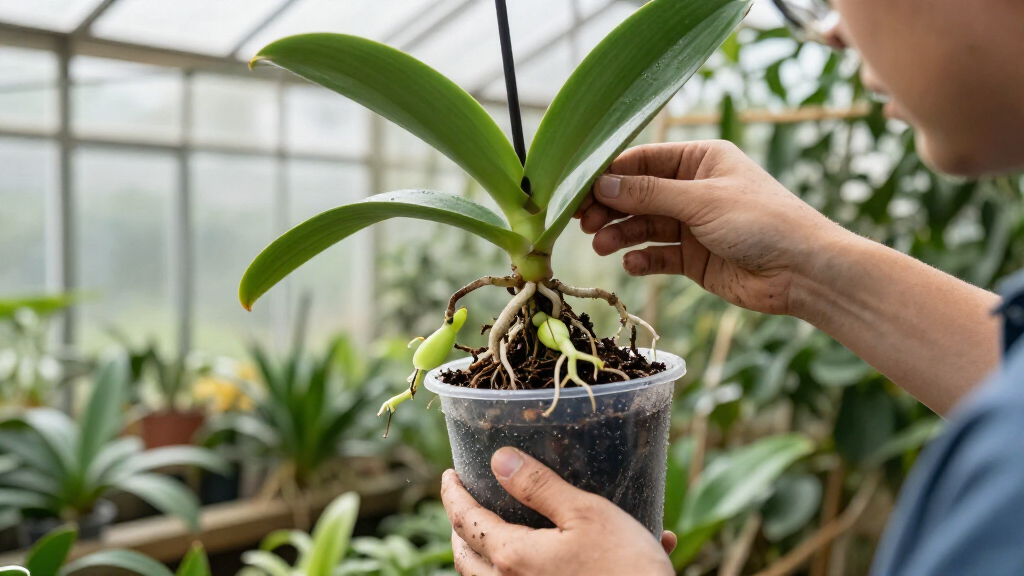
Where the keiki grows matters. A spike keiki grows on the flower stem and can appear on an otherwise healthy orchid. A basal keiki emerges beside the lower leaves. Gardening Know How says this type can form when the parent’s growing tip—the crown at the center of the leaves—has been damaged, leaving the plant unable to produce new leaves there. Dendrobium orchids may also produce keikis when canes lose their roots or connection to the rest of the plant through rot or injury.
The report says stress is only one possible factor. Orchid genetics, heat, fertilizer, low light and low humidity have also been linked to keiki growth. Healthy leaves should feel firm, and sound roots should be plump rather than brown and mushy. A soft, black or wet-looking crown is more concerning than the presence of a keiki alone. One older yellowing leaf can be part of normal aging, while several yellowing leaves or newer limp, wrinkled leaves may signal a problem.
Read the Growth Alongside the Plant
For orchid owners, the distinction matters because treating every keiki as evidence of decline can prompt unnecessary changes to a plant’s care. The report’s central point is that a spike keiki on an orchid with firm leaves and plump roots may not require intervention. Checking the plant before acting can help growers avoid disturbing healthy roots or changing watering and light conditions without evidence of a problem.
At the same time, a basal keiki near a damaged crown can be a reason to inspect the parent rather than celebrate the offshoot alone. Crown rot can prevent new leaves from forming and, if it spreads, may kill the orchid, according to the report. Looking for several signs together—such as deteriorating leaves, mushy roots and a soft crown—gives a more informative picture than the unusual growth by itself.
Popular right now

Dyson Car+Boat Cordless Handheld Vacuum

Dyson W1 PencilWash Wet and Dry Cleaner with Dok Cordless Wet Floor Cleaner

Sony BRAVIA XR8B 65-Inch 4K OLED Google TV (K-65XR8B)
As an affiliate, we earn on qualifying purchases.
How Orchid Keikis Form
Keikis develop from buds that would otherwise remain dormant. On Phalaenopsis, the buds are found along the flower spike; the resulting offshoot can grow leaves and roots while still attached to the parent. Some orchid varieties and hybrids are more prone to producing them, the report says. It also notes that growers can use cytokinin, a plant growth hormone, to prompt a dormant bud to grow, meaning a keiki can appear even when the parent is healthy.
The report lists prolonged heat as a flower spike finishes, heavy nitrogen feeding late in the season, and insufficient light or humidity among conditions associated with keiki growth. These are possible influences, not proof of a specific cause in an individual plant. A cooler windowsill can also affect leaves: the report says temperatures below 60°F (16°C) at night may yellow lower leaves in fall, so a single yellow leaf should not be taken as a diagnosis.
““A few minutes at the sink with the parent plant will tell you more than the keiki does itself.””
— Gardening Know How
What the Offshoot Cannot Confirm
A keiki’s presence does not establish that an orchid is stressed, and the report does not identify one cause that applies to every plant. Heat, feeding, light, humidity and inherited tendencies may all play a role. The source also gives no figures on how often keikis occur in healthy versus declining orchids, so the growth cannot be treated as a reliable stand-alone measure of plant health.
Even visible symptoms need to be considered together. A yellow leaf can have more than one explanation, and the source says crown rot is often associated with water molds, including Pythium ultimum and Phytophthora cactorum. It does not provide laboratory testing or establish a pathogen diagnosis for any particular plant. The actual condition and cause in an individual orchid remain uncertain until its crown, roots and growing conditions are examined.
Check Roots Before Changing Care
Gardeners can begin by checking whether the leaves are firm, whether the roots are plump, and whether the crown is green and firm. If the plant appears healthy, Gardening Know How advises leaving both the orchid and its keiki in place. If roots are rotted, the report recommends cutting them back to firm tissue with a small, sharp tool and wiping the blades with rubbing alcohol between plants. A plant with damaged roots can be repotted in specialist orchid mix.
After repotting, the report advises watering sparingly until new roots reach the fresh bark, watering in the morning so leaves can dry before dark, and emptying water that collects in the crown. It recommends bright, indirect light and keeping moth orchids away from cold glass and heating vents. No particular keiki-removal timetable is given; the source’s immediate guidance is to assess the parent first and make care changes only when an inspection points to a problem.
Key Questions
What is a keiki on an orchid?
A keiki is a small orchid plant that grows from a dormant bud, often on the flower spike of a moth orchid. It can develop its own leaves and roots while attached to the parent.
Does a keiki mean my orchid is dying?
No. A keiki can grow on a healthy orchid. A basal keiki beside the lower leaves may be more concerning if the parent also has a soft, dark or wet-looking crown, but the offshoot by itself does not establish that the plant is failing.
What should I check if my orchid has a basal keiki?
Check the crown, leaves and roots. A healthy crown is firm and green; healthy leaves are firm; and healthy roots are plump. Brown, mushy roots or a soft, black crown are signs to investigate further.
Should I remove the keiki?
Not necessarily. Gardening Know How says a keiki can stay attached, particularly if the parent looks healthy. Its guidance is to address any problem found in the parent plant rather than remove the offshoot just because it appeared.
What can cause an orchid to produce a keiki?
Possible influences include the orchid’s variety, heat, heavy nitrogen feeding late in the season, and low light or humidity. The report also says cytokinin can prompt a dormant bud to grow, so a keiki is not proof of stress.
Source: gardeningknowhow.com