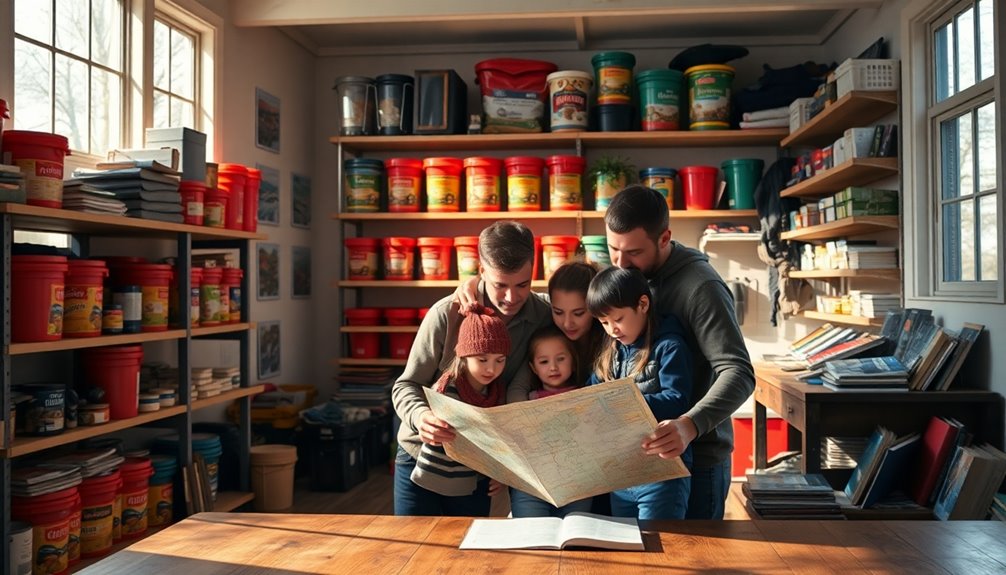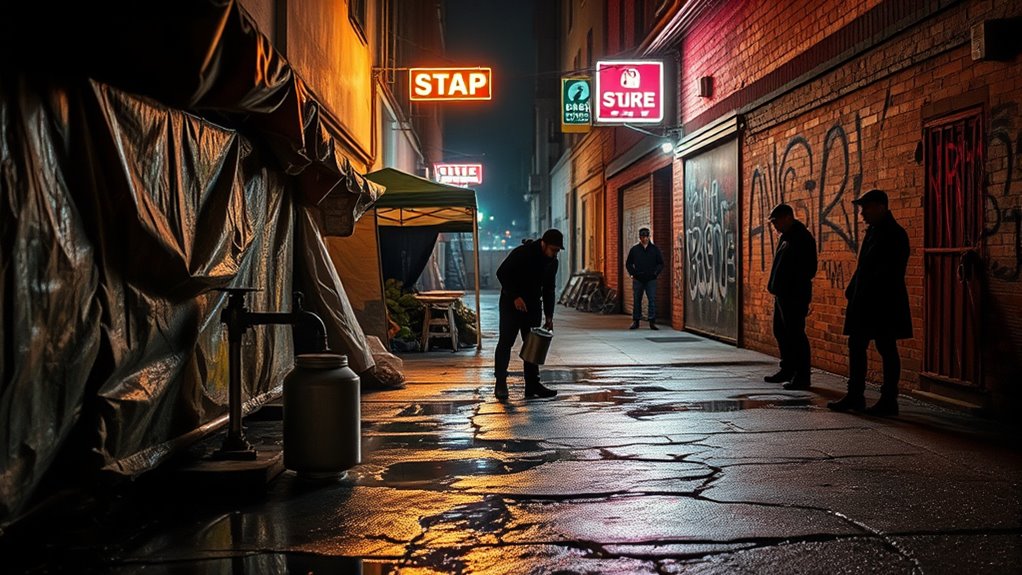

In urban survival, prioritize securing shelter by reinforcing entry points, installing security systems, and keeping valuables hidden. Make certain access to water by identifying safe sources and methods for purification. Maintain your security through awareness of surroundings, watching out for suspicious activity, and staying informed about local safety updates. Acting proactively helps you stay protected during emergencies. Continue exploring these strategies to better prepare for urban challenges and build your resilience in any situation.
Key Takeaways
- Prioritize securing your residence with reinforced doors, security cameras, and reliable locks to ensure shelter safety.
- Identify and access clean water sources, such as filtered tap water or stored supplies, for hydration needs.
- Stay vigilant in public spaces by keeping belongings close, avoiding risky areas, and trusting your instincts.
- Have emergency supplies, including water, non-perishable food, and basic first aid, readily available at home and on the go.
- Maintain situational awareness and stay informed about local safety advisories to adapt quickly to urban threats.

Living in an urban environment requires more than just knowing your way around city streets; it demands a set of practical skills to stay safe and adapt to unexpected situations. One crucial aspect of urban survival is securing your living space, which begins with apartment fortifications. You should reinforce entry points like doors and windows, using sturdy locks and security bars where possible. Installing a peephole or security camera can help you identify visitors before opening the door, adding an extra layer of protection. Keep valuables out of sight and consider a security system if your budget allows. These measures don’t make you paranoid—they make you prepared. Additionally, understanding home security principles can enhance your ability to protect your residence effectively.
Secure your apartment with sturdy locks, security cameras, and hidden valuables to stay safe in the city.
Public transportation safety is equally vital. Buses, trains, and subways are convenient, but they also pose risks if you’re not cautious. Always stay aware of your surroundings, especially during crowded times when pickpocketing and scams tend to increase. Keep your belongings close—use bags that close securely and avoid flaunting valuables. When traveling late at night, plan your routes ahead of time and consider traveling with a companion if possible. Be familiar with the transit schedules and know the locations of emergency stops and help points. Trust your instincts—if someone or something feels off, don’t hesitate to change your route or seek help. Carry a charged phone and save emergency contacts, so you can quickly reach out if needed.
In addition to personal vigilance, familiarize yourself with the safety protocols of public transportation. Many cities have security personnel or surveillance systems, so report any suspicious activity immediately. If you find yourself in an emergency situation, knowing how to react quickly can make a difference. Use designated emergency buttons or alert systems, and don’t be afraid to seek assistance. It’s also wise to stay updated on city alerts or safety advisories through local news or official apps.
Living smart in the city involves more than just navigating the streets; it’s about creating a secure environment around you and being prepared for transit-related risks. Apartment fortifications protect your home, while practicing public transportation safety ensures you reach your destination safely. By staying vigilant and proactive, you build resilience. Ultimately, urban survival hinges on your ability to adapt, stay alert, and make informed decisions, giving you confidence and peace of mind amid city chaos.
Frequently Asked Questions
How Can I Find Reliable Communication Methods in Urban Emergencies?
To find dependable communication methods during urban emergencies, you should keep an emergency radio handy, as it can operate on batteries or hand cranks even if power is out. Additionally, consider investing in satellite communication devices, which work independently of cell networks. These tools guarantee you stay connected with loved ones and emergency services, giving you peace of mind and essential updates when traditional communication channels fail.
What Are Stealth Tactics for Avoiding Threats in a City?
To avoid threats in a city, use concealment techniques like blending into crowds and avoiding open areas. Stay alert and observe your surroundings for potential dangers. Employ evasion strategies such as taking less obvious routes, using alleys, or changing your pace to stay unpredictable. Keep a low profile, avoid drawing attention, and remain calm. These tactics help you stay hidden and increase your chances of avoiding threats effectively.
How Do I Identify Safe Zones Quickly During a Crisis?
Did you know that over 60% of urban emergencies require quick identification of safe zones? To find them fast, look for clear evacuation routes and hazard indicators like smoke, fire, or blocked streets. Avoid areas with visible damage or crowds. Trust your instincts, stay alert, and move toward designated safe zones marked by official signs or known community centers. Your quick decision-making can be lifesaving during a crisis.
What Are Effective Barter Items for Urban Survival?
You should focus on trade commodities like bottled water, non-perishable food, and medical supplies, as these are always in demand. Additionally, barter skills such as first aid, mechanical repair, or language translation can be invaluable. These items and skills help you establish trust and build alliances, making it easier to trade effectively in urban survival situations. Always keep your barter items discreet and in good condition.
How Can I Maintain Mental Health in a Long-Term Urban Disaster?
You can maintain your mental health during a long-term urban disaster by prioritizing mental health strategies like staying connected with community support, practicing mindfulness, and establishing routines. Keep communication open with neighbors and friends to share concerns and solutions. Engage in activities that bring you comfort, and avoid isolation. Staying active and fostering a sense of purpose helps you stay resilient, ensuring your mental well-being remains strong despite ongoing challenges.
Conclusion
In the chaos of the city streets, your resilience is your shield, and preparedness is your guiding light. By securing shelter, water, and security, you become the steady heartbeat amid the storm. Remember, you’re the captain of your survival story—navigating turbulent waters with confidence and purpose. Stay vigilant, adapt quickly, and keep your wits sharp. When chaos surrounds you, your readiness will be the anchor that keeps you grounded and safe.