Two-way radio range can be limited by myths—it’s not just about power but also environment, terrain, and antenna quality. A good antenna and proper placement boost signal strength more than increasing power alone. Battery planning is essential; carry spare batteries or choose models with longer life to stay connected longer. Remember, factors like obstacles and frequency bands influence performance. To get the most out of your radio, understanding these basics will help you optimize your equipment for any situation.

Get garden gear delivered free with Prime
- Fast, free delivery on millions of items
- Prime Video, Amazon Music and more included
- Member-only deals all year
Key Takeaways
- Range myths often overestimate signal reach; factors like terrain, obstacles, and antenna quality significantly affect actual distance.
- Proper antenna selection and placement are crucial for maximizing two-way radio range and signal clarity.
- Power output influences range but is limited by regulations; higher wattage doesn’t always mean longer distance.
- Battery planning involves balancing usage, power needs, and device longevity to ensure reliable communication during extended use.
- Environment-specific choices of frequency band (VHF or UHF) optimize performance based on terrain and obstructions.
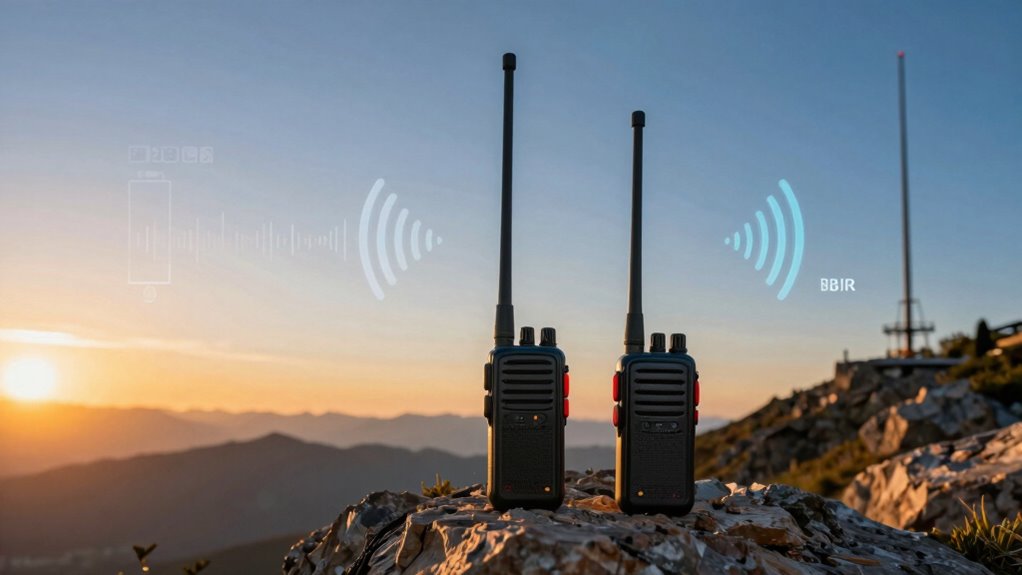
Ever wondered how two-way radios keep communication seamless in various settings? It all comes down to understanding some fundamental aspects like frequency bands and power output. When you’re selecting or using a two-way radio, knowing which frequency band it operates on is vital. These bands are essentially slices of the radio spectrum assigned for different uses, such as VHF (Very High Frequency) and UHF (Ultra High Frequency). VHF radios tend to work better over long distances and in open areas, while UHF radios are often more effective indoors or in urban environments with lots of obstructions. Choosing the right frequency band ensures your communication remains clear and reliable, no matter if you’re coordinating a team on a construction site or staying in touch during outdoor adventures.
Power output plays a significant role in how far your two‑way radio can transmit. It’s measured in watts, and higher power generally means a longer communication range. However, it’s not just about cranking up the power; higher power output can also lead to increased battery consumption and potential interference. Most consumer-grade two-way radios operate between 0.5 to 5 watts, which is sufficient for many applications. For professional or industrial use, radios with 10 watts or more are common, providing greater coverage. But keep in mind, the maximum power output doesn’t guarantee a perfect connection—terrain, obstacles, and antenna quality also influence how far your signal travels.
Understanding the relationship between frequency bands and power output helps you optimize your radio’s performance. For example, if you’re working in a dense urban environment with many tall buildings, UHF radios with higher power output might give you better coverage. Conversely, if you’re in open country or over water, VHF radios with moderate power could be more suitable. It’s a balance: higher power can extend your range but might drain your battery faster and cause more interference, so choosing the right combination based on your environment and needs is essential. Additionally, advancements in antenna technology continue to improve signal strength and range, making it easier to stay connected in challenging conditions.
Choosing the right frequency band and power ensures reliable communication in any environment.
Additionally, keep in mind that regulations often limit the maximum power output for certain frequencies, especially in unlicensed bands. Always check local laws to make sure your radio setup complies. By understanding these basics—frequency bands, power output, and their interaction—you can make smarter choices about your two-way radio setup, ensuring clear, effective communication whenever you need it. Whether you’re in a professional setting or enjoying outdoor activities, these factors directly impact how well your radios perform and how seamlessly you stay connected.
As an affiliate, we earn on qualifying purchases.
Frequently Asked Questions
How Do Weather Conditions Affect Two-Way Radio Range?
Weather impact can considerably reduce your two-way radio range. Rain, snow, fog, and thunderstorms cause signal attenuation, weakening the radio signals as they pass through these conditions. Heavy weather creates obstacles that absorb or scatter signals, leading to decreased clarity and distance. You should expect shorter communication distances during adverse weather, so plan accordingly, especially for critical or long-distance communications, to guarantee reliable contact despite these weather-related challenges.
What Are the Best Practices for Maintaining Radio Antennas?
Think of your antenna as the backbone of your radio system. To keep it in top shape, you should regularly check antenna placement, making sure it’s upright and free from obstructions. Additionally, inspect cables for wear or corrosion and replace damaged ones promptly. Proper cable maintenance prevents signal loss, while ideal antenna placement maximizes range. By following these best practices, you’ll guarantee your radio stays reliable and performs at its best.
Can Multiple Radios Interfere With Each Other’s Signals?
Yes, multiple radios can interfere with each other’s signals if not properly managed. To prevent this, you should use interference mitigation techniques like adjusting frequencies and ensuring proper radio frequency coordination. Keep radios on different channels or separate frequencies when possible, and avoid overlapping transmitters. Proper planning helps minimize interference, ensuring clear communication and reliable performance across all devices.
How Do You Determine the Optimal Battery Capacity for a Group?
Choosing the right battery capacity is essential for seamless group communication. You should consider the group’s size, activity duration, and power demands. Larger groups or longer shifts require higher capacity batteries to avoid interruptions. Juxtapose short, low-demand shifts with extended, demanding operations—your battery needs differ. By evaluating these factors, you guarantee reliable communication, prevent unexpected power loss, and keep your team connected throughout the entire operation.
Are There Legal Restrictions on Radio Transmission Power Levels?
Yes, there are legal restrictions on radio transmission power levels. You must follow legal compliance standards set by authorities like the FCC, which specify power limitations to prevent interference and ensure safety. Always check your local regulations before adjusting your radio’s power settings. Staying within these limits helps you avoid fines and maintains effective communication, while also respecting the legal boundaries designed to protect all radio users.
As an affiliate, we earn on qualifying purchases.
Conclusion
Don’t let range myths hold you back from reliable communication. With the right antenna and battery planning, you can stay connected when it matters most. I know it’s tempting to think your radio won’t work in tough spots, but proper setup makes all the difference. Trust in your gear and prepare wisely—you’ll gain confidence and peace of mind, knowing you’re always ready to connect, no matter the challenge.
As an affiliate, we earn on qualifying purchases.
As an affiliate, we earn on qualifying purchases.
Fall yard work Picks
leaf blowers
As an affiliate, we earn on qualifying purchases.