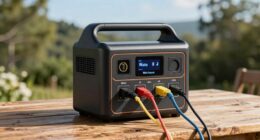
To size a solar generator correctly, focus on three key numbers: your total daily energy requirement, the inverter’s peak wattage capacity, and the battery’s total storage in watt-hours. These figures help guarantee your system can handle your daily power needs, startup surges, and energy reserves without underestimating or overspending. Getting these numbers right prevents outages and unnecessary costs. Keep going, as you’ll discover how to determine each of these essential numbers for your setup.
Key Takeaways
- Determine your total daily energy needs by multiplying each device’s wattage by its usage hours.
- Calculate the battery capacity in watt-hours (Wh) to ensure sufficient energy storage for your daily consumption.
- Identify the inverter wattage to handle peak power loads, especially during device startup surges.
- Add a safety margin (around 20-25%) to capacity numbers to accommodate unexpected power demands.
- Consider future expansion or additional devices to avoid underestimating your generator size.

Are you wondering how to determine the right size of a solar generator for your needs? It all starts with understanding two critical numbers: battery capacity and inverter size. These figures tell you how much power the generator can store and deliver, helping you avoid underestimating or overestimating what you’ll need. When selecting a solar generator, you want to ensure it can handle your power demands without running out of juice or struggling to supply enough energy.
Battery capacity, measured in watt-hours (Wh) or amp-hours (Ah), indicates how much energy the generator can store. If you plan to run essential appliances, you need to calculate their total wattage and determine how long you’ll need them powered. For example, a refrigerator might use around 150 watts, while LED lights may only need 10 watts. Add up the wattages of all devices you intend to run simultaneously and multiply by the number of hours you’ll use them daily. This total gives you a baseline for the minimum battery capacity needed. If you want more flexibility or longer run times, choose a generator with a larger battery capacity. Remember, having some extra capacity ensures you’ll have energy reserves and prevents your batteries from depleting too quickly.
Next, consider the inverter size, which is measured in watts. The inverter converts stored DC power into AC power your appliances need. To avoid overloading, you must match the inverter size with your maximum power requirement. Start by listing the high-wattage devices you intend to run at the same time. For instance, a microwave might draw 1000 watts, a power tool could need 1500 watts, and a laptop charger only 60 watts. The inverter should comfortably handle the combined wattage of these devices. If you often run multiple appliances simultaneously, choose an inverter with a capacity that exceeds your peak load. This prevents shutdowns or damage caused by overloading.
Sizing your solar generator correctly isn’t just about picking the biggest battery or inverter; it’s about matching those numbers to your actual power needs. Underestimating could leave you powerless when you need it most, while overestimating might mean paying extra for capacity you won’t use. Take the time to do the math—consider your daily power consumption, the surge wattage of startup devices, and future needs. Understanding the balance between battery capacity and inverter size is essential for making an informed choice. By focusing on the right battery capacity and inverter size, you ensure your solar generator will reliably meet your energy demands without underperformance or unnecessary expense.
Frequently Asked Questions
How Do Seasonal Changes Affect Solar Generator Sizing?
Seasonal variability impacts your solar generator sizing because shorter days and less sunlight in winter guarantee energy production, requiring you to adjust your storage capacity planning. You should consider larger batteries or extra panels to compensate for lower output during certain seasons. By accounting for seasonal changes, you ensure your system meets your energy needs year-round, avoiding shortages and maximizing efficiency in all weather conditions.
Can I Upgrade My Solar Generator Later?
Yes, you can upgrade your solar generator later. You just need to guarantee battery compatibility and consider expansion options. Check if your current system supports adding extra batteries or modules, and verify compatibility with new components. By choosing a generator designed for future growth, you create a flexible, scalable system. This way, you get the power capacity you need now and the potential to expand as your energy demands grow.
What Safety Considerations Are There in Sizing?
When sizing your solar generator, prioritize safety considerations like proper battery maintenance and following safety protocols. Confirm your batteries are correctly ventilated, kept at appropriate temperatures, and regularly inspected for damage. Adhere to safety protocols such as wearing protective gear and avoiding overcharging. Proper sizing prevents overloading, reduces risks of overheating, and ensures reliable performance. Always consult manufacturer guidelines and local electrical codes to keep your setup safe and efficient.
How Does Battery Lifespan Impact Size Decisions?
Battery lifespan impacts your size decisions because battery degradation reduces capacity over time, affecting backup reliability. To optimize lifespan, you should choose a slightly larger capacity than your current needs, allowing for capacity loss while maintaining performance. This ensures your system remains effective longer, avoiding frequent replacements. Proper sizing, considering lifespan optimization, helps you balance initial costs with long-term reliability, preventing the need to overbuy or underbuy.
Are There Size Differences for Portable vs. Stationary Units?
Yes, portable units generally have smaller capacities to maximize portability, focusing on portable capacity needs. Stationary units, on the other hand, emphasize stationary efficiency, allowing for larger sizes that support higher power demands and longer usage. When choosing, consider how much power you need regularly. Portable units excel in mobility, while stationary ones are better for consistent, high-capacity energy supply at a fixed location.
Conclusion
Think of choosing a solar generator like fitting a key to a lock—you want it just right. By understanding those three essential numbers, you prevent yourself from underbuying and getting stuck in the dark. When you size your generator properly, you’re planting the seeds for reliable power, no matter what life throws your way. So, take the time to get it right—your future self will thank you for having the perfect fit, every time.