In survival situations, your best bet is to find plants that provide both food and signaling benefits. Look for species with distinctive features, bright berries, or aromatic qualities that can be used safely for nourishment and to attract attention. Burning aromatic or smoky plants like juniper can create visible signals from afar. Using these dual-purpose plants smartly can increase your chances of rescue while ensuring your sustenance—discover strategies to identify these essential plants and enhance your survival toolkit.

Get garden gear delivered free with Prime
- Fast, free delivery on millions of items
- Prime Video, Amazon Music and more included
- Member-only deals all year
Key Takeaways
- Select plants with distinctive visual or aromatic signals like bright berries or fragrant foliage to attract rescuers.
- Use aromatic plants such as juniper or cedar to create smoke signals that are visible from a distance.
- Foraging sustainably ensures a continuous supply of dual-purpose plants that can feed and flag rescuers safely.
- Recognize safe, edible wild plants that also produce noticeable signals, avoiding poisonous look-alikes.
- Enhance signal visibility by arranging dry branches and leaves around edible plants to create smoky or visual markers.
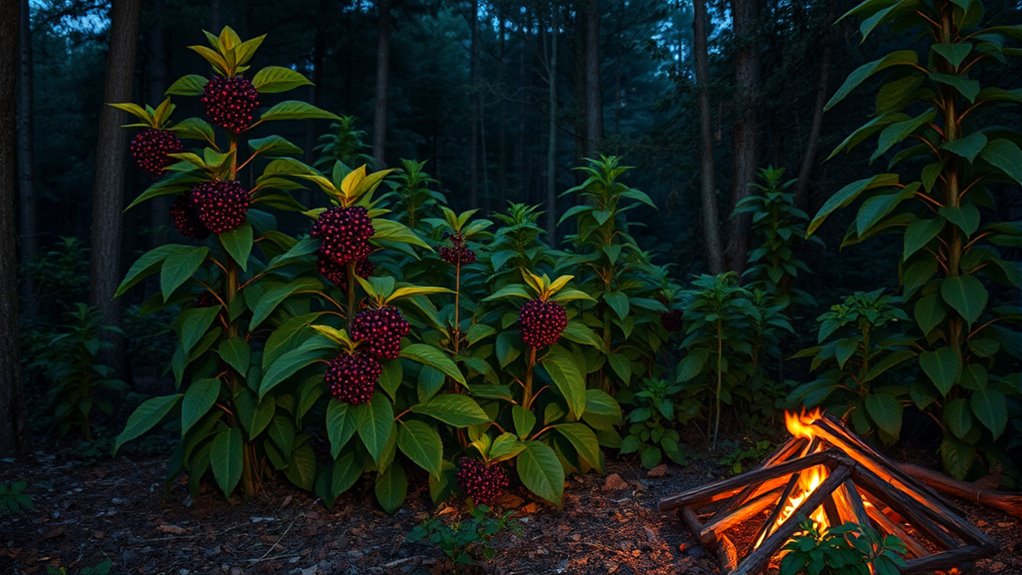
In disaster situations, having plants that serve multiple purposes can be a game-changer. Not only can they provide essential nourishment, but they can also act as signals to rescuers. Knowing how to identify these plants and employing effective foraging techniques can make all the difference when help is needed most. When you’re in the wild, your first priority should be accurate plant identification. Misidentifying a plant can lead to poisoning or other health risks, so take the time to learn which flora are safe and useful. Look for distinctive features like leaf shape, color, smell, and growth patterns. For example, some plants with bright berries or unique flowers can serve as visual signals, while others with strong scents can be used to create smoke signals.
Foraging techniques involve more than just picking plants; it requires a methodical approach. You want to harvest sustainably, ensuring the plant’s survival while gathering enough for your needs. Use your senses—touch, sight, smell—to confirm plant identity. Keep a guidebook or app handy if possible, to cross-reference what you find. When collecting plants for food, focus on those known for their nutritional value and safety. For signaling, select plants that produce visible or aromatic cues, like the smoke from burning certain leaves. Some plants, such as juniper or cedar, produce fragrant smoke that can be seen from a distance, helping rescuers locate you.
Many dual-purpose plants are easy to identify if you know what to look for. For example, certain wild herbs not only add flavor to your meals but also have leaves or bark that burn well, creating smoke signals. Using plants as signals can be as simple as arranging dry branches and leaves to make a visible or smoky marker. The key is to choose plants that stand out in your environment, whether through color, scent, or smoke. It’s essential to remember that safety comes first—never consume or burn a plant unless you’re certain of its identity and safety. Additionally, understanding the contrast ratio of your signals can improve their visibility in different lighting conditions.
Frequently Asked Questions
How Do You Identify Dual-Purpose Plants in Different Climates?
To identify dual-purpose plants across different climates, focus on plant identification techniques suited to each environment. Observe their features—leaf shape, color, and growth patterns—and consider how they adapt to local conditions. You should also research native species known for climate adaptation, which often serve dual roles like providing food and signaling. This approach helps you distinguish versatile plants that thrive in various climates and serve multiple essential functions.
What Safety Precautions Should Be Taken When Foraging Wild Foods?
Imagine you’re foraging and pick a wild mushroom, but fail to recognize its poisonous look-alike. To stay safe, always verify plant identification with a reliable guide or expert, especially since seasonal hazards can change which plants are safe. Avoid consuming unknown plants, and be cautious of contaminated areas that might harbor pollutants. Wearing gloves and washing your harvest thoroughly helps reduce risks. Remember, safety is key to enjoying wild foods responsibly.
Are There Legal Restrictions on Collecting Wild Plants for Rescue Signals?
You should be aware that legal restrictions and plant collection regulations vary depending on your location. Many areas have laws to protect native plants, so collecting wild plants for rescue signals could be unlawful without proper permits. Always research local rules and obtain necessary permissions before gathering plants. Ignoring these restrictions can lead to fines or environmental harm, so stay informed and responsible to ensure your actions support conservation efforts.
How Long Do Signal Fires Made From Plants Typically Last?
Imagine a flickering torch in the night’s embrace; that’s how long plant-based signal fires typically last. The plant’s longevity directly influences fire duration, which can range from a few hours to several days, depending on the material used. Dried plants tend to burn longer, providing a steady signal, while fresh greens may extinguish quickly. Always consider the plant’s moisture content and density for ideal fire duration.
Can All Wild Plants Be Used Safely for Both Food and Signaling?
You should never assume all wild plants are safe for both food and signaling. Edibility verification is essential, as many plants can be toxic if misidentified. Plant toxicity awareness helps you avoid dangerous mistakes. Always research thoroughly or consult trusted sources before using wild plants for eating or signaling. Remember, what’s edible for one person might be harmful to another, so cautious identification safeguards your health and your chances of rescue.
Conclusion
By knowing which plants can serve as both food and signals, you’re better prepared for emergencies in the wild. These dual-purpose plants are like hidden gems, offering sustenance and a way to catch someone’s eye when it matters most. Don’t put all your eggs in one basket—learn to recognize these versatile plants before you need them. When you’re in a pinch, it’s often the simple tricks that make all the difference; stay alert and keep your eyes open.
Halloween Picks
halloween
As an affiliate, we earn on qualifying purchases.