Small solar systems are essential for emergencies, providing reliable, off-grid power to keep your communication devices, lights, and medical equipment running when the grid fails. High-efficiency panels maximize energy capture even on cloudy days, while battery storage guarantees you have power when sunlight isn’t available. These portable setups are simple to operate and perfect for preparedness. To discover how you can boost your emergency readiness with small solar solutions, explore the details below.
Key Takeaways
- Small solar systems provide reliable off-grid power during emergencies, keeping communication devices and essential equipment operational.
- High-efficiency solar panels maximize energy capture, ensuring power generation even in limited sunlight or cloudy conditions.
- Combining solar panels with batteries offers backup energy, enabling continuous device operation without relying on grid power.
- Portable and simple to set up, small solar units are ideal for quick deployment in emergency situations or disaster preparedness kits.
- Reliable solar power enhances safety, maintains connectivity, and reduces vulnerability during power outages caused by storms or other crises.
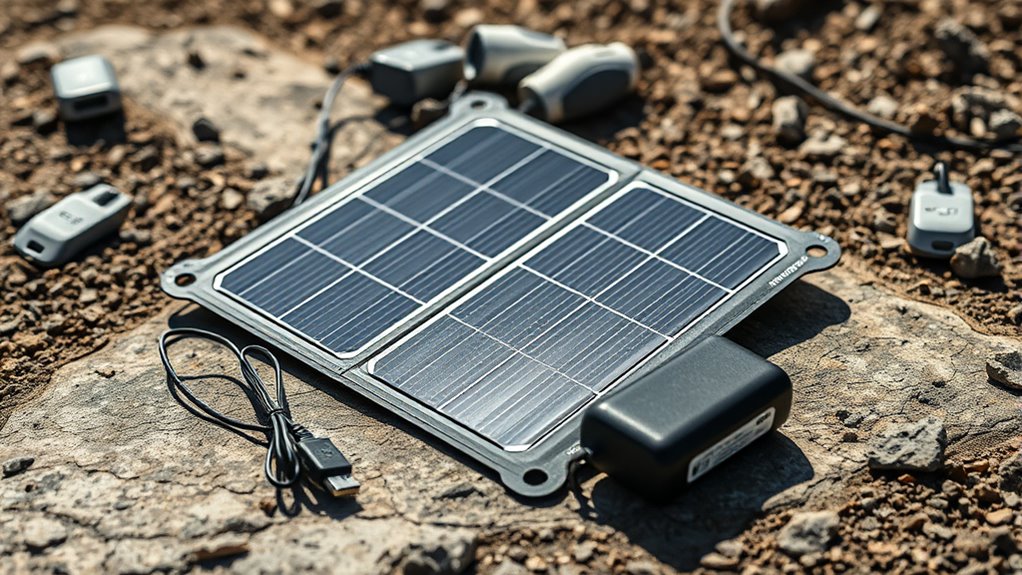
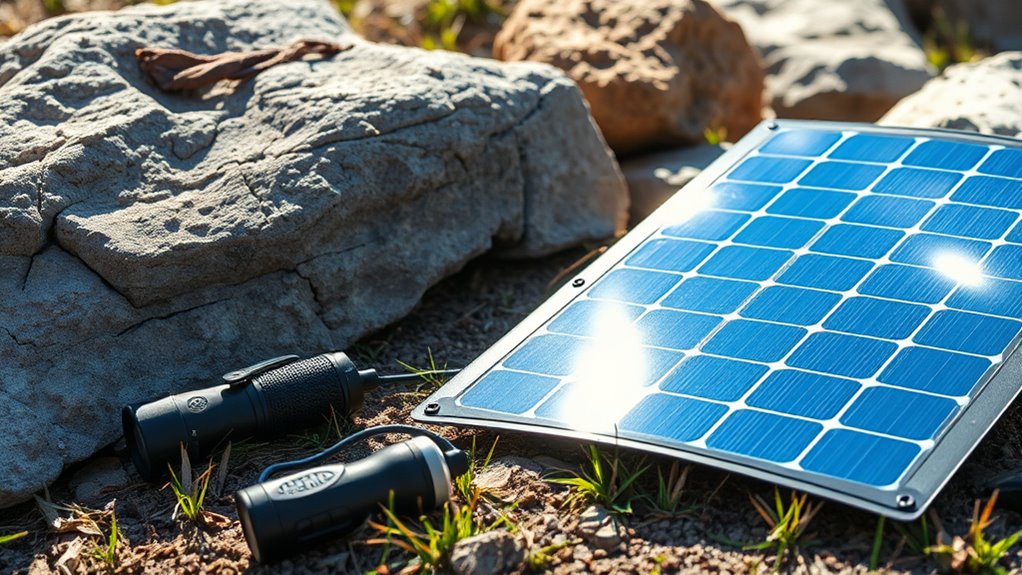
Have you ever been caught in an emergency without access to power? It’s a frustrating and sometimes dangerous situation, especially when you need to keep communication lines open or run essential devices. Small solar systems can be a game-changer in these moments, providing reliable, off-grid power when you need it most. The key to making these systems effective lies in understanding solar panel efficiency. High-efficiency panels convert more sunlight into usable energy, meaning you get more power from a smaller, portable unit. This is especially important during emergencies when space and weight matter. A highly efficient solar panel ensures you can maximize your power output in limited sunlight, giving you confidence that your device needs will be met even on overcast days or during brief periods of cloud cover. Pairing these panels with solid emergency power storage options further enhances your preparedness. Batteries designed for emergency use can store excess energy generated during sunny periods, so you have a backup supply when the sun isn’t shining. This combination means you don’t have to rely solely on real-time sunlight, which can be unpredictable during storms or extended cloudy days. When choosing a small solar setup, look for units that prioritize both solar panel efficiency and reliable storage capacity. A system with a high-efficiency panel coupled with a robust battery will allow you to charge devices like smartphones, radios, LED lights, or even small medical equipment, ensuring essential communication and safety devices stay operational. The portability of small solar units makes them perfect for emergency preparedness; you can easily carry them in your bug-out bag, car, or home emergency kit. Additionally, many models are designed to be simple to set up and use, so even if you’re not a tech expert, you can quickly deploy the system when needed. Remember, the key is to understand how well your solar panel performs in various conditions and how much energy your emergency power storage can hold. These factors determine how long you can keep essential devices running during a power outage. Small solar solutions aren’t just a convenience—they’re a critical safety feature that can keep you connected and safe when conventional power sources fail. Investing in a system that emphasizes high solar panel efficiency and reliable emergency power storage ensures you’re better prepared for unexpected situations. When disaster strikes, having a dependable source of solar power means you won’t be left in the dark, giving you peace of mind and a crucial edge in any emergency scenario. Additionally, understanding the solar panel efficiency of your system can help optimize energy use and extend the duration of your backup power.
Frequently Asked Questions
How Long Do Small Solar Panels Typically Last?
Small solar panels typically last around 10 to 15 years, depending on their solar panel durability and how well you maintain them. Factors like exposure to weather, quality of materials, and frequency of use influence their lifespan. You can prolong their life by keeping them clean and protected from extreme conditions. While the lifespan of small panels varies, investing in high-quality options usually ensures longer-lasting, reliable power in emergencies.
Can Small Solar Systems Power All Emergency Devices?
Small solar systems can power some emergency devices, but their ability depends on solar panel efficiency and the energy demands of your devices. You might run essential items like flashlights, radios, or small chargers, but larger appliances probably won’t be supported. To guarantee reliable emergency power sources, choose a system with high-efficiency solar panels and plan your device usage carefully, focusing on critical needs during outages.
What Maintenance Is Required for Small Solar Setups?
Ever wonder if your small solar setup is ready when you need it most? You should regularly clean the panels to make certain they operate efficiently, especially after dirt or snow. Check the battery’s health to maximize its longevity, and occasionally inspect connections for corrosion or damage. Performing these simple maintenance tasks keeps your emergency power reliable, so you’re prepared when it counts the most.
Are Portable Solar Panels Waterproof and Weather-Resistant?
Portable solar panels are designed with solar panel durability and weatherproof features, making them generally waterproof and weather-resistant. You can rely on them to withstand light rain, sun exposure, and wind. However, it’s wise to verify the manufacturer’s specifications, as some models may have limited water resistance. To guarantee longevity, consider storing your portable solar panel in a dry place when not in use and avoid prolonged exposure to harsh weather conditions.
How Much Do Small Solar Kits Cost on Average?
Small solar kits typically cost between $50 and $300, making them a wallet-friendly option for emergency power. Think of it as planting a seed—your investment grows into reliable backup energy when needed. Your cost analysis should consider affordability factors like size, wattage, and brand. While some kits offer basic features, others provide advanced options, so choose one that fits your budget and power needs for peace of mind.
Conclusion
When emergencies strike, having a small solar setup can be a lifesaver. Imagine you’re stranded during a storm, and a portable solar panel keeps your phone charged, helping you call for help or access crucial information. Just like Sarah, who used her compact solar charger during a blackout, you can stay connected and safe. Don’t wait for disaster—invest in small solar today, and be ready to power through any emergency.