To prevent algae, leaks, and plastic taste during long-term water storage, choose food-grade, opaque containers made from high-density polyethylene (HDPE). Regularly clean and sanitize your bottles or drums, inspecting for cracks or leaks and replacing damaged containers promptly. Treat water with approved disinfectants and allow sufficient contact time before sealing. Proper container selection and maintenance will keep your water safe and fresh for extended periods—continue with careful practices to guarantee lasting quality.

Get garden gear delivered free with Prime
- Fast, free delivery on millions of items
- Prime Video, Amazon Music and more included
- Member-only deals all year
Key Takeaways
- Use opaque, dark-colored, food-grade containers to block light and prevent algae growth.
- Ensure containers are made from high-density polyethylene (HDPE) and have tight-sealing lids.
- Regularly clean and sanitize containers to prevent residue buildup and potential leaks.
- Discard and replace containers showing cracks, leaks, or persistent plastic taste.
- Maintain consistent water disinfection and store in a cool, dry environment to inhibit algae and spoilage.

Ever wondered how to guarantee you always have access to clean water during emergencies or long-term disruptions? The key lies in proper long-term water storage practices, especially when it comes to water purification and choosing the right container material. If you want your stored water to stay safe, clear, and fresh for extended periods, you need to pay close attention to both of these aspects.
First, focus on water purification before storing. No matter how clean your tap water seems, it’s vital to treat it with a suitable disinfectant, like unscented household bleach or water purification tablets. This step kills bacteria, viruses, and other pathogens that can multiply over time. Proper purification reduces the risk of algae growth and minimizes the chances of unsafe water. After disinfecting, let the water sit for at least 30 minutes before sealing your container. Remember, water purification isn’t a one-time task; it’s an ongoing process to make certain your stored water remains safe, especially if stored for months or even years.
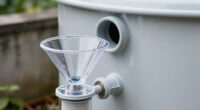
Next, consider the container material. The right container can make all the difference in maintaining water quality. Food-grade plastic bottles or drums are popular choices because they don’t leach harmful chemicals into the water and resist algae growth. Look for containers specifically designed for water storage, as they are typically made from high-density polyethylene (HDPE), which is durable and inert. Avoid containers that previously stored chemicals or non-food-grade plastics, as they can introduce contaminants and alter the water’s taste. Also, ensure your containers are opaque or dark-colored; exposure to light encourages algae growth and promotes plastic taste. Tight-sealing lids are essential to prevent leaks and contamination from outside sources.
Proper container maintenance is equally important. Regularly clean your storage containers with a mild brush and sanitized water, avoiding harsh cleaning agents that could leave residues. Rinse thoroughly before refilling with purified water. For long-term storage, inspect your containers periodically for cracks or leaks, which can compromise water quality or cause leaks that damage storage areas. If you notice any signs of algae or plastic taste, it’s best to replace the container and sanitize the storage area.
food grade water storage containers
As an affiliate, we earn on qualifying purchases.
As an affiliate, we earn on qualifying purchases.
Frequently Asked Questions
How Often Should Stored Water Be Rotated?
You should rotate stored water every 6 to 12 months, depending on your container material considerations. Use BPA-free plastic or food-grade containers for best results. Establish a water rotation schedule to prevent algae growth, leaks, and plastic taste. Regularly check for cracks or leaks, and replace containers as needed. By staying consistent with your schedule, you guarantee safe, fresh water for emergencies or long-term storage needs.
Can Different Types of Plastic Containers Affect Water Quality?
Think of your water container as a silent storyteller—its material tells a lot about your water quality. Different plastic containers can indeed affect water quality through plastic leaching, especially if made from low-quality or non-food-grade plastics. Choosing containers labeled BPA-free or food-grade helps prevent unwanted chemicals from seeping into your stored water. Always verify the container material to guarantee your water stays fresh, safe, and tasting clean.
Are There Natural Remedies to Prevent Algae Growth?
You can try natural remedies like adding a few drops of tea tree oil or vinegar to your water to help with algae prevention. These substances have antimicrobial properties that inhibit algae growth. Keep your storage containers in a cool, shaded area, and make sure they’re clean before filling to further prevent algae. Regularly inspecting your water supply also helps catch any early signs of algae buildup, keeping your water fresh and safe.
What Are the Safest Cleaning Agents for Storage Containers?
A stitch in time saves nine, so choose your cleaning agents wisely. For safe storage containers, use non-toxic options like white vinegar or baking soda, which are effective and gentle. Avoid harsh chemicals that can compromise container safety or leave residues. Always rinse thoroughly after cleaning to prevent any taste or contamination. Remember, safe cleaning agents safeguard your water supply and ensure it stays fresh and pure for long-term storage.
How Does Water Temperature Impact Storage Longevity?
Water temperature considerably impacts storage longevity because higher temperatures accelerate microbial growth, which can cause spoilage and contamination. Keep stored water in cool, stable temperatures to inhibit bacteria and algae development. Extreme heat can also weaken container materials, leading to leaks or plastic taste. Conversely, colder temperatures help preserve water quality longer, reducing the risk of unwanted taste, algae, and microbial activity, ensuring your stored water remains safe and fresh over time.
As an affiliate, we earn on qualifying purchases.
Conclusion
Now that you know how to store water safely for the long haul, imagine the peace of mind you’ll have—no algae, leaks, or plastic taste to worry about. But what if a hidden flaw slips through your precautions? Will your setup stand the test of time and unexpected challenges? Stay vigilant, keep monitoring, and your water will remain pure and ready when you need it most. The key to reliable storage is in your hands—are you prepared?
long term water storage disinfectant tablets
As an affiliate, we earn on qualifying purchases.
As an affiliate, we earn on qualifying purchases.
As an affiliate, we earn on qualifying purchases.
Halloween Picks
halloween
As an affiliate, we earn on qualifying purchases.