To start rainwater harvesting, you need to understand the importance of first-flush systems, which divert the initial dirty runoff to keep your stored water clean. Use gutters, filters, and screens to remove debris and insects before storing the water safely in tanks made from durable, non-toxic materials. Proper maintenance, like regular cleaning, is key to keeping the water safe and clear. If you keep exploring, you’ll discover how to optimize your system for better quality and efficiency.
Open a free Amazon Business account
Business pricing, bulk buying and tax-exempt orders.
As an affiliate, we earn on qualifying purchases.
Key Takeaways
- Implement first-flush devices to divert initial runoff, reducing debris and pollutant entry into storage tanks.
- Install screens and filters at inlets to remove leaves, insects, and larger debris, ensuring cleaner stored water.
- Use food-grade or UV-resistant materials for tanks to prevent contamination and maintain water safety.
- Regularly clean filters and inspect tanks to sustain water quality and system efficiency.
- Combining rainwater harvesting with graywater reuse optimizes water conservation and promotes sustainable management.
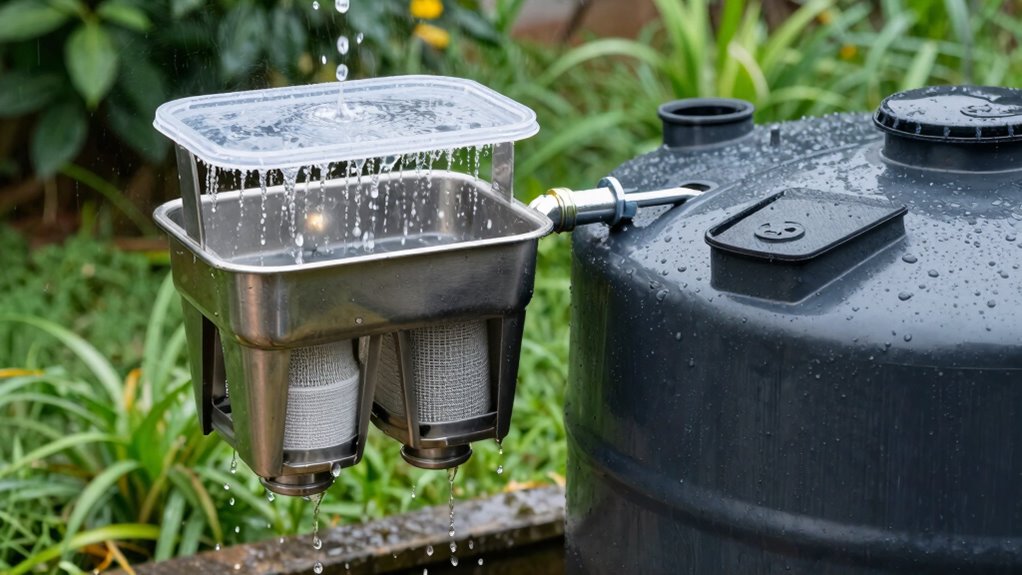
Have you ever wondered how to make the most of rainwater? If you’re interested in sustainable living or reducing your water bills, understanding rainwater harvesting basics is essential. One of the key steps is managing stormwater effectively. Stormwater management involves capturing and directing runoff from roofs and surrounding surfaces to prevent flooding and erosion. When you install a rainwater harvesting system, you’re essentially creating a controlled way for rainwater to flow into storage tanks, reducing the strain on municipal drainage systems. Proper stormwater management also helps limit pollutants washing into local waterways, which is crucial for maintaining environmental health. By designing your system with gutters, downspouts, and first-flush devices, you ensure that the initial, most contaminated runoff is diverted away, keeping your stored water cleaner and safer for use.
Effective stormwater management captures runoff, prevents flooding, and keeps your stored rainwater cleaner and safer for reuse.
Graywater reuse is another important aspect of sustainable water management. While rainwater is a primary focus, graywater—wastewater from sinks, showers, and laundry—can also be reused for non-potable purposes like irrigation or toilet flushing. Combining rainwater harvesting with graywater reuse creates a comprehensive water conservation system, reducing your dependence on municipal water sources. When you implement this, you’re not just collecting rainwater but also optimizing your entire water cycle indoors and outdoors. This integrated approach helps you conserve freshwater resources, especially in areas facing water scarcity, and diminishes the environmental footprint of your household.
To maximize the benefits of your rainwater system, filtration and safe storage are vital. You should install screens and filters at entry points to remove debris, leaves, and insects, ensuring the water remains clean for your intended use. The stored water must be kept in tanks made from food-grade or UV-resistant materials to prevent contamination and algae growth. Regular maintenance, like cleaning filters and inspecting tanks, keeps the system functioning efficiently and guarantees safe water quality. Remember, the first flush—an initial surge of rainwater—is often dirtier due to accumulated debris and pollutants on roofs. Diverting this first flush away from your storage tank is a practical step to improve water quality and prolong the life of your system. Additionally, understanding stormwater management principles can help you design more effective collection systems that reduce runoff and protect local ecosystems.
Incorporating these practices into your rainwater harvesting setup not only promotes stormwater management and graywater reuse but also guarantees that your stored water remains safe and usable. With proper design, filtration, and maintenance, you can transform rainwater into a reliable resource that reduces your environmental impact and supports sustainable living. Every drop counts, and mastering these basics empowers you to make the most of this abundant, renewable resource.
rainwater harvesting first-flush diverter
As an affiliate, we earn on qualifying purchases.
As an affiliate, we earn on qualifying purchases.
Frequently Asked Questions
How Often Should Rainwater Harvesting Systems Be Cleaned?
You should clean your rainwater harvesting system at least twice a year, but the maintenance schedule depends on your local environment. Regular cleaning guarantees your system stays efficient and safe. Check your gutters, first‑flush devices, and filters every few months, and clean them when you notice debris or sediment buildup. By sticking to a consistent cleaning frequency, you’ll keep your water quality high and prevent potential issues.
Is Rainwater Harvesting Legal in All Regions?
Rainwater harvesting isn’t legal everywhere; it depends on regional regulations and local laws. You should check with your local authorities or water management agencies to understand any legal restrictions in your area. Some regions encourage it to conserve water, while others have rules to protect existing water rights or infrastructure. Always guarantee you’re compliant to avoid fines or legal issues when installing or using a rainwater harvesting system.
What Are the Costs Involved in Setting up a System?
You should do a cost analysis to understand the total expenses involved in setting up a rainwater harvesting system. Installation expenses include materials like gutters, tanks, filters, and plumbing, which vary based on system size and complexity. Additional costs may involve permits and professional labor. Budgeting carefully helps you plan effectively, ensuring your investment is worthwhile and sustainable over time.
Can Harvested Rainwater Be Used for Drinking Without Treatment?
You shouldn’t drink harvested rainwater without proper treatment because it can contain waterborne pathogens and chemical contamination. For example, in a rural community, untreated rainwater caused illness due to bacteria and pollutants. Even if it looks clean, pathogens like Giardia or chemical residues from nearby industrial activity can pose health risks. Always verify you treat rainwater with appropriate filtration and disinfection before drinking to stay safe.
How Long Can Rainwater Be Stored Safely?
You can typically store rainwater safely for about 5 to 7 days if you maintain proper storage conditions. Water contamination can occur if you leave it exposed to sunlight, debris, or pests, which accelerates bacterial growth. To extend storage duration, make certain your tank is sealed, clean, and covered. Regularly check for algae or odors, and use appropriate filtration or treatment if you plan to use the water beyond a week.
rainwater filtration system for tanks
As an affiliate, we earn on qualifying purchases.
As an affiliate, we earn on qualifying purchases.
Conclusion
By implementing rainwater harvesting with proper first-flush, filtration, and storage, you can substantially reduce your reliance on municipal water supplies. Did you know that capturing just 1% of rainfall over a 1,000-square-foot roof can provide enough water for your needs for months? Taking these simple steps not only conserves a precious resource but also saves you money and helps protect the environment. Start harvesting rainwater today and make a positive impact!
food-grade rainwater storage tank
As an affiliate, we earn on qualifying purchases.
As an affiliate, we earn on qualifying purchases.
rainwater collection system with screens
As an affiliate, we earn on qualifying purchases.
As an affiliate, we earn on qualifying purchases.
NFL season / tailgating Picks
team gear
As an affiliate, we earn on qualifying purchases.