To guarantee safe hot tent use, always maintain proper ventilation to prevent carbon monoxide buildup by never blocking vents and using heating devices according to manufacturer instructions. Control sparks by using spark arrestors and operating on stable, level surfaces away from flammable materials. Regularly check your gear and monitors for signs of wear or malfunction. Following these safety measures reduces risks and keeps your outdoor experience enjoyable—switching on your awareness can help you master these essentials easily.
Key Takeaways
- Ensure proper ventilation by regularly opening vents and windows to prevent carbon monoxide buildup.
- Keep heat sources stable, maintain safe distances from tent fabric, and use spark arrestors to control sparks.
- Install and maintain carbon monoxide detectors inside the tent for early warning of leaks.
- Use heat sources according to manufacturer instructions, avoiding blockages and ensuring safe operation.
- Regularly inspect and maintain all safety equipment, including extinguishers and ventilation systems, before and during use.
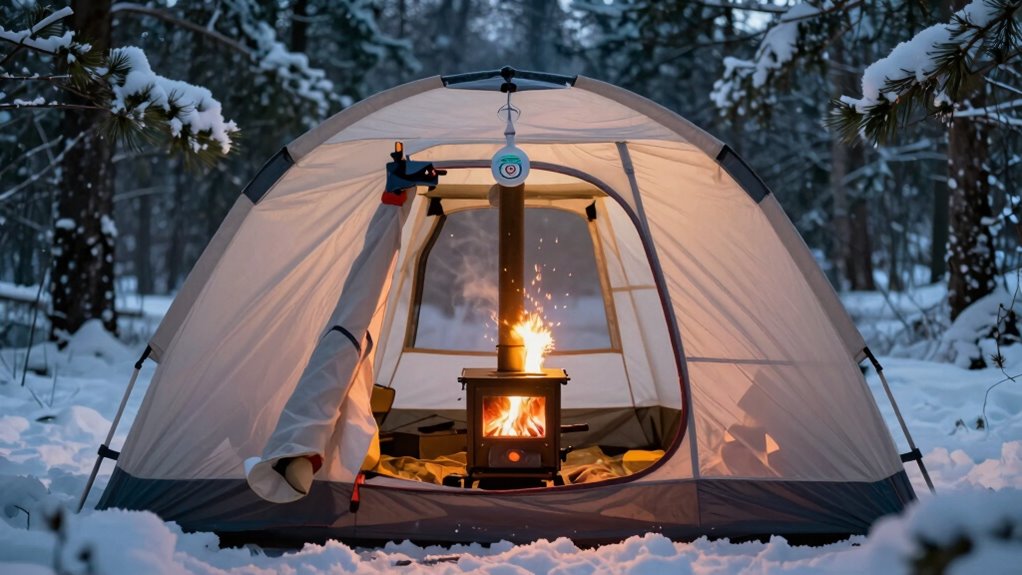
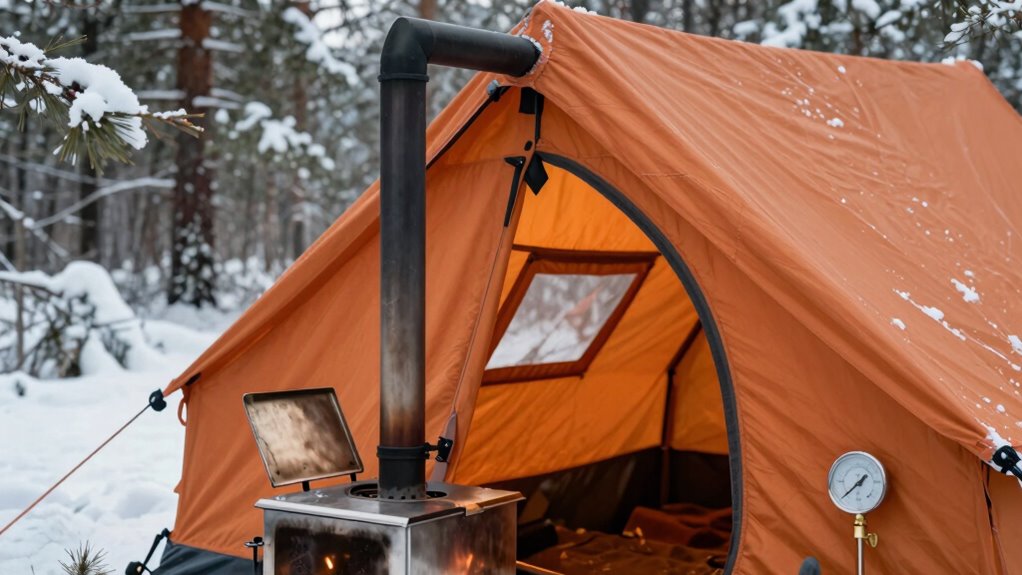
Ever wondered how to enjoy the warmth of a hot tent safely? Staying cozy in a heated tent can be great, but safety must come first. One of the most critical aspects is knowing where to place your fire extinguisher. You want to keep it within easy reach but away from potential heat sources or flames. A good rule is to position it near the tent’s entrance or in a designated safety corner, ensuring quick access if an emergency arises. Regularly check that the fire extinguisher is fully charged and functional, especially before heading out. This simple step can make a big difference if a small fire starts, helping you contain it before it spreads. Additionally, having an emergency communication plan is vital. Always carry a fully charged cellphone or radio, and ensure someone outside the tent knows your plans and location. In remote areas, consider investing in satellite communication devices or emergency beacons that can send distress signals if needed. Clear communication lines mean help can be on the way faster if an accident occurs, and you can coordinate your response more effectively. Proper ventilation and spark control are also crucial for hot tent safety. When using a stove or heater, make sure the tent has adequate ventilation to prevent dangerous buildup of carbon monoxide. Never block vents or leave them closed for extended periods, and always follow manufacturer instructions for your heating device. Sparks from the stove or heater can ignite tent fabric or nearby gear, so keep a safe distance between the heat source and combustible materials. Use a spark arrestor if your stove doesn’t already have one, and always operate it on a stable, level surface. Regularly inspect your heat source and the surrounding area for signs of wear or damage. Good venting not only controls heat but also reduces the risk of carbon monoxide poisoning, which can be deadly if undetected. Fire safety measures are essential when using heaters in enclosed spaces, emphasizing the importance of proper setup and ongoing vigilance. Venting, proper placement of safety equipment, and effective emergency communication all work together to ensure your safety in a hot tent. Never underestimate the importance of planning ahead and staying vigilant. Check your safety gear before setting up, keep emergency contacts readily accessible, and educate yourself on how to respond to hazards like fires or carbon monoxide leaks. By taking these precautions seriously, you can enjoy the comfort of your hot tent without compromising your safety. Remember, a little preparation goes a long way in making sure your outdoor adventure remains enjoyable and incident-free.
Frequently Asked Questions
How Often Should I Inspect My Tent’s Venting System?
You should inspect your tent’s venting system before every trip and at least monthly during extended use. During vent inspection, look for blockages or damage, and perform vent cleaning to remove dirt, debris, or snow. Regular maintenance guarantees proper airflow, reduces the risk of carbon monoxide buildup, and keeps your tent safe. Don’t forget to check all vents and their seals for maximum performance and safety.
What Are the Signs of Carbon Monoxide Poisoning?
You should recognize the signs of carbon monoxide poisoning, such as headache, dizziness, weakness, nausea, or confusion. Poor indoor air quality can cause these symptoms, especially if your tent’s venting isn’t effective. If you notice these signs, act quickly and prioritize emergency preparedness by getting fresh air and seeking medical help. Regularly inspect your tent’s venting system to prevent carbon monoxide buildup and make certain of safe, healthy camping conditions.
Can I Use a Portable Heater Safely Inside a Hot Tent?
Using a portable heater inside a hot tent can be safe if you prioritize heater safety and venting maintenance. Imagine your tent as a chimney, needing proper venting to let out smoke and gases. Always choose a heater designed for indoor use, keep vents clear, and never leave it unattended. Regularly check for carbon monoxide buildup and ensure proper airflow to prevent dangerous leaks. Safety first keeps your adventure enjoyable.
How Do I Prevent Sparks From Igniting Tent Materials?
To prevent sparks from igniting your tent materials, always use a spark arrestor on your heater’s chimney or stovepipe. Choose fire-resistant fabrics for your tent, especially around heat sources, and keep them away from open flames or sparks. Regularly inspect your equipment for damage, and never leave the heater unattended while in use. These precautions help minimize fire risks and keep your camping experience safe.
What Maintenance Is Required for Safe Spark Control Systems?
Think of your spark control system as a vigilant guardian. You need to perform regular heater maintenance and spark control inspection to guarantee it functions properly. Check for wear, corrosion, and loose connections, and clean any buildup. Replace worn parts promptly. By maintaining your spark control system diligently, you keep your tent safe from accidental fires and ensure reliable operation during your adventures.
Conclusion
Remember, keeping your hot tent cozy shouldn’t come at the cost of harmony with your surroundings. By minding the gentle dance of ventilation, sparking safety, and carbon monoxide awareness, you create a sanctuary that’s both warm and wise. Treat your tent with care, and it’ll reward you with safe, peaceful nights under the stars. Stay attentive and respect the delicate balance—your adventure depends on it, and so does your well-being.