
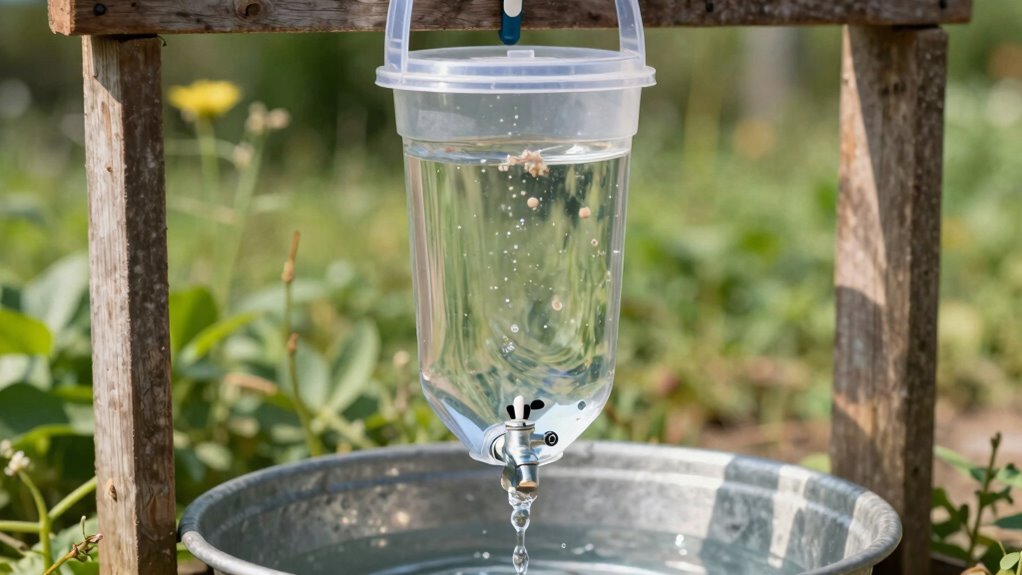

To set up a gravity water filter for groups, choose a stable, level area free from vibration and direct sunlight. Assemble two containers—one for dirty water and one for clean water—connecting them with secure, leak-proof hoses and fittings. Make certain all connections are tight, and the system is stable before use. Regularly inspect and maintain the filter to keep water flowing smoothly. If you want to learn more about perfecting your setup, keep exploring the details below.

Get garden gear delivered free with Prime
- Fast, free delivery on millions of items
- Prime Video, Amazon Music and more included
- Member-only deals all year
Key Takeaways
- Select a level, stable location with easy water access for efficient gravity filtration.
- Assemble two containers securely, connecting hoses tightly to ensure leak-proof operation.
- Follow manufacturer instructions carefully to position the filter correctly and prevent leaks.
- Regularly inspect and rinse the filter element, replacing parts as needed for optimal performance.
- Maintain the system by cleaning components, checking connections, and keeping spare parts on hand.

Setting up a gravity water filter is straightforward and essential for guaranteeing clean drinking water. Whether you’re preparing for outdoor adventures, setting up a community supply, or creating a backup system at home, knowing how to properly install and maintain your filter is key. The process begins with understanding the setup steps, which guide you through assembling the system correctly so it functions efficiently. Once assembled, proper filter maintenance becomes crucial to keep the water safe and the filter working at peak performance.
Start by choosing a stable, level surface to set up your gravity filter. Most systems come with two containers—one for dirty water and another for clean water. You’ll need to attach the filter element securely between these containers. During setup steps, ensure that all connections are tight and leak-proof. This often involves threading hoses onto the inlet and outlet ports, making sure they’re snug but not over-tightened, to prevent damage or leaks. Some filters come with additional accessories like spigots or valves, which should be installed as per the manufacturer’s instructions. Follow these setup steps carefully to avoid issues down the line.
Choose a stable surface, connect hoses securely, and install accessories as per manufacturer’s instructions.
Once the physical setup is complete, it’s time to focus on filter maintenance. Regular upkeep is vital for guaranteeing your water remains safe to drink. Before first use, rinse the filter element with clean water to remove any manufacturing residues. After each use, inspect the filter for debris or blockages. Depending on the model, you might need to backflush the filter or replace the cartridges periodically. Many filters have indicators or visual cues to help you determine when maintenance is needed, so stay alert to these signs. Proper filter maintenance not only prolongs the lifespan of your system but also guarantees the removal of harmful contaminants.
When performing filter maintenance, always follow the manufacturer’s recommended procedures. This might include cleaning the housing, replacing worn-out parts, or soaking elements in sanitizing solutions. Keeping spare parts handy can make this process smoother and quicker. Additionally, always use clean water to rinse parts during maintenance to prevent introducing new contaminants. If your filter has a pre-filter or mesh, check and clean these components regularly to prevent clogging. By adhering to these setup steps and maintaining your filter properly, you ensure consistent access to safe drinking water, especially in situations where reliable water sources are scarce or intermittent. Proper maintenance is also essential for optimizing filter performance and lifespan.
Popular right now

KitchenAid Artisan 5-Quart Tilt-Head Stand Mixer, Blue Velvet

Dyson Cyclone V10 Origin Cordless Vacuum

Roborock Q7 M5+ Robot Vacuum and Mop with Self-Emptying Dock
As an affiliate, we earn on qualifying purchases.
Frequently Asked Questions
How Often Should I Replace the Filter Elements?
You should replace the filter elements based on their filter lifespan, which typically ranges from 6 to 12 months, depending on usage and water quality. Regular maintenance tips include checking for clogging, discoloration, or decreased flow rate. If you notice these signs, it’s time to swap out the filters to guarantee clean water. Keep track of your filter’s age and follow manufacturer recommendations for peak performance and safety.
Can Gravity Filters Remove All Types of Contaminants?
Gravity filters can’t remove all types of contaminants due to filter limitations. They effectively target bacteria, protozoa, and sediment, but may not eliminate viruses or chemical pollutants. You need to check the filter’s specifications to understand its contaminant removal capabilities. For all-encompassing safety, consider combining gravity filters with other treatment methods like chemical disinfection or activated carbon filters, especially if you’re concerned about chemical or viral contamination.
Is There a Recommended Water Source for Optimal Filtering?
Think of your water source as the foundation of a strong home. For ideal filtering, choose a source with high source quality—preferably clear, flowing water from a spring or well. Avoid stagnant or murky water. Select a durable, food-grade container that won’t introduce contaminants. This pairing ensures your gravity filter performs best, providing safe, clean water effortlessly, like a steady stream flowing smoothly to quench your group’s needs.
How Long Does a Typical Gravity Water Filter Last?
Your gravity water filter typically lasts between 6 months to 2 years, depending on usage and water quality. The filter lifespan varies with replacement frequency, so it’s vital to monitor the flow rate and taste. You should replace the filter when you notice a decline in flow or water quality. Regular maintenance ensures clean water, and following manufacturer guidelines helps you maximize the filter’s effectiveness and lifespan.
Are There Maintenance Tips to Extend Filter Lifespan?
To extend your gravity water filter’s lifespan, regularly perform filter cleaning as recommended by the manufacturer. Store your filter in a cool, dry place, following storage best practices to prevent mold and bacteria growth. Avoid letting the filter dry out completely or sit unused for long periods. Proper maintenance guarantees your filter continues providing clean water efficiently, saving you money and hassle over time.
Conclusion
Setting up a gravity water filter is simple and effective, providing clean water without constant pumping. While some believe natural filtration alone can guarantee safety, studies show that combining gravity filters with proper maintenance truly safeguards your group’s health. So, trust the science—using a gravity filter isn’t just convenient, it’s a reliable way to access safe water in any situation. With this setup, you’ll always have clean water, no matter where you are.