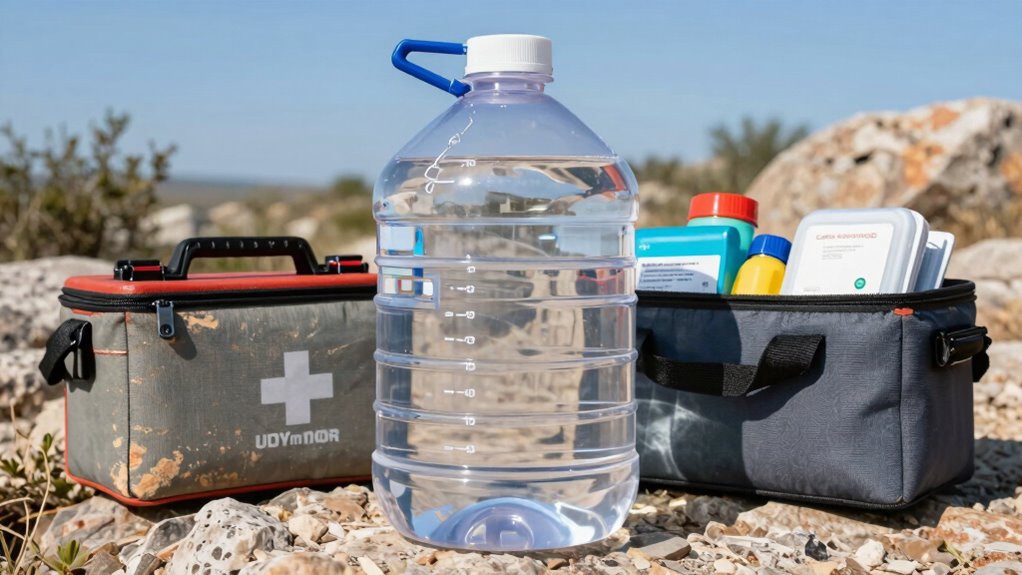
To determine how many gallons of water are enough for you, start with at least 1 gallon per person per day for drinking, cooking, and minimal hygiene. For a short-term emergency planning, aim for 3 gallons per person for 3 days. For longer-term storage, plan on at least 14 gallons per person for two weeks. Adjust these amounts based on your family’s needs, health, and climate—more details await to help you size your emergency water supply properly.

Get garden gear delivered free — and shop member deals
- Fast, free delivery on millions of items
- Access to Prime Big Deal Days deals on October 6–7
- Prime Video, Amazon Music and more included
Key Takeaways
- The minimum emergency water supply is 3 gallons per person for 3 days; long-term needs are at least 14 gallons for two weeks.
- Calculate based on daily needs of at least 1 gallon per person, adjusting for health, climate, and family size.
- Use food-grade, sealed containers, and label with the storage date, rotating water every six months for safety.
- Consider additional quantities if dealing with contaminated sources or specific health requirements.
- Proper planning ensures sufficient water for drinking, cooking, and hygiene during emergencies.
Have you ever wondered how much water you need to store for an emergency? Knowing the right amount is essential because water is the most fundamental resource during a crisis. To determine your needs, consider the basic daily water requirements per person. The general guideline is at least one gallon of water per person per day. This amount covers drinking, cooking, and minimal hygiene. For a typical emergency plan lasting three days, you’d need three gallons per person. But many experts recommend storing enough water for at least two weeks, which means 14 gallons per person. Adjust this based on your family’s specific needs, health considerations, and climate conditions. Understanding deep-sky imaging can also inspire you to prepare your outdoor space for emergency scenarios, such as setting up water collection or storage areas.
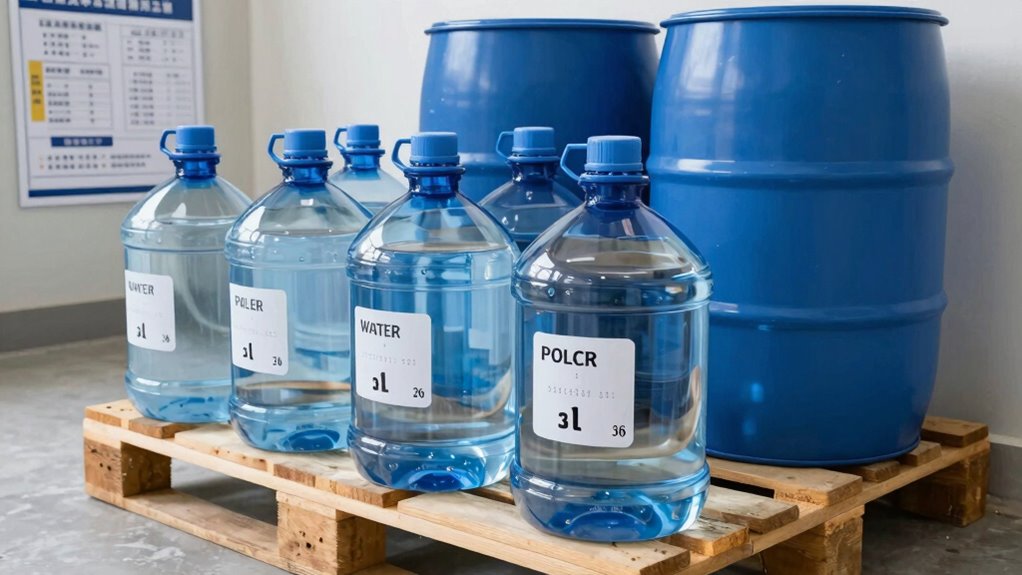
When planning your emergency water storage, think about the best types of storage containers. Look for food-grade, BPA-free containers designed specifically for water storage. These containers are sturdy, seal tightly, and prevent contamination. Avoid using containers that once held chemicals or non-food substances, as they can taint the water. Your storage containers should be durable and easy to clean, with a wide mouth for easy filling and cleaning. Transparent containers help you monitor water levels and detect any potential contamination or sediment buildup. Make sure to label your containers clearly with the date of storage, so you know when to replace the water. Rotating your stored water every six months is a good practice to maintain freshness and safety.
In addition to proper containers, water filtration plays a critical role in emergency preparedness. If your stored water becomes contaminated or if you need to find additional water sources during a crisis, having a reliable water filtration system is essential. Portable filters, purification tablets, or UV purifiers can help ensure your water remains safe to drink. Remember, even stored water can become unsafe over time if not properly maintained. Regularly inspecting your containers for leaks or damage, and replacing water as needed, keeps your supply reliable.
food grade water storage containers
As an affiliate, we earn on qualifying purchases.
As an affiliate, we earn on qualifying purchases.
Frequently Asked Questions
How Often Should I Review My Emergency Water Supply?
You should review your emergency water supply at least every six months. During these maintenance schedules, check for leaks, proper sealing, and signs of contamination. Rotate your stored water regularly—ideally every year—to guarantee freshness. Staying on top of these checks helps you identify potential issues early, so your supply remains safe and reliable in an emergency. Consistent review and rotation keep your water stock ready when you need it most.
Can I Use Bottled Water for Long-Term Storage?
Yes, you can use bottled water for long-term storage. Just make sure to select food-grade bottles designed for this purpose, and store them in a cool, dark place to prevent spoilage. Regularly check for leaks or signs of deterioration, and rotate your supply every 6 to 12 months to guarantee freshness. Properly stored bottled water provides a reliable source of clean drinking water during emergencies.
What Are the Best Containers for Emergency Water Storage?
You should choose food-grade plastic containers, as they’re durable and safe for long-term water storage. Consider BPA-free polyethylene or polypropylene, which resist cracks and leaks. Containers like 55-gallon drums or smaller bottles work well; a recent study shows durable plastic can last over 20 years with proper care. Always guarantee containers are sealed tightly, clean, and stored in a cool, dark place to maintain water quality.
How Does Climate Affect Water Storage Needs?
Climate impact substantially influences your water storage needs, as hotter or drier environments increase evaporation and demand. You’ll experience storage variability depending on seasonal changes, with warmer months requiring more water. In colder climates, you might need less water stored for daily use but guarantee adequate supplies for emergencies. Adjust your storage plan accordingly, considering climate impact, to ensure you always have enough water during emergencies.
Are There Ways to Purify Stored Water Effectively?
You can’t afford to take chances with stored water—effective water purification is essential! Use proven storage techniques like airtight containers and keep water away from sunlight. When needed, treat your water with boiling, filtration, or chemical disinfectants like bleach. These methods eliminate bacteria, viruses, and contaminants, ensuring your water stays safe and clean. Don’t gamble with your health—master water purification and storage techniques for real peace of mind.
As an affiliate, we earn on qualifying purchases.
Conclusion
In emergencies, storing enough water is vital, but the idea that one gallon per person per day is always sufficient is oversimplified. While it covers basic hydration, factors like climate, activity level, and health needs can increase water requirements. Research suggests planning for at least three gallons daily per person to guarantee safety and well-being. By understanding these nuances, you can better prepare for any situation, making sure your water supply truly meets everyone’s needs.
portable water filtration system
As an affiliate, we earn on qualifying purchases.
As an affiliate, we earn on qualifying purchases.
As an affiliate, we earn on qualifying purchases.
Fall Picks
fall essentials
As an affiliate, we earn on qualifying purchases.