To keep your fuel storage safe, regularly inspect tanks, containers, and wood stacks for damage, leaks, or corrosion. Follow safety rules like storing tanks upright in well-ventilated, cool areas away from heat or flames, and keep wood off the ground and covered. Make certain compliance with local regulations, and use proper containers for gas, propane, and wood. Staying vigilant about these practices helps prevent accidents; learn more to protect yourself and your property.
Key Takeaways
- Regularly inspect tanks, valves, and connectors for corrosion, leaks, or damage to ensure safety.
- Store propane and gas tanks upright in well-ventilated, stable areas away from heat and ignition sources.
- Follow safety regulations for proper distances from living spaces and ensure proper ventilation during storage.
- Use approved containers for fuel, keep them sealed, labeled, and stored outdoors or in ventilated spaces.
- Store wood in dry, covered locations off the ground, away from ignition sources, with good ventilation to prevent hazards.
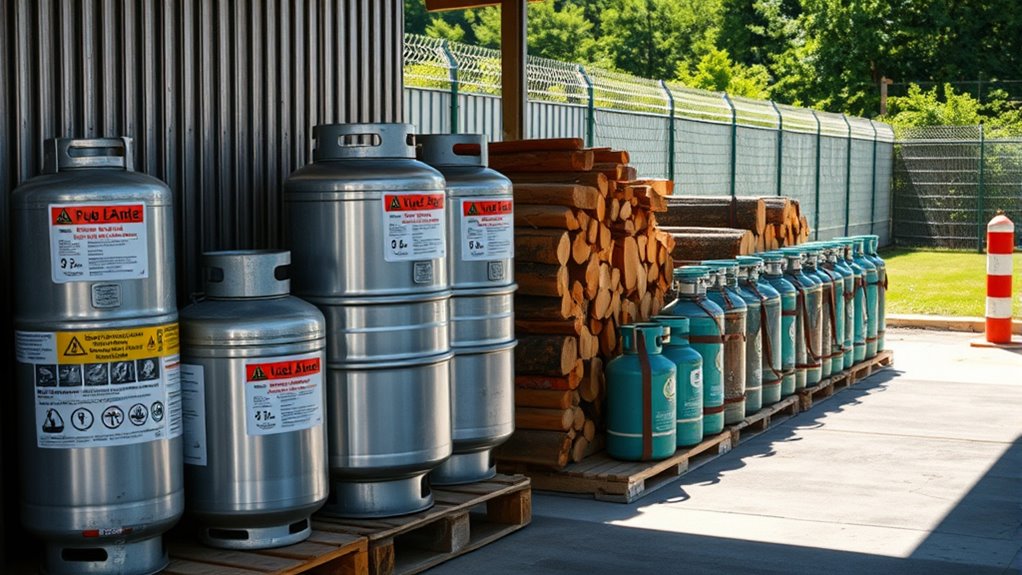
Are you aware of the key safety measures needed to prevent accidents when storing fuel? Ensuring safe storage of propane, gas, and wood requires diligent attention to tank maintenance and strict adherence to safety regulations. Proper tank maintenance is critical because it helps identify potential issues before they escalate into hazards. Regular inspections of tanks, valves, and connectors allow you to catch corrosion, leaks, or damage early. Neglecting maintenance can lead to leaks, which pose fire and explosion risks, especially with flammable fuels like propane and gasoline. Following safety regulations set by local authorities and industry standards is equally essential. These regulations specify safe distances from living areas, proper ventilation requirements, and the correct types of containers to use, helping you minimize risks associated with fuel storage.
Regularly inspect tanks and follow safety regulations to prevent fuel storage hazards.
When storing propane tanks, you should check for rust, dents, or corrosion regularly. Keep tanks upright on a stable, level surface, and ensure they’re protected from extreme weather conditions, such as intense heat or freezing temperatures, which can compromise tank integrity. Ventilation is crucial; store tanks in well-ventilated areas to prevent gas buildup in case of leaks. It’s also wise to keep tanks away from sources of ignition—no smoking nearby or open flames—since propane is highly flammable. If you notice any signs of leaks or damage, follow safety regulations by shutting off the supply immediately and contacting professionals for repairs. Never attempt to repair leaks yourself unless you’re trained and authorized to do so.
For gasoline and other fuels stored in containers, tank maintenance involves checking for cracks, deterioration, or improper sealing. Use approved containers designed for fuel storage, and keep them tightly sealed when not in use. Store fuel in cool, dry, well-ventilated areas, away from heat sources, electrical equipment, or open flames. Implementing safety regulations also involves labeling containers clearly to prevent accidental misuse. When refueling equipment, do it outdoors or in well-ventilated spaces, and avoid overfilling tanks to prevent spills. Additionally, ensure proper fuel container disposal to prevent environmental hazards and safety risks.
Handling wood fuels, although less volatile, still requires proper storage practices. Stack wood in dry, covered areas, off the ground to prevent moisture absorption, which can lead to mold or decay. Keep the storage area away from ignition sources and ensure good ventilation to avoid accumulation of dust or fumes that could become a fire hazard.
Frequently Asked Questions
How Often Should Propane Tanks Be Inspected for Safety?
You should inspect your propane tanks for safety at least once a year, focusing on propane tank maintenance and checking for leaks or corrosion. Regular inspections ensure your storage area has proper ventilation, preventing dangerous gas buildup. If you notice any damage, leaks, or foul odors, it’s essential to have the tank checked immediately by a professional. Consistent safety checks keep your propane storage safe and functional.
What Are Signs of Gas Leaks in Storage Areas?
Think of a gas leak as a silent alarm in your storage area. You should notice the smell of rotten eggs, hissing sounds, or bubbles in standing water. For leak detection, check for unusual odors or sights, and make certain ventilation is adequate to disperse any fumes. Regularly inspect connections and valves, keeping your space well-ventilated to prevent dangerous buildup. If you suspect a leak, evacuate immediately and call emergency services.
Can Wood Be Stored Near Propane or Gas Cylinders Safely?
You should avoid storing wood near propane or gas cylinders to guarantee safety. Keep wood storage separate and away from these cylinders, following safety precautions like maintaining a clear space of at least 10 feet. Proper ventilation and avoiding ignition sources near wood storage help prevent fire hazards. Always store wood in a cool, dry place, and never pile it directly against cylinders to minimize risks.
Are There Legal Restrictions on Storing Large Quantities of Fuel?
Think of fuel storage regulations as the guardrails on a winding road—you must stay within them to avoid danger. You’re legally limited in how much fuel you can store, depending on your location and the type of fuel. Violating these legal limits can lead to fines or accidents. Always check local codes and follow proper storage rules to keep yourself and your property safe from uncontrolled fires or explosions.
How to Dispose of Old or Damaged Fuel Containers Properly?
To properly dispose of old or damaged fuel containers, you should first guarantee they’re empty and dry. Then, take them to a designated hazardous waste facility or participate in container recycling programs. Avoid pouring residual fuel down drains or onto the ground. Proper disposal prevents environmental harm and safety hazards. Always follow local regulations and manufacturer instructions to ensure safe and compliant container recycling and disposal.
Conclusion
You can’t afford to ignore fuel storage safety—one tiny mistake could ignite a chain reaction of disaster that consumes everything around you. Properly handling propane, gas, and wood isn’t just important; it’s the difference between your world remaining safe or erupting into chaos. Take every precaution seriously, because a single oversight could turn your peaceful sanctuary into a blazing inferno in the blink of an eye. Safety isn’t just a rule—it’s your ultimate shield against catastrophe.