To preserve food through dehydrating and canning, start by removing moisture to prevent bacteria and mold growth—dehydration does this by drying food using a dehydrator, oven, or sun, while canning involves sealing foods in sterilized jars and heating them to eliminate microbes. Both methods extend shelf life, preserve flavors, and reduce waste, with dehydration producing lightweight snacks and canning ensuring long-lasting stored foods. Continuing further will uncover more tips to maximize your preservation results.
Key Takeaways
- Dehydration removes moisture to inhibit bacteria and molds, extending shelf life and concentrating flavors.
- Canning involves sealing food in sterilized jars and heating to eliminate microbes, creating a vacuum seal.
- Proper techniques in both methods prevent spoilage and foodborne illnesses.
- Dehydrated foods are lightweight, compact, and shelf-stable, ideal for long-term storage.
- Combining dehydration or canning with vacuum sealing can further extend freshness and preserve nutrients.
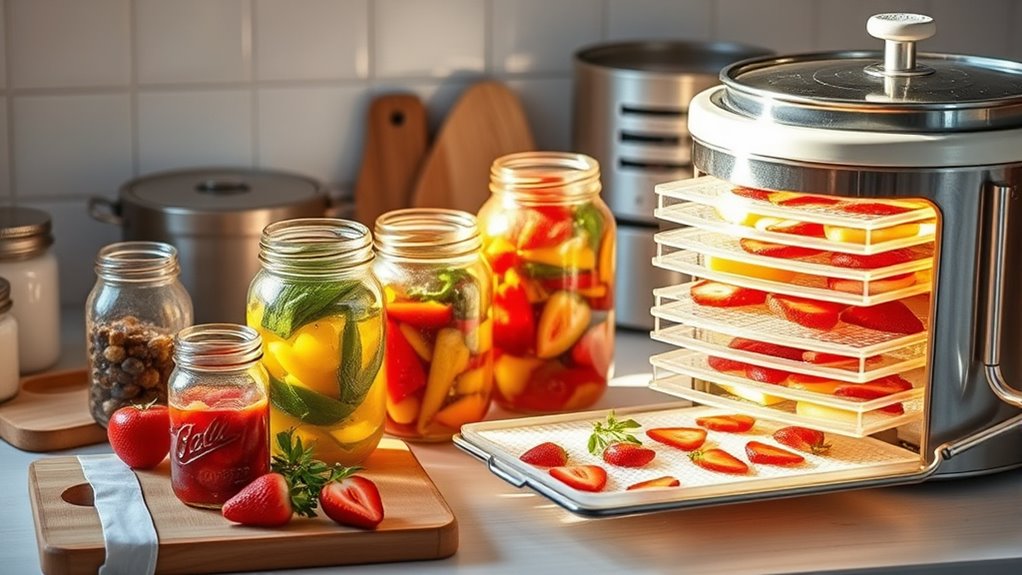
Have you ever wondered how people keep food fresh for longer periods? It’s a smart question, especially when you want to enjoy seasonal produce year-round or reduce waste. Food preservation techniques like pickling, dehydration, and canning help you do just that. When it comes to pickling techniques, you’re essentially transforming vegetables or fruits into tangy, long-lasting treats. Pickling involves immersing your produce in a brine or vinegar solution, which creates an inhospitable environment for bacteria and molds. This method not only preserves the food but also adds flavor and texture that can elevate simple snacks into gourmet delights. To maximize shelf life, many people combine pickling with other preservation methods, like vacuum sealing, which further extends freshness. Vacuum sealing methods remove air from storage bags or jars, slowing down oxidation and microbial growth. This technique is especially useful after pickling, as it keeps the preserved food tasting fresh and prevents spoilage caused by air exposure. When you use vacuum sealing methods, you’re creating an airtight barrier that locks in flavor and nutrients, making your preserved foods last much longer. It’s a simple but effective way to store pickled vegetables or fruits in the fridge or freezer, saving space and reducing waste.
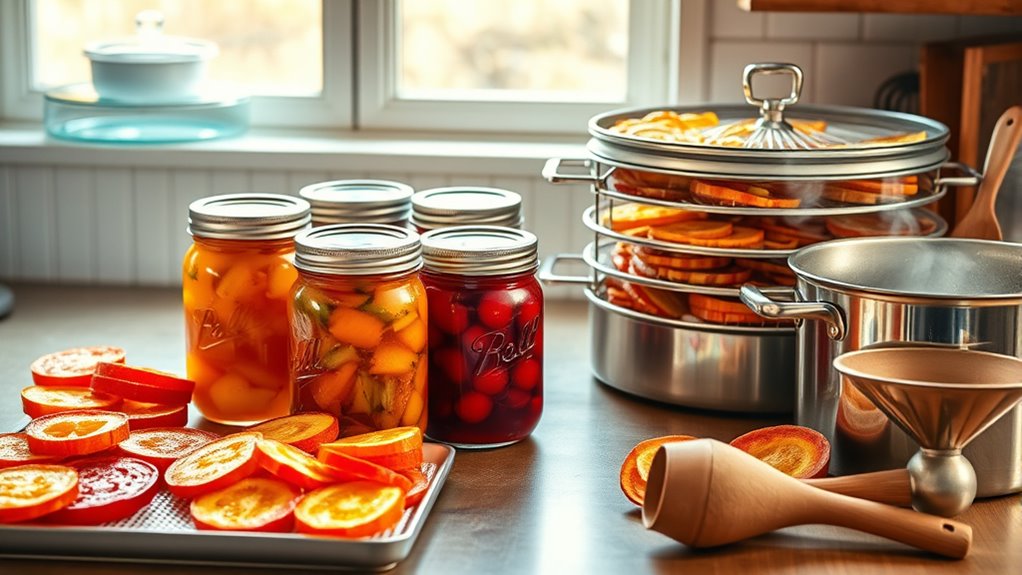
In addition to pickling and vacuum sealing, dehydration is another powerful preservation method. It involves removing moisture from food, which bacteria and molds need to thrive. Dehydrating can be done using a food dehydrator, oven, or sun-drying, depending on what you have available. Once dried, foods like fruits, herbs, and even meats become lightweight, compact, and shelf-stable. Proper dehydration not only preserves the food but concentrates flavors, making snacks like dried apricots or beef jerky particularly delicious. When combined with vacuum sealing, dried foods can stay fresh for months, even years, without refrigeration.
Canning is another tried-and-true method that involves sealing food in sterilized jars and heating them to eliminate bacteria, yeasts, and molds. The heat creates a vacuum seal as the jar cools, preventing new microbes from entering. Using proper canning techniques is vital to avoid spoilage or foodborne illnesses. Whether you choose water bath canning for high-acid foods or pressure canning for low-acid items, mastering these techniques ensures your preserved foods are safe and delicious.
Frequently Asked Questions
How Long Do Dehydrated Foods Stay Safe to Eat?
Dehydrated foods typically stay safe to eat for 6 to 12 months if stored properly, but their shelf life can vary depending on storage conditions. To guarantee food safety, keep them in airtight containers in a cool, dark place. Regularly check for signs of spoilage like mold or off odors. Properly dried and stored dehydrated foods can maintain quality and safety within this timeframe, helping you enjoy them longer.
Can I Dehydrate All Types of Fruits and Vegetables?
You can’t dehydrate all types of fruits and vegetables, but “a little knowledge is a dangerous thing.” For fruit safety, stick to varieties like apples, berries, and peaches, which dehydrate well. Vegetables like carrots, green beans, and peppers also work. However, some produce, like leafy greens and high-moisture fruits, may not dehydrate properly. Always research specific fruit and vegetable varieties to guarantee safe, quality results.
What Are the Best Canning Jars for Long-Term Storage?
You should choose high-quality canning jars like Mason jars or Ball jars for long-term storage. These jars are durable, feature thick glass, and come with reliable screw-on lids that create a tight seal. Opt for jars with a wide mouth for easy filling and cleaning. Make sure they’re free of chips or cracks before use. Properly sealed, these jars keep your preserved foods fresh for years, making them ideal for long-term storage.
Does Canning Affect the Nutritional Value of Food?
Ever wonder if canning diminishes your food’s nutrients? Canning does have a processing impact, but it generally preserves most nutrients, especially when done correctly. While some heat-sensitive vitamins like vitamin C may decrease slightly, minerals and fiber usually stay intact. Proper techniques, like using the right processing times, help maximize nutrient retention. So, yes, canning affects nutrient levels, but it remains a healthy way to store food long-term.
Are There Any Foods That Shouldn’t Be Canned or Dehydrated?
You should avoid canning or dehydrating toxic foods like wild mushrooms, certain berries, and green potatoes, as they can pose health risks. Some foods have spoilage risks or may not preserve well, leading to unsafe or spoiled products. Always research specific foods before processing, and follow trusted guidelines to prevent contamination or health issues. Proper knowledge guarantees safe preservation and keeps your food safe to eat.
Conclusion
Now that you know the basics of dehydrating and canning, you’re well on your way to keeping your harvest fresh through any season. Remember, preserving food isn’t just about storage — it’s about patience, care, and respecting nature’s bounty. Like the wise alchemist of old, you turn humble ingredients into lasting treasures. So, embrace these skills as a timeless craft, and may your pantry always be full, no matter what the future holds.