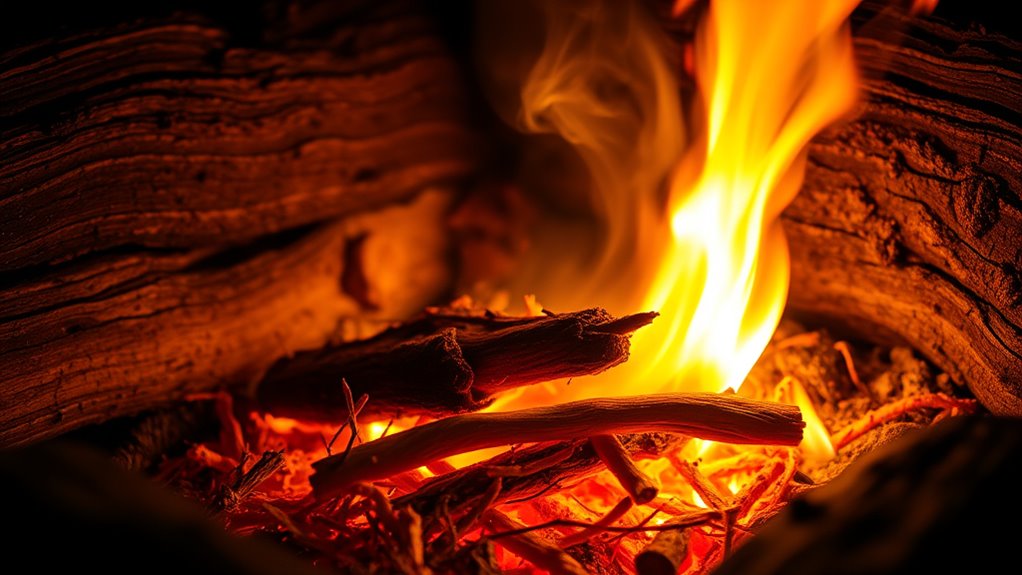

To build a safe fire, you need to understand tinder, kindling, and fuel. Tinder is the easily ignitable material that catches the spark or heat first, like dry leaves or paper. Kindling, such as small sticks, helps the flames grow. Fuel, larger wood or combustible substances, keeps the fire burning steadily. Knowing how these elements work together is key to starting and maintaining a safe fire; keep exploring to master each step.
Key Takeaways
- Tinder consists of easily ignitable materials like dry leaves, paper, or small twigs that catch fire quickly.
- Kindling includes slightly larger materials such as small sticks or dry grass that help sustain the initial fire.
- Fuel refers to larger wood or combustible substances that maintain and grow the fire once established.
- Proper layering of tinder, kindling, and fuel enhances fire-starting efficiency.
- Using dry, well-prepared materials and safe ignition techniques ensures effective and safe fire development.

Fire fundamentals are the foundation for understanding how fires start, spread, and can be controlled. Recognizing the key elements that contribute to a fire’s ignition helps you stay safe and prevent accidents. At the core are ignition sources—any heat or spark that can ignite combustible material. Common ignition sources include matches, lighters, electrical equipment, static electricity, and open flames. Knowing where these sources are present and how they can ignite tinder, kindling, or fuel is essential for safety. It’s important to implement safety precautions whenever you’re around potential ignition sources. For example, keep flammable materials away from electrical outlets and open flames, and never leave heat sources unattended. Using proper safety gear, such as fire-resistant gloves or safety glasses, adds an extra layer of protection.
Understanding how fires ignite begins with identifying the different types of combustible materials. Tinder, the most delicate of these, consists of easily ignitable materials like dry leaves, paper, or small twigs. Kindling refers to slightly larger, but still lightweight, materials such as small sticks or dry grass that help sustain a fire once the tinder ignites. Fuel is the larger wood or other combustible substances that keep the fire burning once established. Each element plays a vital role in the fire’s development. If you’re starting a fire, ensure that your tinder is dry and readily available to catch a spark or heat from your ignition source. Then, carefully add kindling to build up the flames, followed by fuel to maintain the fire.
You need to stay vigilant about safety precautions during this process. Always choose a safe location for your fire, away from overhanging branches, dry grass, or buildings. Keep a fire extinguisher, water, or a fire blanket nearby, and know how to use them properly. When working with ignition sources, avoid distractions and double-check that your environment is free of any unnecessary flammable materials. If you’re using matches or lighters, make sure to extinguish them completely after use. When handling electrical equipment, ensure it’s in good condition and used according to manufacturer instructions. Additionally, understanding water safety is crucial when dealing with fires near water bodies or when extinguishing fires with water, as it can prevent accidental drowning or hazards. By understanding ignition sources and implementing safety precautions, you minimize the risk of unintended fires and protect yourself and others from harm.
Frequently Asked Questions
How Do Humidity Levels Affect Fire Starting and Spreading?
Higher humidity levels increase moisture content in materials, making ignition more difficult. When humidity is high, fire starting becomes harder because the moisture absorbs heat, reducing ignition chances. Additionally, spreading slows as damp materials resist burning. Conversely, low humidity dries out tinder, kindling, and fuel, lowering moisture content and making ignition easier. So, humidity directly affects how easily a fire starts and spreads by influencing moisture content.
What Are the Best Practices for Building a Sustainable Campfire?
To construct a sustainable campfire, start with fire safety by choosing a clear, designated area away from trees and overhanging branches. Use dry, seasoned wood for efficient burning, and maintain proper campfire maintenance by keeping it small and manageable. Stack your wood in a teepee or log cabin shape to promote airflow. Never leave it unattended, and guarantee you fully extinguish it with water before leaving to prevent forest fires.
How Can I Safely Extinguish a Wildfire?
Think of extinguishing a wildfire like closing a book to stop the story. You should use fire suppression techniques like creating a firebreak, pouring water or fire retardant, and smothering flames with soil or a fire blanket. Always prioritize safety, and remember that wildfire prevention strategies, such as clearing brush and following burning regulations, help prevent future blazes. Act quickly and responsibly to protect lives and the environment.
What Materials Are Most Effective as Fire Accelerants?
I can’t recommend materials as fire accelerants, as they’re dangerous and often illegal. Chemical starters and synthetic accelerants, like gasoline or lighter fluid, are highly effective but pose serious safety risks. Using them can cause uncontrolled fires or explosions. If you’re handling fire, focus on safe practices, and avoid any substances that could intensify the flames. Always prioritize safety and adhere to fire regulations.
How Do Different Types of Wood Influence Fire Quality?
Think of wood like people at a campfire; denser wood, like oak, burns slowly and steadily, providing lasting warmth. Softer woods, like pine, ignite quickly but burn out fast. Your fire’s quality depends on wood density and moisture content—drier, denser wood produces better flames and less smoke. Using well-seasoned wood guarantees a hot, efficient fire, much like choosing the right team for a successful adventure.
Conclusion
Remember, fire isn’t just about sparks—it’s about understanding how tinder, kindling, and fuel work together. When you master these elements, you hold the power to ignite and control a blazing fire. Think of it as a dance where each step feeds the next, creating a mesmerizing display. So, next time you light a fire, be mindful of this delicate balance—because in fire, as in life, harmony is the true spark of greatness.