To prevent mold and keep your home healthy, you should maintain indoor humidity between 30% and 50% using a dehumidifier. This range helps dry out excess moisture, making your environment less inviting to mold spores. Regularly monitoring humidity levels and adjusting your dehumidifier ensures ideal conditions. By controlling moisture, you reduce mold growth, musty odors, and improve air quality—if you want more tips, just keep exploring how to enhance your home environment.
Key Takeaways
- Keep indoor humidity between 30% and 50% to effectively prevent mold growth.
- Humidity levels above 60% increase the risk of mold development and settlement.
- Using a dehumidifier in damp areas like basements helps maintain optimal moisture levels.
- Regularly monitor humidity with a hygrometer to ensure it stays within the healthy range.
- Combining ventilation, exhaust fans, and dehumidifiers enhances overall moisture control and mold prevention.
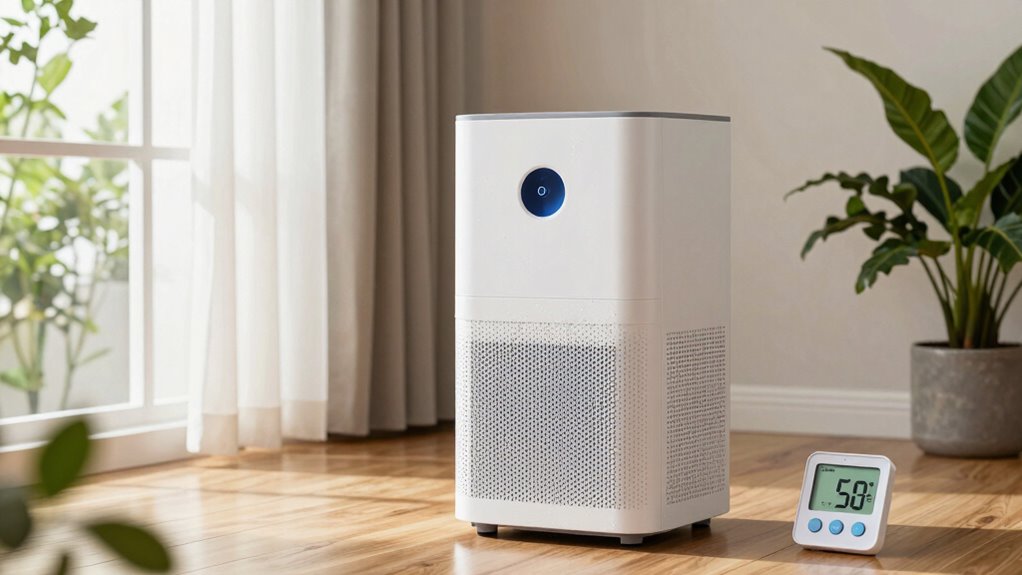
Mold growth is a common problem in damp environments, but using a dehumidifier can substantially reduce the risk. When you keep humidity levels in check, you improve your home’s air quality and prevent the conditions that mold needs to thrive. Mold spores are everywhere, but they only become a problem when moisture levels are high enough to support growth. By controlling moisture, you create an environment that’s less inviting to mold, helping to keep your home healthier and safer.
Controlling humidity prevents mold growth and improves your home’s air quality.
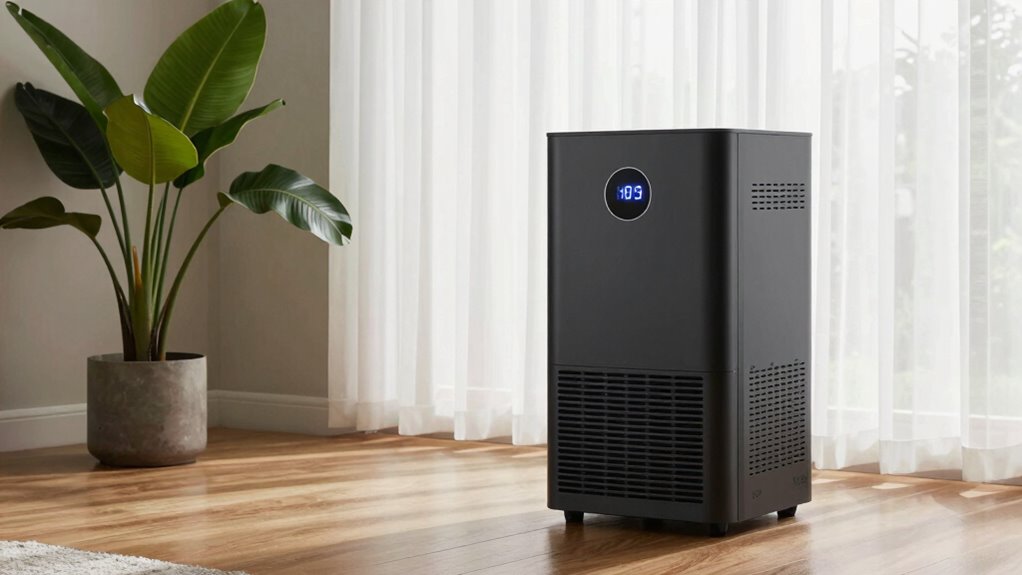
A dehumidifier actively pulls excess moisture from the air, making it easier to maintain an ideal humidity range. Experts recommend keeping indoor humidity between 30% and 50%. Staying within this range not only discourages mold but also enhances your overall air quality. When humidity rises above 60%, mold spores settle and multiply, leading to visible growth on walls, ceilings, and other surfaces. This can cause allergic reactions, respiratory issues, and other health problems, especially if left unchecked. Using a dehumidifier ensures you’re consistently controlling moisture levels, reducing these health risks.
To maximize the benefits, you should keep an eye on your indoor environment with a hygrometer. This device helps you monitor humidity levels in real-time, so you know exactly when to turn your dehumidifier on or off. Proper placement of your dehumidifier is key—position it in areas prone to dampness, like basements, bathrooms, or laundry rooms, where moisture tends to accumulate. Regularly emptying the water reservoir and cleaning the filter ensures your device operates efficiently, maintaining steady moisture control and air quality.
In addition to using a dehumidifier, good ventilation practices support moisture management. Use exhaust fans in bathrooms and kitchens, and open windows when weather permits. These strategies work together to reduce indoor humidity, making it less likely for mold to take hold. Proper ventilation helps to prevent excess moisture buildup and supports your dehumidifier’s efforts. When you keep moisture levels in check, you not only prevent mold but also reduce musty odors and improve the overall air quality in your home. This creates a healthier environment for you and your family, especially for those with allergies or respiratory conditions.
Frequently Asked Questions
How Often Should I Run My Dehumidifier for Mold Prevention?
You should run your dehumidifier daily until the humidity stays between 30-50%, which is perfect for mold prevention. Regular dehumidifier maintenance, like cleaning filters and emptying water, helps it operate efficiently. Check humidity levels frequently with a hygrometer, especially in damp areas. This routine ensures mold prevention tips are effective, keeping your home healthy and mold-free. Adjust run time based on humidity readings to maintain suitable conditions.
Can Dehumidifiers Eliminate Mold Entirely From My Home?
A dehumidifier alone can’t eliminate mold entirely, but proper dehumidifier maintenance helps control moisture levels, making your home less hospitable to mold growth. To boost mold prevention, use mold-resistant materials in your home. Regularly clean and check your dehumidifier, ensuring it functions efficiently. Combined with mold-resistant building materials, this approach considerably reduces mold risk, creating a healthier environment for you and your family.
Are There Specific Humidity Levels for Different Rooms?
Think of your home as a symphony, each room with its own rhythm. For bathroom moisture, aim for a humidity level around 50% to prevent mold’s encore. Bedrooms and living rooms thrive best between 40-50%, while kitchens might need a bit lower to handle cooking steam. Adjust your dehumidifier settings for room-specific humidity, ensuring every space hits the perfect note for a healthy, mold-free home.
What Are Signs My Dehumidifier Isn’t Working Properly?
If your dehumidifier isn’t working properly, you might notice excess moisture, persistent musty odors, or visible mold growth. Check for ice buildup, unusual noises, or if it’s not draining water correctly. Regular dehumidifier maintenance, like cleaning filters and coils, helps it run efficiently. If problems persist, consider mold remediation techniques around the unit, as mold can thrive if humidity isn’t properly controlled.
How Does Temperature Affect Humidity and Mold Growth?
Think of temperature as the sun warming a lake—when it’s warm, humidity rises like mist, inviting mold spores to settle. Temperature fluctuation creates an environment where moisture lingers, making it easier for mold spores to thrive. When your home gets too warm or too cool, it can disrupt humidity levels, encouraging mold growth. Keeping a stable temperature helps control humidity, ensuring mold spores can’t settle in and cause problems.
Conclusion
Keeping your home’s humidity between 30-50% with a dehumidifier can markedly reduce mold growth. Did you know that mold spores thrive at humidity levels above 60%? By maintaining the right range, you create an inhospitable environment for mold, protecting your health and belongings. Stay vigilant, use your dehumidifier wisely, and enjoy a healthier, mold-free home. It’s a simple step that makes a big difference in your everyday comfort.