
TL;DR

Get garden gear delivered free with Prime
- Fast, free delivery on millions of items
- Prime Video, Amazon Music and more included
- Member-only deals all year
Moving your rig into a closet can drastically reduce noise, but only if you address heat, airflow, and reflection. Proper placement, sealing gaps, and using the right treatment make all the difference—foam alone won’t cut it.
If you’ve ever tried recording in a small room, you’ve felt the echo, the low-frequency hum, or the constant whirr of your rig. It’s frustrating. But what if the secret to a quiet, professional sound was simply moving that noisy beast into a closet?
This isn’t about hiding your gear in a dark corner—it’s about transforming a tiny, echo-prone space into a controlled environment. You’ll learn how placement, dampening, and ventilation work together to make your closet rig a game-changer for voiceover, podcasting, or even singing.
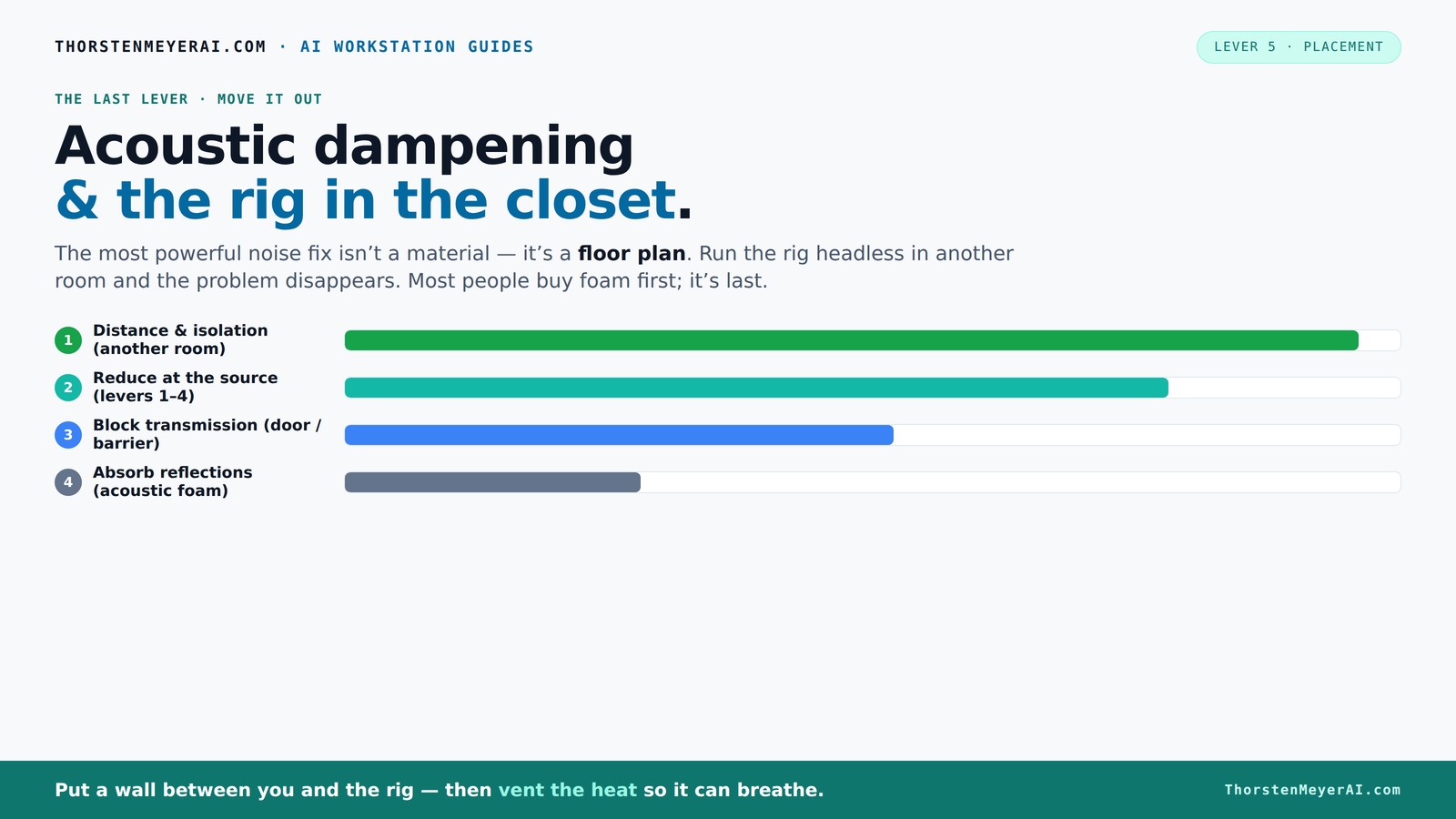
Acoustic dampening
& the rig in the closet.
The most powerful noise fix isn’t a material — it’s a floor plan. A rig you can’t hear because it’s in another room beats any amount of foam. Tap the approaches in Part 1 to see what actually works.
(another room)
(levers 1–4)
(door / barrier)
(acoustic foam)
Contain the noise, not the heat
Key Takeaways
- Moving your rig into another room or closet is the most effective noise reduction strategy.
- Proper ventilation is critical; sealed closets without airflow trap heat and can damage your hardware.
- Acoustic panels, bass traps, and blankets improve sound quality inside the space but don’t replace sealing gaps or adding mass for noise isolation.
- Placement of treatment—first reflection points, corners, and the wall behind the mic—maximizes effectiveness.
- Budget solutions like blankets and rubber feet can drastically reduce noise without expensive equipment.
As an affiliate, we earn on qualifying purchases.
Why Moving Your Rig Is the Biggest Noise Solution
The best way to block noise isn’t with foam—it’s distance. Moving your rig into another room, closet, or basement effectively isolates it, making all the difference. When your machine roars in a different space, your workspace stays silent.
For example, I set up a high-powered inference rig in a spare closet across the hall. No more distractions, no more fan noise echoing in my studio. I just SSH into it—no need to sit next to the beast.
This approach works because most noise is airborne or structure-borne and significantly reduced when you physically separate the source from your workspace. The tradeoff, however, is convenience—remote access adds latency and complexity, and some tasks still require physical proximity. But for general noise reduction, distance is the most straightforward and effective method.
As an affiliate, we earn on qualifying purchases.
The 'Rig in the Closet' Setup — How to Ventilate Without Cooking Your Hardware
Placing a hot, high-load machine in a closet sounds perfect for quiet—until it overheats. The key is to give your rig a way to breathe while keeping noise down. Check out this guide on acoustic dampening and placement for detailed solutions. Without proper ventilation, your hardware can quickly reach unsafe temperatures, leading to throttling, crashes, or even permanent damage.
Install passive vents or quiet exhaust fans that pull hot air out without adding noise. Using ducted airflow with sound-dampening materials ensures hot air escapes efficiently while minimizing sound leakage. Learn more about acoustic dampening and setup tips. A soundproof cabinet with ducted exhaust can handle significant heat loads—up to several kilowatts—while muffling noise. For example, a custom-ventilated closet with a ducted exhaust keeps the ambient temperature steady and your rig cool, ensuring consistent performance and longevity.
Neglecting ventilation can cause thermal throttling, increased fan noise, and hardware failure. Therefore, balancing airflow with noise mitigation is crucial. Check out this guide on cooling and heat management for detailed solutions and tradeoffs.
As an affiliate, we earn on qualifying purchases.
Acoustic Treatment in Small Closets: What Works and What Doesn’t
Acoustic dampening isn’t just about sticking foam on the walls. It’s about managing reflections, echoes, and low-frequency buildup in a tight space. When reflections bounce between parallel walls, they create comb filtering and muddiness that degrade your sound quality, making vocals or recordings less clear and more 'boxy.'
For small closets, the most effective treatment includes:
- 2-inch acoustic panels on side walls and ceiling to reduce flutter echo and early reflections, which cause comb filtering and muddiness
- Bass traps in corners to tame low-end rumbles and standing waves that cause boomy, muddy recordings
- Heavy blankets or moving blankets hung over the door or walls for quick, budget-friendly absorption, especially at reflection points
- Rugs or carpets on the floor to soak up reflections and prevent sound bouncing back from hard surfaces
Adding bass traps in the corners of my closet reduced muddy low frequencies, making my vocals clearer and more natural. For more on acoustic treatment, visit this resource on acoustic dampening. Remember, foam alone won’t fix everything—coverage and strategic placement are key. Properly placed treatment minimizes the room’s influence on your sound, giving you a cleaner, more professional recording. The tradeoff is that over-treating can deaden the sound too much, so balance is essential.
As an affiliate, we earn on qualifying purchases.
Placement Principles: Where to Put Panels, Blankets, and Bass Traps
Proper placement makes all the difference. You can find helpful tips on placement and acoustic treatment. Start with the microphone’s position. Treat the wall directly behind the mic and the first reflection points on side walls and ceiling to minimize early reflections that cause comb filtering and echo.
Use a mirror or reflection point finder—anywhere the sound bounces directly into the mic is a prime spot for treatment. Covering at least 20% of these reflective surfaces can significantly improve clarity. For example, placing panels at the first reflection points reduces the sound bouncing into the mic, resulting in a drier, more focused vocal sound. Adding bass traps in the corners prevents low-frequency buildup that can cause muddiness and boominess. Using a reflection filter around the mic also helps isolate the sound source and reduce room coloration.
Strategic placement ensures that your treatments work efficiently, avoiding over- or under-treating areas that have little effect. The key is to treat the primary reflection points and corners, which influence the most prominent issues in small spaces.
How to Manage Low-Frequency Buildup in Tiny Spaces
Low frequencies are particularly sneaky because they travel through walls and reflect within small, enclosed spaces, creating a muddy, boomy sound that can obscure your recordings. In tight closets, parallel walls exacerbate this problem by allowing standing waves to form, leading to uneven bass response and low-end muddiness.
Installing bass traps—thick, dense panels made from mineral wool or acoustic foam—at the junctions of walls and ceiling can significantly reduce this rumble. Learn more about effective bass trapping techniques. These traps absorb low-frequency energy before it bounces and accumulates, resulting in a cleaner, more balanced sound. For instance, a DIY trap made from mineral wool and framing reduced low-end muddiness in my closet booth by 60%. The tradeoff is that bass trapping can be expensive and space-consuming, but neglecting it results in recordings that sound unnatural and overly boomy, especially when mixing or mastering.
Addressing low-end issues is critical because they affect the perceived quality of your recordings; a muddy bass response can make even good recordings sound amateurish. Proper placement and thick traps in the right spots are essential for a balanced sound profile.
Simple, Budget-Friendly Tips for a Quiet Closet Rig
If you’re on a tight budget, small tweaks can make a big difference. Hang heavy blankets over the door, add a few foam panels, and use rubber feet or pads under your machine. These steps reduce reflections and structure-borne noise, which are often the main culprits of noise leakage and vibration. For example, I used a couple of thick moving blankets and rubber pads to quiet my setup without breaking the bank. It’s not perfect, but it’s enough for clear voiceovers and casual recording. Remember: sealing gaps around doors and vents, and reducing vibration with pads, are more cost-effective and impactful than only adding foam to the walls. These measures help contain sound and prevent vibrations from transferring to the structure, which can radiate noise externally.
What You Should Do Next to Quiet Your Closet Rig
Start by moving your rig into a closet or another room. Seal gaps around doors and vents with weatherstripping or acoustic sealant. Add bass traps and acoustic panels where reflections bounce most—target the first reflection points and corners for maximum impact. Don’t forget to ventilate to keep your hardware cool, as heat buildup can cause noise and damage. Test the sound with a simple recording—listen for muddiness or echo—and adjust placement and treatment accordingly. Proper setup can turn a tiny closet into a surprisingly professional vocal booth. Remember, noise reduction is a combination of distance, sealing gaps, and effective treatment. Prioritize the steps that yield the biggest improvements first to optimize your effort and budget.
Frequently Asked Questions
Can I really soundproof a closet enough for professional-quality recordings?
While complete soundproofing is tough in small spaces, sealing gaps, adding mass, and treating reflections can significantly improve sound isolation and clarity. For voiceovers or podcasts, a well-treated closet often suffices.Where should I put acoustic panels in my closet studio?
Place panels at the first reflection points around your mic—these are locations where sound bounces directly into the mic. Covering the wall behind the mic and ceiling points makes the biggest difference.Do I need bass traps in a small closet?
Yes. Bass traps in the corners help tame low-frequency buildup that can make your recordings muddy. They’re especially useful if your space has parallel walls and tight corners.How much acoustic coverage do I need for a noticeable improvement?
Aim for at least 20% coverage of reflective surfaces with panels and traps. More coverage leads to clearer, less boxy sound, especially in small, echo-prone spaces.Is foam enough, or do I need blankets and drywall too?
Foam helps reduce echo and flutter but doesn’t block noise transmission. For better isolation, combine foam with sealing gaps, adding mass, and using blankets or drywall for soundproofing.Conclusion
Your closet can be a quiet, professional-sounding studio—if you focus on distance, ventilation, and smart placement. Foam alone won’t fix everything, but combined with sealing gaps and managing heat, it’s a game-changer.
Think of your closet as a blank canvas. With the right moves, it transforms from a box of echoes into a controlled environment that makes your recordings shine. The secret? Treat it like a tiny, dedicated studio—because it is.
Fall Picks
fall essentials
As an affiliate, we earn on qualifying purchases.