
To manage risks, sharks and predators adapt their behaviors by changing hunting times, altering movement patterns, and staying close to safe zones. Environmental changes like habitat loss and human activities threaten their survival, but protecting habitats like coral reefs and seagrass beds helps maintain natural risk management strategies. Supporting conservation efforts keeps ecosystems balanced, allowing predators to thrive safely. Keep exploring how these animals navigate a shifting ocean world to better understand their resilience.
Key Takeaways
- Predators adapt by changing hunting times and movement patterns to avoid environmental threats and human activities.
- Preserving healthy habitats like coral reefs reduces predators’ exposure to risks and supports natural behaviors.
- Habitat destruction forces predators into unfamiliar, more dangerous areas, increasing their vulnerability.
- Environmental stressors prompt risky behaviors, such as venturing into unsafe zones, to find food or shelter.
- Conservation efforts maintain ecological balance, enabling predators to effectively manage risks and survive.
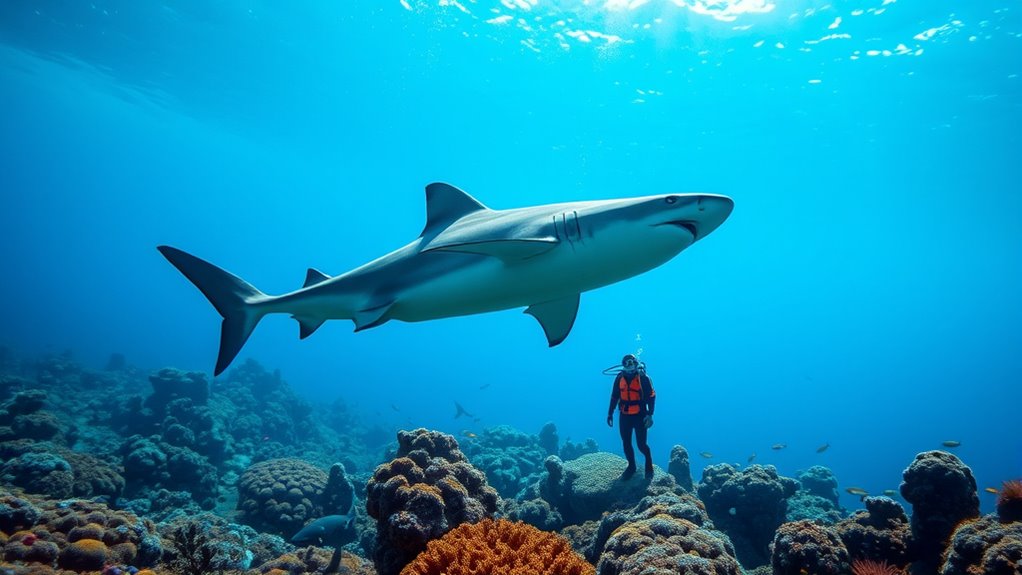
Have you ever wondered how sharks and other predators manage the risks they face in their environment? It’s a fascinating question because these creatures operate in a world filled with dangers, from changing ocean conditions to human activities. Their survival depends on sophisticated strategies like behavior adaptation and habitat preservation. Behavior adaptation involves modifying their actions to better suit their surroundings and avoid threats. For example, some sharks change their hunting times to avoid human activity, often becoming more active during dawn or dusk when humans are less present. Others may alter their movement patterns, staying close to safe zones or areas where they’re less likely to encounter threats. These adaptations aren’t random; they’re evolved responses that maximize their chances of survival in a constantly shifting environment.
Sharks adapt their behavior and change habitats to survive in a constantly shifting ocean environment.
Habitat preservation plays a essential role in enabling these natural behaviors to thrive. When their habitats are protected, sharks and predators have access to stable environments that support their behaviors. Healthy coral reefs, seagrass beds, and open ocean ecosystems serve as safe zones where they can hunt, breed, and rest without excessive disturbance. Preserving these habitats helps maintain the balance that allows predators to manage risks naturally. Some species rely heavily on specific habitats for their survival, and destruction of these areas forces them into unfamiliar, less suitable environments, increasing their vulnerability. By safeguarding these habitats, we support their ability to perform behavior adaptations effectively, reducing the likelihood of dangerous encounters and ensuring healthy predator populations.
Additionally, habitat preservation reduces the need for risky behaviors triggered by environmental stressors. When prey populations decline due to habitat loss, predators might be forced to venture into unfamiliar or more perilous areas in search of food. This increases their exposure to risks like human interactions or conflicts with other species. Conversely, when habitats are intact, predators can rely on familiar territories and established behaviors, minimizing unnecessary risks. Your support in habitat preservation not only helps maintain the ecosystems that predators depend on but also allows them to continue their natural risk management strategies effectively.
Understanding the link between behavior adaptation and habitat preservation highlights why protecting these environments is essential. It’s not just about saving individual species but about maintaining the delicate balance that allows predators like sharks to thrive and manage risks successfully. When you support conservation efforts, you’re enabling these animals to continue their natural behaviors, which are essential for their survival and the health of the entire ocean ecosystem. So, by understanding how predators adapt and the importance of habitat preservation, you can see how your actions contribute to their ongoing risk management and overall conservation.
Frequently Asked Questions
How Can I Identify Aggressive Predator Behavior Early?
To spot aggressive predator behavior early, pay attention to predator signaling like rapid movements, stiff postures, or intense eye contact. Look for early warning signs such as circling, sudden lunges, or lowered pectoral fins. These cues help you recognize when a predator is becoming aggressive, giving you time to react or retreat. Staying alert and observing these signals allows you to stay safer and avoid escalation.
What Are the Best Safety Protocols During Shark Encounters?
Imagine you’re in a silent dance, observing shark behavior and predator communication. Stay calm, keep eye contact, and avoid sudden movements to prevent provoking an attack. Use a dive buddy for added safety, and maintain a safe distance from sharks showing signs of aggression. Always follow local guidelines, carry protective gear, and exit calmly if a shark displays aggressive behavior. These protocols help you navigate encounters with confidence and safety.
How Do Local Regulations Vary for Predator Risk Management?
Local regulation differences considerably impact predator risk management, so you should always check regional predator policies before engaging in water activities. Some areas have strict shark safety protocols, like shark nets and warning systems, while others rely on public awareness and swimmer education. Understanding these regional policies helps you stay safer, as they reflect local predator behaviors and environmental conditions. Always follow the specific rules to reduce risks effectively.
Are There Specific Times When Predator Attacks Are More Likely?
Predator attacks are more likely during dawn and dusk because these times have lower light levels, making it harder to spot threats. Seasonal patterns also influence risk, with attacks increasing during warmer months when predators are more active and food sources are abundant. You should stay especially alert during these times and seasons, avoiding swimming in risky areas or water conditions to reduce your chances of an attack.
How Effective Are Deterrent Devices Against Sharks and Predators?
Deterrent devices are like shields, offering a significant advantage against sharks and predators. They effectively modify behavior, making predators less likely to approach. Modern deterrent technology, such as acoustic or electric barriers, has shown promising results, reducing attacks in some areas. While not foolproof, they’re valuable tools for increasing safety, especially when combined with other risk management measures. Your vigilance and proper equipment can make a big difference.
Conclusion
By understanding and respecting the behaviors of sharks and predators, you become a guardian, not a victim. Awareness transforms fear into caution, and caution into confidence. Remember, danger isn’t always lurking—sometimes it’s just a wave away. With vigilance and knowledge, you hold the power to navigate the waters safely. So, embrace your role as a mindful explorer—because in the dance of nature, awareness is your most trusted partner, guiding you through every ripple and ripple.