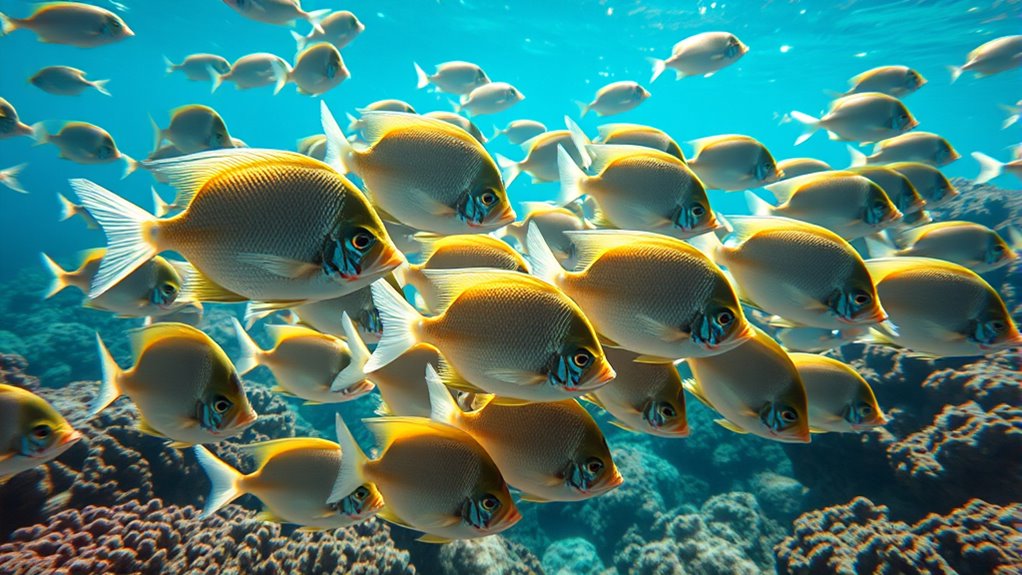

To understand fish body language, watch how they swim and interact. Steady swimming and bright colors usually mean they’re relaxed, while quick, erratic movements or dull colors suggest stress or illness. Notice if they stay close to others or isolate—this reveals their comfort level. Pay attention to fin flicks, head movements, and how they respond to their environment. Keep observing these cues, and you’ll gain a better sense of what your fish are trying to tell you.
Key Takeaways
- Observe swimming patterns: steady indicates comfort, erratic suggests stress or illness.
- Watch coloration changes: vibrant colors mean relaxation, dull shades signal stress or sickness.
- Note interactions: close proximity shows security, isolation may indicate discomfort or health issues.
- Read movement signals: fin flicks or rapid head movements often reveal agitation or agitation.
- Consider overall behavior: combining cues helps identify environmental issues and fish well-being.
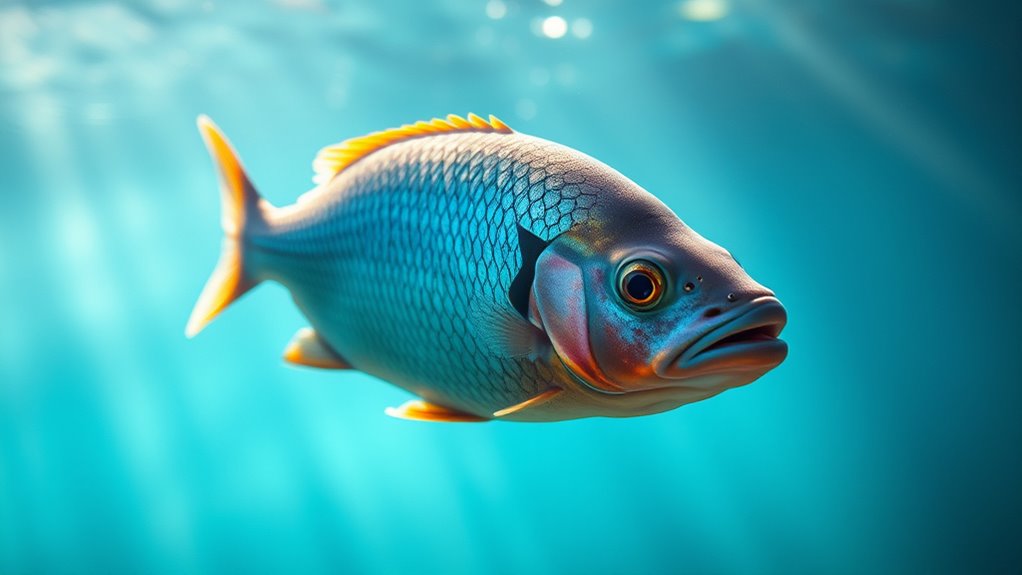
Understanding fish body language can greatly enhance your ability to interpret their behavior and improve your interactions with them. Fish communicate mainly through their movements and visual cues, which can tell you a lot about how they’re feeling or what they might need. By observing their fish swimming patterns, you can gain insights into their emotional state or health. For example, steady, purposeful swimming often indicates that a fish feels secure and comfortable. Conversely, erratic or rapid movements might signal stress, agitation, or discomfort. When you see a fish darting around unpredictably, it could be trying to escape a perceived threat or might be experiencing illness. Paying attention to these movements helps you respond appropriately, whether that means adjusting tank conditions or giving the fish some space.
Coloration cues are equally revealing. Fish often change their coloration based on mood, environment, or health. Bright, vibrant colors usually indicate that a fish is relaxed and happy, especially during social interactions or feeding time. On the other hand, dull or faded colors often suggest stress, fear, or sickness. Some species display specific color patterns when they’re feeling aggressive or territorial, such as darkening or dark stripes. Recognizing these coloration cues allows you to interpret their emotional state more accurately, helping you prevent conflicts or provide the right environment for their well-being. If you notice a sudden change in a fish’s coloration, it’s a sign to check the water quality, temperature, or other environmental factors that might be affecting them. Understanding filtration and water quality can help you maintain optimal conditions for your fish’s health and behavior.
In addition to swimming patterns and coloration cues, observe how fish interact with each other and their surroundings. A fish that stays close to others may be feeling secure, while one that isolates itself might be stressed or unwell. Rapid head movements or fin flicks can also indicate agitation or discomfort. Learning to read these subtle signals takes practice, but it pays off by giving you a clearer picture of your fish’s state of mind. The more attentive you are to these cues, the better you’ll be at creating a healthy, stress-free environment. By understanding the language of body movements, colors, and interactions, you foster a stronger, more intuitive bond with your aquatic pets, ensuring they thrive and remain comfortable in their home.
Frequently Asked Questions
How Can I Tell if a Fish Is Stressed?
You can tell a fish is stressed by observing its signaling and stress cues. Look for rapid or erratic swimming, gill flaring, or hiding more than usual. If your fish is rubbing against objects or staying near the water’s surface, these are signs of stress. Changes in color, loss of appetite, or clamped fins also indicate distress. Recognizing these cues helps you address issues before they harm your fish.
Do Different Species Communicate Differently Through Body Language?
Think of fish like different characters in a story; each has its own way of speaking through species-specific gestures. You’ll notice some use vivid displays, while others rely on subtle shifts, all part of their visual communication. These variations help you understand their mood and intentions. By observing these unique signals, you become a translator, deciphering the unspoken language that varies from species to species, enriching your connection with your aquatic friends.
Can Fish Body Language Indicate Health Issues?
Yes, fish body language can indicate health issues. Watch their Fish coloration for dullness or unusual spots, which may signal stress or disease. Pay attention to fin movements; if fins are clamped or frayed, it could be a sign of illness. Changes in behavior, combined with these signs, help you catch health problems early and guarantee your fish stays happy and healthy.
How Do Environmental Changes Affect Fish Body Language?
Environmental changes, like fluctuations in aquarium temperature and water quality, directly influence your fish’s body language. When the temperature rises or drops unexpectedly, your fish might swim erratically or stay near the surface. Poor water quality causes them to hide, flick their fins, or gasp at the surface. Keep the environment stable by monitoring these factors regularly, so your fish feel comfortable, healthy, and exhibit natural behaviors.
Is There a Way to Train Fish to Respond to Signals?
In the spirit of being a modern-day aquanaut, you can train fish to respond to signals through consistent positive reinforcement. By observing fish signaling and understanding aquatic communication, you can create specific cues for desired behaviors. Use treats or gentle taps to associate signals with actions, gradually shaping their responses. Patience is key, and over time, your fish will learn to interpret your signals, fostering better communication and cooperation.
Conclusion
By paying close attention to your fish’s body language, you can better understand their needs and feelings. Did you know that studies show stressed fish often hide or become less active? Recognizing signs like fin flicks or swimming patterns helps prevent health issues and improves their well-being. So, stay observant and responsive—your fish will thank you with a healthier, happier life. Remember, a little awareness goes a long way in building a strong bond with your aquatic friend.