To prepare for your dives, focus on calming your mind through controlled breathing techniques like diaphragmatic breathing or box breathing. These methods help you relax, reduce anxiety, and improve focus before water entry. By slowing and deepening your breaths, you activate your body’s relaxation response, making you more alert and centered. Developing this skill creates a peaceful mindset that boosts your confidence and safety, and exploring more can deepen your ability to stay calm under water.
Key Takeaways
- Use diaphragmatic breathing to promote relaxation and reduce pre-dive anxiety.
- Practice box breathing to establish a calming, rhythmic breath pattern.
- Focus solely on your breath to quiet the mind and enhance mental clarity.
- Incorporate breathing exercises before water entry to activate the parasympathetic nervous system.
- Regularly practicing these techniques builds mental resilience for safer, more confident dives.
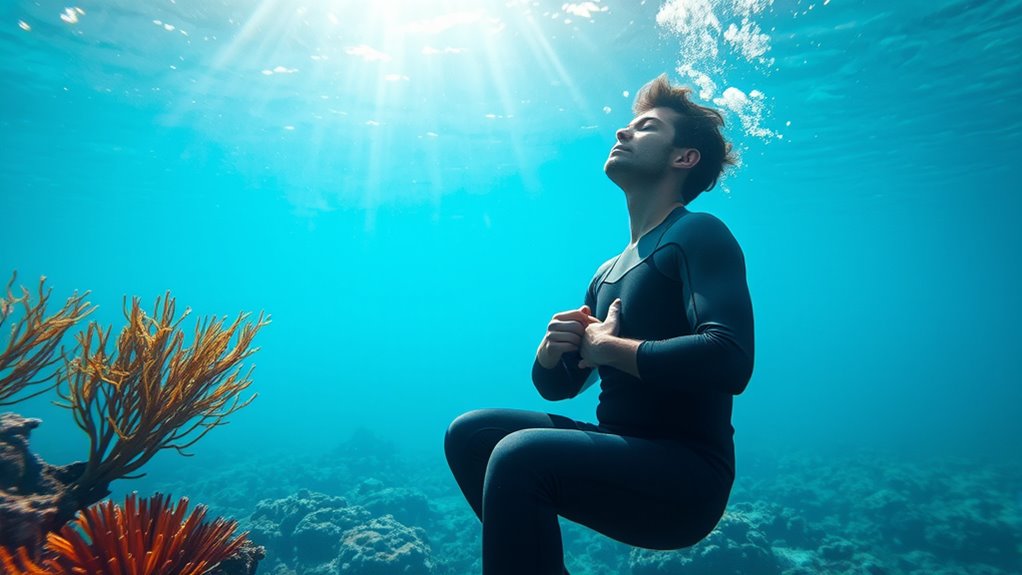
Have you ever wondered how your breath can influence your state of mind? When preparing for a dive, your breathing plays a pivotal role in setting the tone for a safe and successful experience. Using specific breathing techniques can help you achieve mental calmness, which is essential before plunging into the water. These techniques aren’t just about oxygen intake; they are powerful tools to regulate your nervous system, reduce anxiety, and sharpen your focus. You might notice that when you slow down your breath and deepen each inhale, your mind starts to quiet, and your body feels more grounded. This mental calmness is indispensable because it helps you stay alert without becoming overwhelmed by excitement or fear.
To harness these benefits, start by practicing diaphragmatic breathing—also known as belly breathing—well before your dive. Inhale slowly through your nose, allowing your diaphragm to expand and fill your lungs completely. Then, exhale gently through your mouth or nose, making sure to release all the air. Repeat this process several times, focusing solely on your breath. By doing so, you activate the parasympathetic nervous system, which promotes relaxation and reduces stress. This method is especially effective because it shifts your focus away from distracting thoughts and physical sensations that might cause anxiety. Over time, incorporating breathing techniques into your routine helps build mental resilience, so you’re better prepared when diving.
Another effective approach is box breathing, which involves inhaling for a count of four, holding your breath for four, exhaling for four, and pausing for another four before repeating. This rhythmic pattern creates a sense of order and control, helping to calm a racing mind. When you practice box breathing regularly, it becomes a mental anchor—something you can turn to whenever you feel nerves creeping in. It’s simple but powerful, providing you with a quick way to regain composure and focus on the task ahead. These breathing exercises can be done anywhere—before entering the water, during your safety stop, or even during surface intervals. They serve as mental resets, allowing you to maintain a steady, peaceful mindset.
Additionally, understanding your zodiac sign compatibility can offer insights into your emotional responses and how you handle stress, which can be beneficial in calming your mind before a dive. Ultimately, mastering breathing techniques cultivates mental calmness that’s essential for diving. When you’re relaxed and centered, you’re more attuned to your body’s signals, better able to manage your air consumption, and more receptive to your surroundings. The calmness gained from deliberate breathing not only enhances your safety but also enriches your overall diving experience. It’s a simple skill with profound benefits—one that empowers you to approach each dive with confidence, clarity, and tranquility.
Frequently Asked Questions
How Long Should a Typical Breath-Up Session Last?
A typical breath-up session lasts about 10 to 15 minutes. During this time, you focus on breath control and mental preparation, gradually calming your mind and body. You should start with light breathing exercises, then deepen your breath control to optimize oxygen levels. This duration allows you to achieve the right mental state and physical readiness, ensuring you’re relaxed and prepared before your dive.
Are There Specific Relaxation Techniques Best for Divers?
You should focus on meditation for divers to calm your mind and reduce anxiety before a dive. Visualization techniques are also effective; imagine yourself completing the dive smoothly and safely. These methods help you stay relaxed and improve your breathing control. Practice them regularly, especially before dives, to enhance your mental readiness and guarantee a more comfortable, safe experience underwater.
Can Breath-Up Routines Be Personalized for Different Skill Levels?
Yes, breath-up routines can be personalized for different skill levels. You should incorporate customized routines that match your experience and comfort, allowing for skill adaptation over time. Beginners might focus on simple breathing exercises to build confidence, while advanced divers can include more complex techniques. Adjusting your routine helps optimize relaxation and performance, ensuring you stay calm and in control before dives.
How Do Mental States Affect Breath-Up Effectiveness?
Your mental state greatly impacts breath-up effectiveness. When you’re mindful and focused, your breathing becomes more controlled and efficient, helping you relax and conserve oxygen. Practicing mindfulness and stress management techniques before diving reduces anxiety, allowing you to stay calm and centered. This mental readiness enhances your ability to perform controlled breaths, improving overall dive safety and comfort. Staying mentally prepared is just as important as physical preparation.
What Common Mistakes Should Be Avoided During Relaxation?
You should avoid relaxation pitfalls like forcing your muscles or overthinking, which can increase tension. Don’t rush through breath-up exercises or skip deep, diaphragmatic breathing, as these are common breath-up errors. Stay calm and focus on slow, controlled breaths. Avoid distractions and maintain a relaxed mindset, since tension or anxiety can hinder your relaxation. Consistent, mindful practice helps you recognize and correct these mistakes, ensuring a more effective relaxation process.
Conclusion
By mastering breath-up and relaxation techniques, you can substantially enhance your diving experience. Did you know that proper breathing can reduce anxiety by up to 40%? Staying calm and focused not only improves your safety but also allows you to enjoy the underwater world more fully. So, take the time to practice these skills—your next dive will be safer, more enjoyable, and unforgettable. Breathe deeply, relax, and explore with confidence.