
Long drives can worsen your pet’s travel sickness because of motion, noise, and unfamiliar surroundings that increase stress. Poor ventilation, direct sunlight, or drafts make them uncomfortable, while lack of breaks can lead to nausea. Your pet’s anxiety is also affected by your attitude and environment. Creating a calm atmosphere, managing noise, stopping frequently, and using comfort strategies can help, but there’s more you should know to make travel easier for your furry friend.

Get garden gear delivered free with Prime
- Fast, free delivery on millions of items
- Prime Video, Amazon Music and more included
- Member-only deals all year
Key Takeaways
- Uncomfortable or unstable carriers can increase motion sickness in pets during long drives.
- Excessive noise, abrupt stops, or sudden acceleration can worsen travel sickness symptoms.
- Lack of regular breaks prevents pets from stretching and can heighten nausea and discomfort.
- Poor ventilation or overheating inside the carrier can intensify travel-related stress and sickness.
- Owner anxiety or agitation may transfer to pets, increasing their travel stress and nausea.

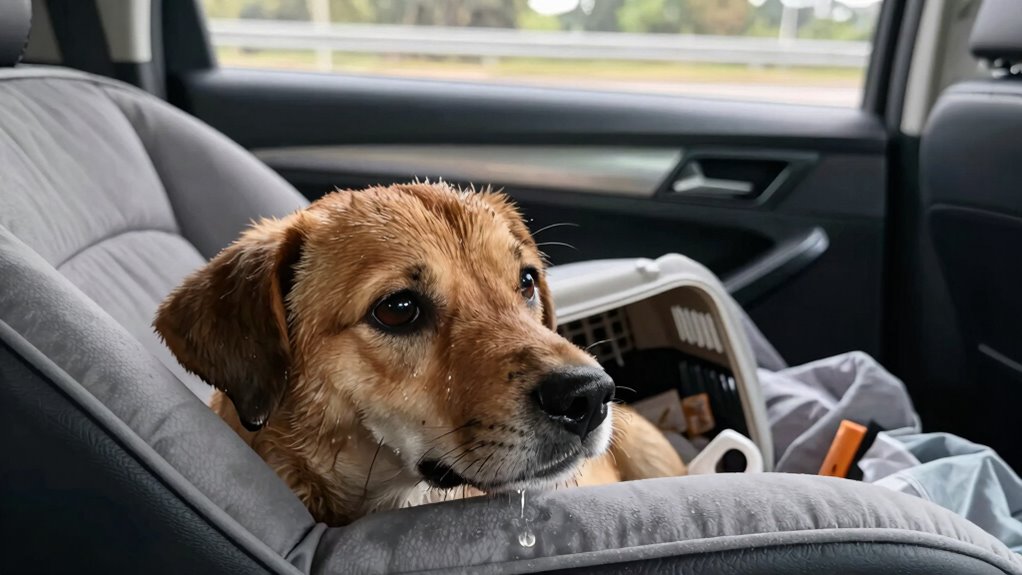
Another essential aspect is carrier comfort tips. The carrier acts as your pet’s safe space during travel, so it needs to be comfortable and secure. Line it with soft bedding that provides support, and make sure it’s ventilated properly to prevent overheating. Avoid placing the carrier in direct sunlight or near drafts, which can add to your pet’s stress. You might also consider covering the carrier with a light cloth to create a cozy, den-like environment that can help soothe your pet and reduce anxiety. During stops, never leave your pet in the car alone, especially if it’s hot, as heat can exacerbate travel sickness and stress. Ensuring proper air circulation in the carrier can significantly improve your pet’s comfort during travel. Long drives often worsen travel sickness because of continuous motion, noise, and unfamiliar surroundings. Your pet’s sensitivity to these factors means that managing their environment is key. Frequent breaks give your pet a chance to stretch, hydrate, and get fresh air, which can help alleviate nausea. When you stop, bring your pet out of the carrier carefully and let them walk around on a leash if possible. This movement can also help reduce queasiness. Keep in mind that abrupt stops and accelerations can increase discomfort, so drive smoothly when possible. Additionally, familiar scents and calming calming techniques can help ease your pet’s anxiety during travel. Creating a consistent routine can also reduce stress for your pet, making long drives more manageable. Using natural remedies such as calming sprays or supplements might also be beneficial in some cases. Lastly, your attitude and preparation play a significant role. Stay calm and reassuring, as pets pick up on your emotions. If you’re anxious, they’ll be more likely to feel anxious too. Use pet motion strategies consistently, and stick to your carrier comfort tips to create a predictable and safe environment. Over time, these steps can help your pet adjust better to travel, making long drives less stressful and more enjoyable for everyone involved.
pet travel carrier with soft bedding
As an affiliate, we earn on qualifying purchases.
As an affiliate, we earn on qualifying purchases.
Frequently Asked Questions
Can Travel Sickness in Pets Be Completely Prevented?
Yes, travel sickness in pets can be completely prevented with consistent effort. You should explore alternative remedies like herbal supplements or natural calming techniques that help soothe your pet’s anxiety. Additionally, use calming techniques such as familiar blankets, calming sprays, or gentle music to create a comfortable environment. Preparing your pet for travel and starting these methods early can markedly reduce or eliminate travel sickness, making trips more enjoyable for both of you.
Are Some Breeds More Prone to Travel Sickness Than Others?
Some breeds are definitely more prone to travel sickness than others, and it’s like they carry a genetic blueprint for it. Breed susceptibility varies because genetic factors influence their inner ear balance and anxiety levels. Small breeds, especially those with delicate frames or anxious temperaments, tend to be more vulnerable. You can’t change genetics, but understanding your pet’s breed susceptibility helps you prepare better for long drives.
How Early Can Signs of Travel Sickness Appear in Pets?
Signs of travel sickness can appear within minutes to an hour of your pet starting a trip. You might notice symptoms like drooling, whining, or restlessness, which are linked to motion sickness and anxiety triggers. The sooner you observe these signs, the better you can help your pet. Offering a calm environment, frequent breaks, and gentle reassurance can ease their discomfort and prevent worsening symptoms during long drives.
Does Age Influence a Pet’s Susceptibility to Travel Sickness?
Absolutely, age factors into a pet’s susceptibility to travel sickness. Young pups and kittens, still in their developmental stages, often face more frequent fears and flutters, making them more prone to nausea during long drives. As pets mature, their tolerance typically stabilizes, but older animals may also experience increased sensitivity due to health issues. Recognize these age-related vulnerabilities to plan proper precautions, ensuring a smoother, safer trip for your furry friend.
Are There Specific Foods That Help Reduce Travel Sickness?
Certain foods can help reduce your pet’s travel sickness, especially when combined with pet calming strategies and dietary supplements. Offer bland, easily digestible treats like boiled chicken or rice before the trip to settle their stomach. Consider natural dietary supplements like ginger or calming treats designed for travel. These options can ease nausea, keep your pet calm, and make long drives more comfortable for both of you.
calming sprays for travel anxiety in dogs
As an affiliate, we earn on qualifying purchases.
As an affiliate, we earn on qualifying purchases.
Conclusion
So, next time you plan a long drive with your pet, don’t forget—your furry friend’s comfort isn’t just about the destination. Ironically, all those precautions we take to make travel easier can backfire, making your pet more miserable. You might think you’re doing the right thing, but sometimes, it’s the little things—like ignoring their nausea—that turn a fun trip into a stressful ordeal. After all, isn’t it about time we prioritize their happiness over our own convenience?
pet travel water bottle and bowl
As an affiliate, we earn on qualifying purchases.
As an affiliate, we earn on qualifying purchases.
As an affiliate, we earn on qualifying purchases.
Fall Picks
fall essentials
As an affiliate, we earn on qualifying purchases.