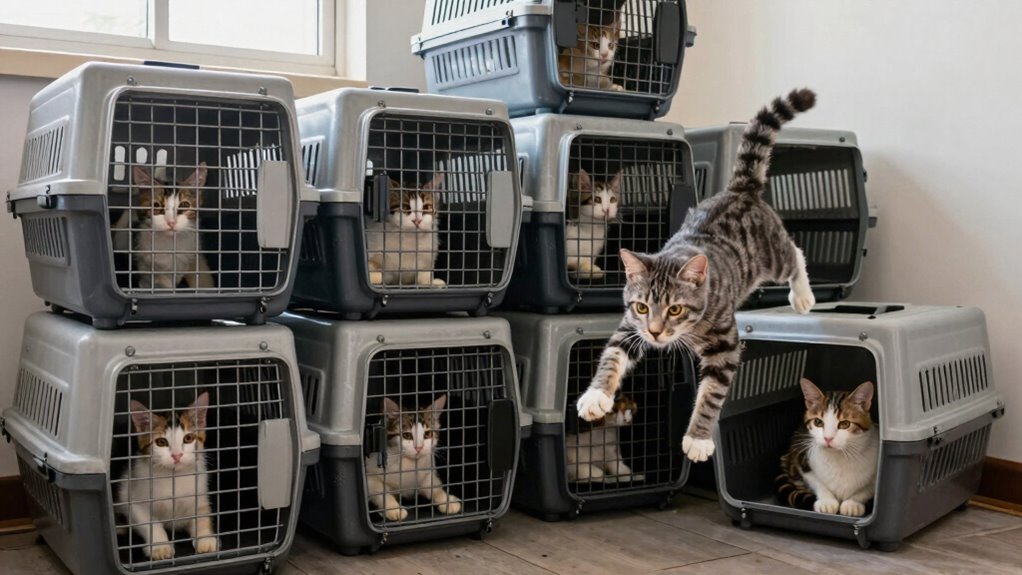

To help your cat stay calm during evacuation, keep their crate in a quiet, familiar spot before you leave, and cover it with a lightweight cloth for security. Speak softly and reassure your cat throughout the journey, avoiding sudden movements or loud noises. When you arrive, confine them to a small, peaceful space and gradually introduce new areas over time. If you’d like to discover more tips on easing evacuation stress, keep exploring.

Get garden gear delivered free with Prime
- Fast, free delivery on millions of items
- Prime Video, Amazon Music and more included
- Member-only deals all year
Key Takeaways
- Keep the crate in a familiar, quiet spot and cover it during travel to create a sense of security.
- Use soft speech and gentle reassurance to calm the cat throughout the evacuation process.
- Minimize loud noises and sudden movements during loading and transit to reduce stress.
- Confine the cat to a small, quiet area at the new location with familiar items for initial comfort.
- Maintain routines and introduce new environments gradually to help the cat adjust calmly.
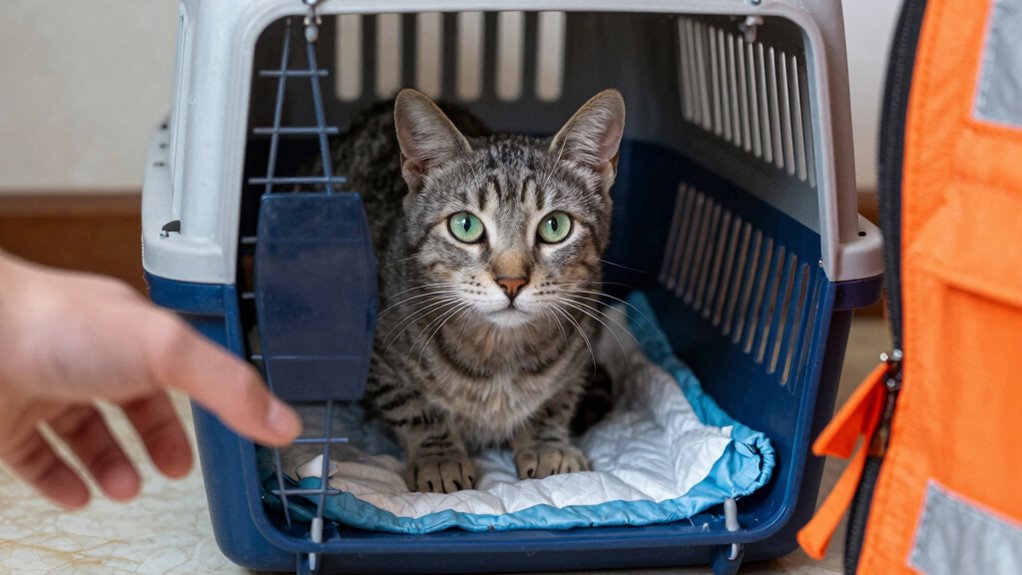
When a sudden move becomes unavoidable, keep the crate in a quiet, familiar spot in your home until departure. Familiarity helps reduce pet anxiety, so maintaining some consistency is key. During packing and loading, keep your cat’s crate accessible, and try to minimize loud noises or disruptive activity nearby. When it’s time to transport your cat, cover the crate with a lightweight cloth. This provides a sense of security by blocking out confusing sights and sounds, helping to keep your cat calm. During the trip, speak softly and reassure them; avoid sudden movements or loud noises that might escalate their panic. Additionally, using familiar objects inside the crate can comfort your cat further during transit. Being aware of your pet’s stress signals can help you intervene early if they seem overwhelmed. Understanding animal behavior during stressful situations can also guide you in providing better support. Recognizing common stress responses allows you to tailor your approach and help your cat feel more secure.
Once you arrive at the new location, keep your cat confined to a small, quiet room with their familiar bedding, toys, and litter box. This space should serve as their safe zone while they acclimate to the new environment. Avoid overwhelming them with too many new sights and smells all at once. Instead, gradually introduce them to the rest of the house, remaining patient and gentle. Remember, your calm demeanor can influence your cat’s emotional state; if you’re anxious, they’ll pick up on it. Consistent routines, familiar objects, and gentle reassurance go a long way in easing pet anxiety during this *change*. With patience and preparation, you can help your feline friend navigate the upheaval with less panic and more confidence.
cat travel crate with soft cover
As an affiliate, we earn on qualifying purchases.
As an affiliate, we earn on qualifying purchases.
Frequently Asked Questions
How Can I Tell if My Cat Is Truly Calm Inside the Crate?
You can tell if your cat is truly calm inside the crate by observing its behavior. Look for relaxed body language, such as lying down comfortably with paws tucked in. During crate training, a calm cat may also gently purr or rest peacefully without trying to escape. If your cat shows signs of stress—hissing, scratching, or tense muscles—it’s not fully calm. Consistent positive reinforcement helps your cat stay relaxed during these moments.
Are There Specific Scents That Can Help Relax My Cat During Evacuation?
Yes, there are specific scents that can help relax your cat during evacuation. Aromatherapy options like synthetic calming pheromones, such as Feliway, mimic natural signals that promote relaxation. You can also try lavender or chamomile essential oils, but make sure they’re properly diluted and used safely. These scents can help soothe your cat, making the experience less stressful and encouraging calm behavior inside the crate.
What Are Signs of Extreme Stress or Fear in Cats During Emergencies?
Like a leaf in a storm, your cat may show signs of extreme stress or fear during emergencies. Look for rapid breathing, dilated pupils, hiding, trembling, or vocalizing loudly. Recognizing these signs is essential for emergency preparedness and pet safety tips. When you see these behaviors, stay calm, speak softly, and give your cat space. Providing comfort and reassurance helps reduce their anxiety and keeps them safe during stressful situations.
How Long Should I Keep My Cat in the Crate Before Evacuation?
You should keep your cat in the crate for at least 15-20 minutes before evacuation, allowing it to settle and become familiar with the space. During this time, make certain the litter box is nearby, and maintain your usual playtime routines to reduce stress. Avoid sudden movements or loud noises, and gently reassure your cat. This helps ease anxiety and makes the shift smoother during the emergency.
Can Training With Treats Improve My Cat’s Response to Sudden Moves?
Yes, training with treats can improve your cat’s response to sudden moves. By using treat reinforcement, you encourage calm behavior and positive associations with movement. When you reward your cat for staying calm during training, it’s more likely to remain relaxed during actual evacuation. Consistent practice helps your cat develop confidence and reduces panic, making emergency situations less stressful for both of you.
As an affiliate, we earn on qualifying purchases.
Conclusion
Remember, even if your cat jitters at the slightest movement, your calmness makes all the difference. Using gentle, steady actions and familiar crates can ease their anxiety during evacuations. Sure, it’s tempting to rush, but patience keeps everyone safe. Don’t think it’s too much effort—your calm approach reduces panic and helps your cat feel secure. With a little preparation, you both can face emergencies confidently, turning chaos into a manageable, even manageable, experience.
As an affiliate, we earn on qualifying purchases.
As an affiliate, we earn on qualifying purchases.
Fall yard work Picks
leaf blowers
As an affiliate, we earn on qualifying purchases.