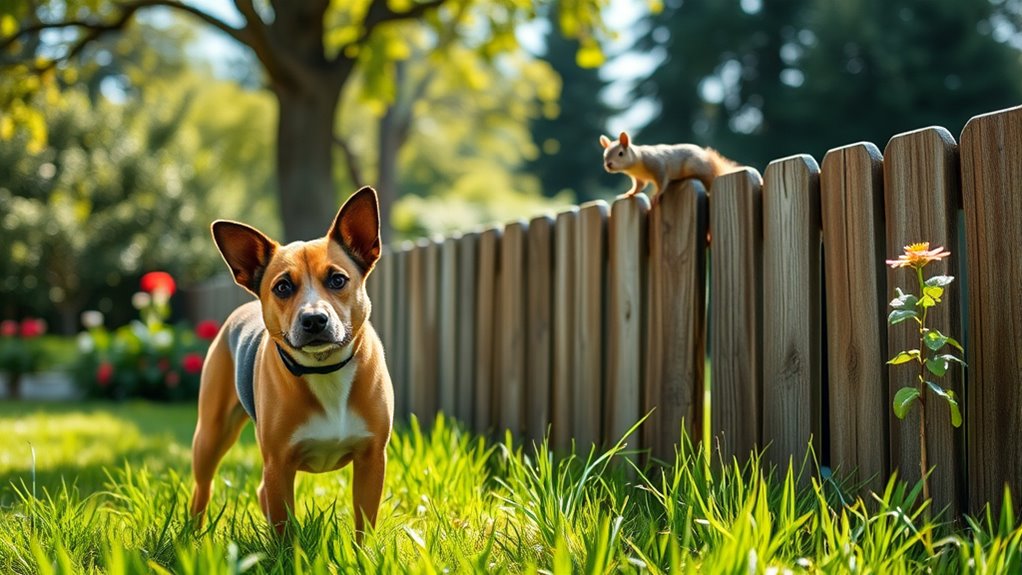

To safeguard your pet from wildlife, supervise outdoor time especially during dawn and dusk when animals are most active. Use leashes, secure enclosures, and deterrents like bells or sprays to keep wildlife at bay. Remove attractants such as trash, spilled birdseed, or pet waste from your yard. Keep your pets vaccinated and ensure they’re protected with proper ID tags. Stay vigilant and learn more ways to keep your pets safe from wildlife encounters.
Key Takeaways
- Supervise pets outdoors during dawn and dusk, and keep them on a leash or in enclosed areas to prevent wildlife encounters.
- Remove attractants like trash, pet waste, and spilled birdseed to reduce wildlife attraction to your yard.
- Ensure pets are vaccinated against rabies, distemper, and other diseases to prevent transmission from wild animals.
- Use outdoor deterrents such as noise makers, bells, or citronella sprays to discourage wildlife from approaching pets.
- Regularly inspect and secure fences, holes, and entry points to prevent wildlife from entering your yard and hiding near pets.
Supervising Pets Outdoors During Peak Wildlife Activity
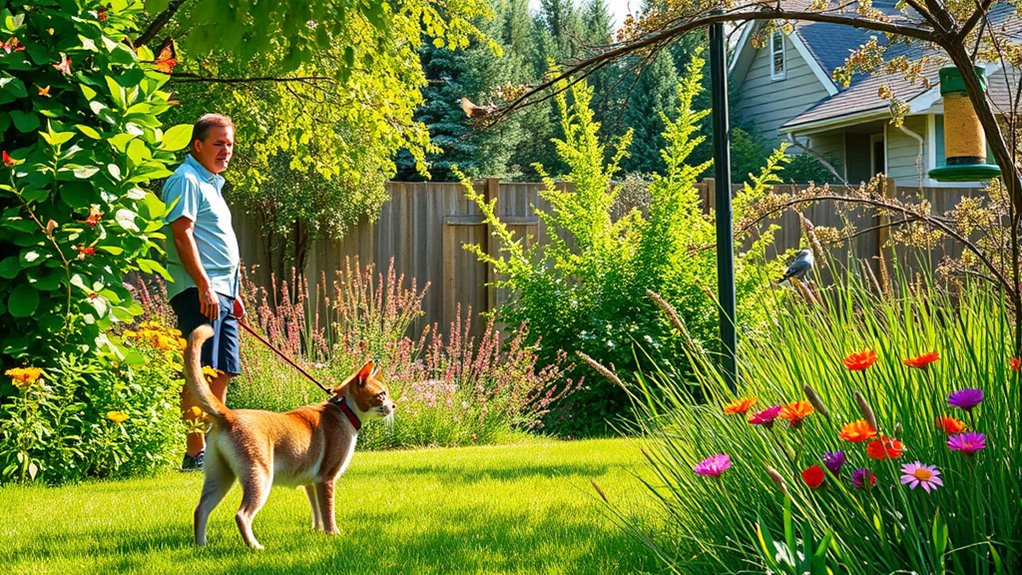
To protect your pets from unexpected wildlife encounters, it’s essential to supervise your pets closely during dawn and dusk when animals like raccoons, skunks, and coyotes are most active. During these peak wildlife activity times, never leave your pets outdoors unsupervised. Keep them on a leash or in a secure enclosed area to maintain control and prevent sudden interactions. Regularly check your yard for gaps or holes that wildlife could use to enter. Using noise deterrents, like shouting or clapping, can help alert wildlife and discourage them from approaching your pets. Avoid leaving pets outside unattended during these hours, especially in areas with known coyote, raccoon, or skunk activity. Prioritizing supervision ensures your pets’ safety during their outdoor adventures. Incorporating automation technologies can also help monitor outdoor spaces and alert you to wildlife presence in real-time.
Avoiding Attractants and Managing Yard Habitats

Reducing attractants in your yard is essential for keeping wildlife at bay and protecting your pets. Remove trash, pet waste, and spilled birdseed to eliminate easy food sources that draw animals. Trim trees, bushes, and shrubs regularly to prevent wildlife like raccoons and skunks from using them as pathways or nesting sites. Seal holes and gaps in fences and around sheds to block entry points and nesting opportunities. Store firewood, compost, and outdoor equipment away from your home to minimize shelter options for wild animals. Using native plants can also help, as they provide natural food, cover, and nesting sites, reducing the need for supplemental feeders. Managing your yard habitat effectively limits wildlife populations near your home, decreasing risks to your pets.
Keeping Pets Vaccinated and Up-to-Date on Health Protections

Making sure your pets are current on core vaccines like rabies and distemper is essential for their health and safety. Regular vet visits help keep their immunity strong and prevent disease spread from wildlife. Staying on top of vaccination records and booster shots protects both your pets and the community. Additionally, understanding indoor air quality and minimizing pollutants can further support your pet’s health, especially in urban environments where air may be compromised. Ensuring proper vaccination efficacy can help maintain their protection against diseases over time. Monitoring symptoms of infectious diseases can help you identify potential health issues early and seek prompt veterinary care. Staying informed about animal disease prevention strategies is crucial for safeguarding your pet’s well-being and preventing outbreaks. Monitoring vaccine efficacy ensures ongoing protection for your pets against common diseases.
Essential Vaccination Schedule
Keeping your pet’s vaccinations current is essential for shielding them from diseases that wildlife can transmit, such as rabies, distemper, and leptospirosis. Following an vital vaccination schedule ensures your pet stays protected and supports overall pet safety. Veterinarians recommend updating core vaccines annually or as needed based on your pet’s lifestyle and risk factors. Rabies vaccination is particularly important, as it’s legally required in many areas and vital for wildlife protection. Regular booster shots for vaccines like DHLPP (distemper, hepatitis, leptospirosis, parvovirus, and parainfluenza) help maintain immunity against common wildlife-borne illnesses. Keeping detailed records of your pet’s vaccination history allows timely updates and ensures your pet remains protected from potential wildlife exposure, promoting long-term health and safety. Additionally, understanding home improvement strategies can help create a safer environment for pets by minimizing hazards around the house. Proper exfoliation of your pet’s skin can also support healthy skin and coat, reducing the risk of infections.
Protecting Pets and Community
Maintaining your pet’s vaccination status is key to safeguarding both your animal and the wider community. Pets that are current on vaccines like rabies, distemper, and leptospirosis are better protected against diseases transmitted by wildlife. Regular veterinary check-ups ensure your pets stay up-to-date on necessary vaccinations and parasite preventatives, reducing their risk of illness. Carrying current tags and collars with vaccination records helps authorities identify and protect pets if they encounter wildlife. Vaccinating pets not only protects your animals but also helps prevent the spread of diseases within the community, reducing potential outbreaks. Staying vigilant with vaccinations is a crucial step in protecting both pets and the community. Positive thinking techniques can also help pet owners maintain a proactive approach to health and safety. If your pet is bitten or exposed to wildlife, immediate veterinary evaluation is indispensable to determine if booster shots or treatment are needed. Regularly monitoring urban wildlife interactions can further help in reducing the risk of disease transmission to your pets. Additionally, leveraging AI-driven data analysis can enhance your understanding of local wildlife patterns, allowing for more targeted preventative measures. Understanding the history of zoonotic diseases can also inform better protective strategies for pets and humans alike. Staying vigilant with vaccinations is a crucial step in protecting both pets and the community, especially as disease transmission risks can increase with changes in wildlife populations and behaviors.
Proper Use of Leashes and Outdoor Deterrents for Dogs
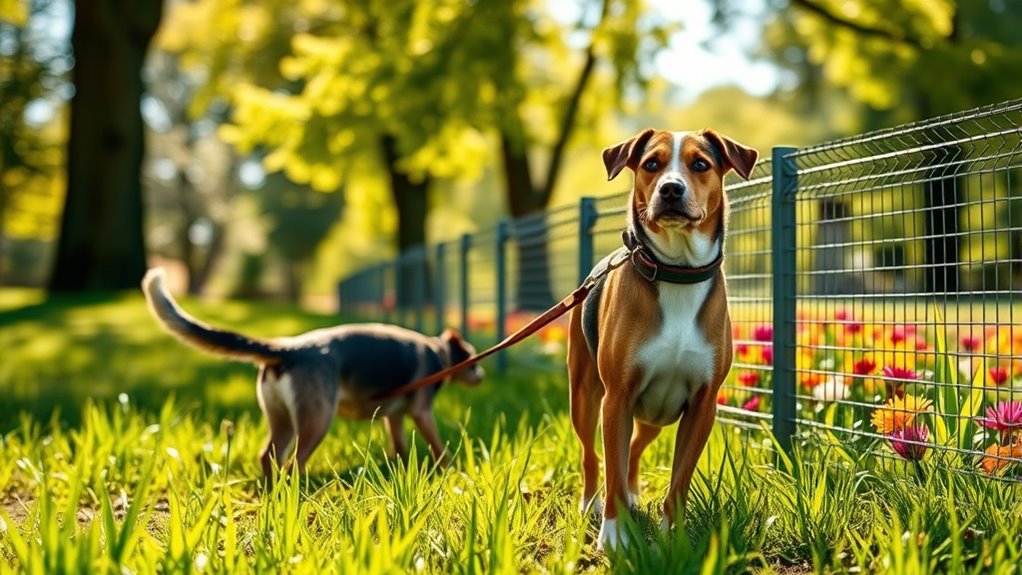
Using a sturdy, well-fitted collar and a leash at least six feet long is essential when walking your dog outdoors to stay in control and prevent wildlife encounters. Proper leash use helps you respond quickly if your dog spots wildlife or gets distracted. Consider adding deterrents like bells on your dog’s collar, citronella sprays, or Pet Corrector to alert wildlife and discourage pursuit. Regularly check your leash and harness for wear, ensuring they’re secure to avoid escapes. Visualize your dog on a leash, surrounded by potential wildlife, yet kept safe by these tools:
| Dog on leash | Wildlife nearby | Deterrents in use |
|---|---|---|
| Controlled, alert | Approaching cautiously | Bell jingling |
| Secure harness | Sensing movement | Citronella spray |
| Safe enclosure | Wildlife at bay | Pet Corrector audible |
Being aware of creative practice can help you develop better strategies for managing your pet’s outdoor safety and responsiveness. Incorporating precious metals into your pet’s safety plan might seem unconventional, but it highlights the importance of diversified investment strategies to safeguard your financial future. Understanding vacuums for dust removal in 2024 can also assist in maintaining a clean environment that supports your pet’s health and reduces allergens indoors. Familiarity with best outdoor safety tools can enhance your preparedness and ensure your pet’s well-being during outdoor adventures. Additionally, choosing a home security system with appropriate monitoring options can provide peace of mind while your pet is outside or indoors.
Protecting Indoor Cats and Managing Outdoor Access

Keeping your cats indoors from the start shields them from dangers and extends their lifespan. Providing engaging toys and window perches satisfies their instincts and keeps them entertained. When outdoor access is necessary, supervise their time outside or use secure options like a catio to keep them safe. Additionally, selecting a suitable dog name can help foster a sense of companionship and security for your pet in various environments. Ensuring proper pet safety measures and regular veterinary check-ups further enhances their well-being and reduces risks associated with outdoor exposure. Practicing responsible environmental considerations helps protect local wildlife and preserves natural habitats for all outdoor pets. Incorporating animal behavior understanding can also improve your ability to recognize signs of stress or discomfort in your pets, promoting their overall health. Regular use of portable camping gear can make outdoor excursions safer and more comfortable for your pets.
Keep Cats Indoors
To safeguard your indoor cats and guarantee they live long, healthy lives, it’s best to keep them indoors from the start. Keeping cats indoors helps protect your pets from dangers like traffic, predators, and infectious diseases, which can drastically reduce their lifespan. As a pet owner, providing indoor enrichment like toys, scratching posts, and window perches keeps cats mentally stimulated and satisfied. If outdoor access is desired, building a screened-in enclosure or catio offers a safe environment for fresh air and sunshine without risking wildlife or traffic hazards. Leash training your cats with harnesses allows supervised outdoor time, maintaining control and safety. Regular nail trimming, reflective collars, and ID tags help protect your pets during outdoor excursions, ensuring they stay safe and secure.
Use Enrichment Options
Providing engaging enrichment options indoors is essential for keeping your pet happy and preventing curiosity about outdoor areas. Toys, scratching posts, and window perches help keep your cat mentally stimulated and physically active. Regularly offering indoor-safe greens like wheatgrass or catnip helps fulfill natural foraging instincts, reducing the desire to explore outside. Building a screened-in porch or catio lets your pet enjoy outdoor sights and smells safely, helping keep them content without risking wildlife encounters. Using a leash and harness for supervised outdoor time also helps manage outdoor access, ensuring safety while satisfying your pet’s curiosity. Overall, enriching your indoor environment helps keep your pet occupied, helping prevent unwanted outdoor adventures and protecting wildlife.
Supervise Outdoor Time
Supervising outdoor time is essential for protecting your indoor cats and managing their access to the outdoors. When you supervise outdoor time, you reduce the risk of your pets hunting or encountering wildlife. Using a leash or long-line helps keep control and prevents spontaneous wildlife interactions, especially during dawn and dusk when animals are most active. Regularly check your yard for hiding spots or entry points that wildlife might use to access your outdoor pets. Limiting outdoor access during high-risk times and areas further minimizes danger. Keeping your cats in screened enclosures or indoors when possible is also effective. By supervising outdoor time, you actively protect your pets and help preserve nearby wildlife, creating a safer environment for everyone.
Responding Effectively to Wildlife Encounters and Incidents
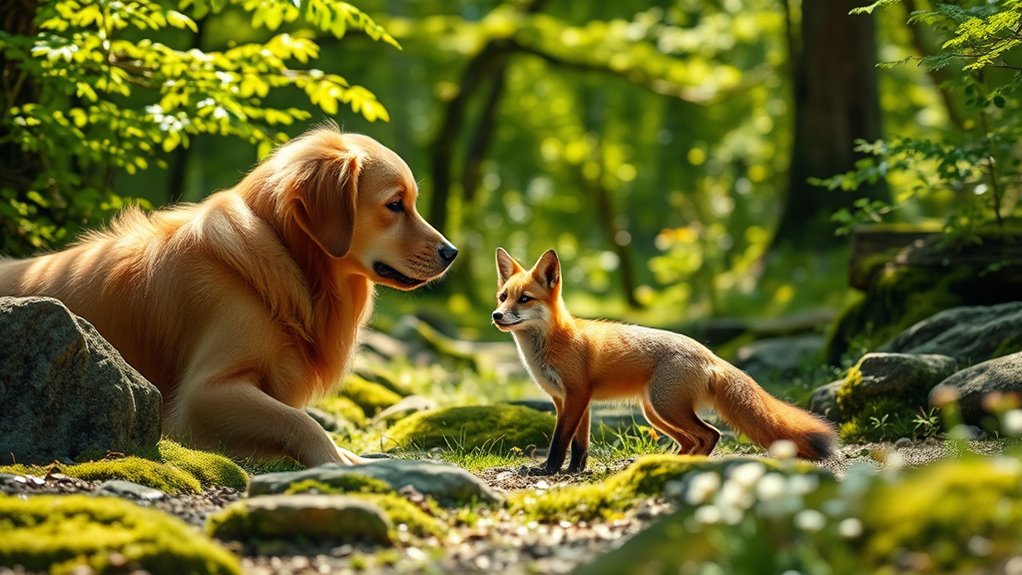
When you encounter wildlife, staying calm and acting quickly can make a big difference in ensuring safety. Keep your pet on a leash to maintain control and prevent it from approaching the animal. Use a deterrent like loud shouting or stomping to appear larger and discourage the wildlife from attacking. If the animal approaches your pet, throw objects such as sticks or rocks to distract it while slowly backing away, always facing the animal. In case of an attack, fight back with whatever you have, aiming to protect your pet’s crucial areas. Seek immediate veterinary care if your pet is bitten or scratched. If safe, photograph the animal before leaving, and report aggressive or sick wildlife to local authorities to prevent future incidents.
Frequently Asked Questions
How Can We Protect Pets From Wildlife?
To guard your pets from wildlife, you need to be proactive. Secure your yard with a tall, smooth fence to block animals from entering. Always supervise your pets outdoors, especially during dawn, dusk, and night when wildlife is most active. Store pet food and trash securely inside, and keep your pets up-to-date on vaccinations. Use noise deterrents like shouting or repellents to keep wild animals at bay and make certain your pets stay safe.
How Do I Protect My Cat From Wild Animals?
To protect your cat from wild animals, keep it indoors or in a secure screened enclosure to avoid encounters with predators like coyotes and hawks. Attach a bell or beeping collar to alert wildlife of your cat’s presence and reduce hunting chances. Avoid letting your cat out during dawn and dusk when predators are more active. Providing indoor toys and perches keeps your cat entertained and less inclined to venture outside.
How to Protect Yourself From Wild Animals?
Wondering how to stay safe around wild animals? You should stay alert, make yourself appear larger by stomping or shouting, and carry deterrent devices like bear spray or noise makers. Keep your distance—never feed or approach wild animals—and stay calm if you encounter one, backing away slowly. Also, make certain outdoor spaces are well-lit with motion sensors to discourage nocturnal visitors. These steps help you avoid potential attacks effectively.
How Do I Keep My Pet Safe?
To keep your pet safe, always supervise them outdoors, especially during dawn and dusk when wild animals are most active. Use sturdy, tall fencing with smooth surfaces or coyote rollers to prevent entry. Keep outdoor food, water, and trash secured indoors to avoid attracting wildlife. Leash your pet or use enclosed kennels when unattended, and guarantee they’re up-to-date on vaccinations like rabies to protect against disease transmission.
Conclusion
Think of your yard as a busy neighborhood where every pet has a safe home. Last summer, a friend’s cat narrowly escaped a squirrel’s surprise visit, reminding us that staying vigilant keeps our pets out of trouble. By supervising outdoors, managing habitats, and staying prepared, you create a fortress of safety. When wildlife shows up, quick actions can turn a potential crisis into just a minor bump in your pet’s adventure—keeping everyone happy and secure.