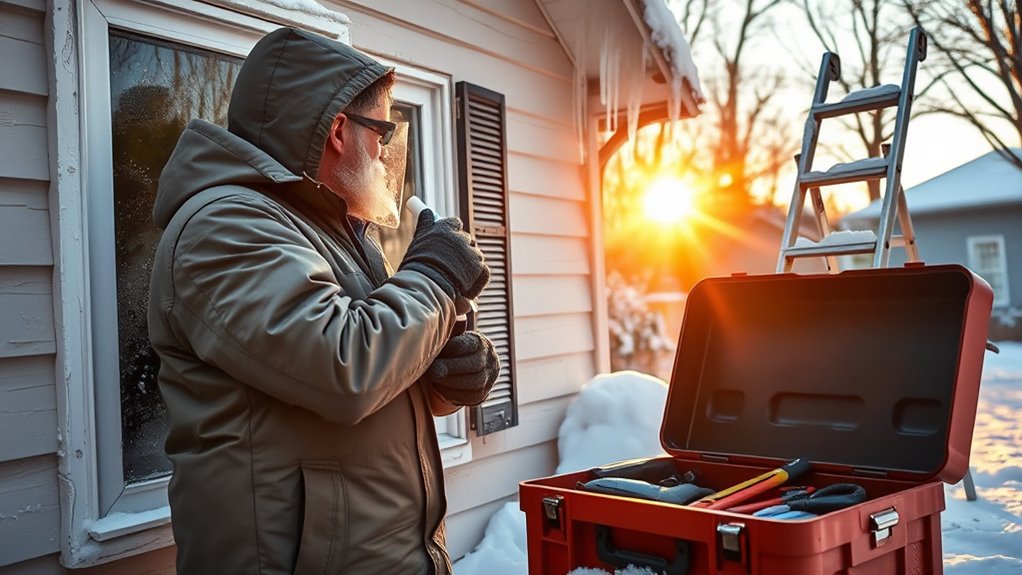

To winterize your home quickly, start by sealing air leaks around windows, doors, and electrical outlets with caulk or weatherstripping. Insulate the attic, basement, and wall gaps for extra warmth. Protect outdoor water sources by disconnecting hoses, draining faucets, and installing covers or insulation. Close interior vents and use draft stoppers on doors and windows to conserve heat. Small quick fixes like these can save energy and prevent costly repairs; learn more to maximize your efforts.

Get garden gear delivered free with Prime
- Fast, free delivery on millions of items
- Prime Video, Amazon Music and more included
- Member-only deals all year
Key Takeaways
- Seal gaps around windows, doors, and electrical outlets with weatherstripping and caulk to prevent drafts.
- Insulate attic, basement, and wall gaps with foam or fiberglass to improve overall home insulation.
- Disconnect and drain outdoor hoses and faucets, then add insulation or covers to prevent freezing.
- Close interior vents and install draft stoppers on windows and doors to conserve heat quickly.
- Use quick fixes like foam insulation, weatherstripping, and door draft stoppers for immediate energy savings.
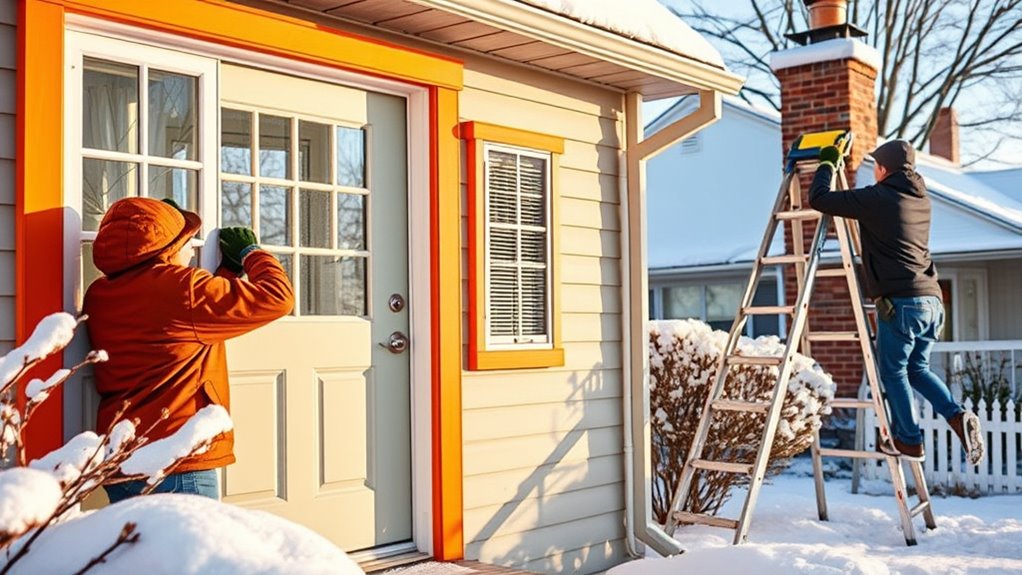
As winter approaches, it’s vital to prepare your home quickly to prevent cold drafts and costly energy losses. The first step is focusing on insulation improvements. Proper insulation keeps warm air inside and cold air out, which reduces your heating bills and makes your home more comfortable. Check your attic, basement, and walls for gaps or thin spots. Adding insulation in these areas can be a quick, effective way to boost your home’s thermal barrier. Use foam or fiberglass insulation to fill in any cracks around windows, doors, and electrical outlets. Don’t forget to seal gaps around window frames and door jambs with weatherstripping or caulk—these small leaks can let in drafts that make your heating system work harder. If you’re pressed for time, prioritize the most noticeable leaks and gaps, sealing them thoroughly to maximize energy efficiency in the shortest period.
Another vital step is protecting outdoor faucets. Exposed outdoor faucets are vulnerable to freezing, which can cause pipes to burst and lead to costly repairs. Outdoor faucet covers are inexpensive and easy to install, making them an excellent quick fix before the cold snap hits. Simply detach hoses from outdoor spigots, drain any remaining water, and secure the covers over the faucets. These covers act as insulators, preventing the water inside the pipes from freezing. If you don’t have faucet covers, wrapping the fixtures with old towels or foam pipe insulation can help insulate them temporarily. Remember, the goal is to minimize moisture exposure and temperature fluctuations that can freeze pipes. Also, consider draining or disconnecting outdoor hoses entirely to avoid water remaining in the line, which could freeze and cause damage. Additionally, understanding pool winterization techniques can help protect your entire property from cold weather impacts. While these tasks are straightforward and can be completed in a short amount of time, don’t overlook other quick fixes like closing interior vents, installing draft stoppers on doors, and adding a programmable thermostat to better control your heating. If you have extra time, installing draft stoppers on windows and sealing any remaining leaks can further improve your home’s insulation. Keep in mind that a little effort now will save you a lot in heating costs and potential repairs later. Prioritizing insulation improvements and outdoor faucet covers gives you the best return on your quick winterizing efforts, ensuring your home stays warmer and more energy-efficient during the cold months.
Frequently Asked Questions
How Early Should I Start Winterizing My Home Each Year?
You should start your seasonal maintenance and home preparation for winter about a month before temperatures drop substantially, typically in late October or early November. This gives you enough time to inspect your home, seal leaks, insulate pipes, and check heating systems. Starting early ensures you’re ready to face winter comfortably and helps prevent costly repairs later. Proper planning makes winterizing your home quick and stress-free, keeping your home safe and energy-efficient all season long.
Are There Affordable DIY Winterizing Tips for Renters?
Did you know that renters can save up to 10% on heating costs by winterizing? You can do it affordably by adding window insulation to keep cold air out and using draft stoppers on doors. These simple DIY tips require minimal effort and cost, making it easy to stay warm without risking your security deposit. Just a few small changes can make a big difference in comfort and energy savings.
What Are Common Signs of Winter Damage to Look For?
You should look for signs like storm damage, such as cracked or broken windows, missing shingles, or damaged gutters, which can let cold air and moisture in. Keep an eye out for pest intrusion, like gnawed wires or droppings, as pests seek warmth during winter. Also, check for drafts around doors and windows, and water stains or mold, which indicate hidden moisture issues caused by winter conditions.
How Can I Prevent Frozen Pipes in Unheated Areas?
You can prevent frozen pipes in unheated areas by using pipe insulation on vulnerable pipes and disconnecting outdoor faucets. Insulate pipes along exterior walls and in unheated spaces to keep them warm. Drain outdoor faucets and shut off their valves to prevent freezing. Consider using heated tape for extra protection. These steps help maintain consistent warmth, reducing the risk of pipes freezing and bursting during cold weather.
Is Professional Winterizing Necessary for Small Homes?
Do you really want to risk costly damage? For small homes, professional winterizing isn’t always necessary if you stay on top of seasonal maintenance and understand emergency preparedness. You can seal leaks, insulate pipes, and add weatherstripping yourself. But if you lack time or confidence, hiring a pro guarantees thorough winterization, giving you peace of mind. After all, proper preparation helps prevent emergencies and keeps your home safe all season long.
Conclusion
Now that you know how to winterize quickly, you can protect your home from the cold, save on energy costs, and prevent costly repairs. By sealing drafts, insulating pipes, and maintaining your heating system, you’re ensuring comfort, safety, and peace of mind all season long. Take action now, stay warm, and enjoy a worry-free winter. Because when you prepare today, you’ll face tomorrow’s cold with confidence, comfort, and security.
Halloween Picks
halloween
As an affiliate, we earn on qualifying purchases.