To maintain sanitation in shelters and temporary housing, regularly clean and disinfect cages, kennels, and shared spaces with pet-safe products. Remove waste, leftover food, and soiled bedding daily, and change bedding frequently. Use gloves when handling waste and wash bowls thoroughly each day. Monitor pets for health issues and address them promptly. Proper ventilation also helps reduce odors and humidity. Continue exploring these tips to guarantee a healthier, more comfortable environment for your animals.
Key Takeaways
- Implement daily cleaning routines to remove waste, leftover food, and soiled bedding, minimizing bacteria and odor buildup.
- Use pet-safe disinfectants on cages, kennels, and communal areas, following manufacturer instructions for thorough sanitation.
- Organize hygiene supplies separately for each area to prevent cross-contamination and ensure quick access for staff.
- Regularly bathe and groom animals to maintain coat hygiene and monitor for health issues or parasites.
- Ensure proper ventilation to reduce humidity and odors, supporting a healthier environment for shelter pets.
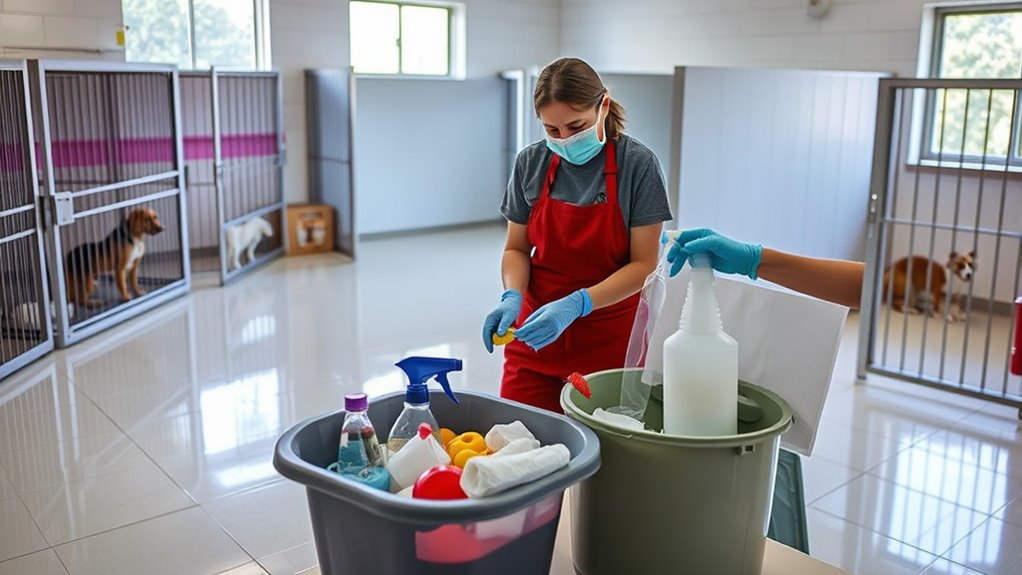
Maintaining good sanitation for your pets is essential for their health and well-being. In shelters and temporary housing, where many animals share close quarters, establishing effective cleaning routines is especially critical. You want to create a clean environment that minimizes the spread of disease and keeps your pets comfortable. To do this, it’s important to have the right hygiene supplies readily available. Stock up on items like disinfectant sprays, pet-safe wipes, brushes, and cleaning cloths. These supplies will help you quickly and thoroughly clean their living areas, reducing the risk of infections and unpleasant odors.
A consistent cleaning routine not only keeps the environment sanitary but also helps your pets feel secure. Daily removal of waste, leftover food, and soiled bedding prevents bacteria and parasites from thriving. Regularly changing bedding and blankets ensures that pets are resting on clean surfaces, which is crucial for their skin and coat health. When cleaning cages, kennels, or crates, use appropriate disinfectants that are safe for animals. Always follow the manufacturer’s instructions, and rinse thoroughly to prevent any residue that could irritate your pet’s skin or be ingested during grooming.
Hygiene supplies should be chosen carefully. Use pet-specific cleaning products, as human cleaners often contain chemicals that can be harmful to animals. Having a dedicated set of supplies for each pet or area reduces cross-contamination. For instance, keep separate brushes and towels for different animals if possible. When handling waste, wear gloves and dispose of it properly to prevent the spread of germs. Regularly sanitizing food and water bowls is equally important; wash them daily with hot water and pet-safe disinfectant to eliminate bacteria and prevent illnesses.
In addition to cleaning routines, pay attention to your pets’ individual hygiene needs. Bathing them when necessary keeps their coats clean and reduces shedding of parasites like fleas and ticks. Comb or brush their fur regularly to remove loose hair and dirt, which also improves skin health. Good hygiene extends beyond just cleaning; it includes checking for signs of infections, parasites, or skin issues and addressing them promptly. Moreover, implementing proper ventilation can help reduce odors and humidity levels, creating a healthier environment for both pets and humans.
Frequently Asked Questions
How Often Should Pet Bedding Be Cleaned in Shelters?
You should clean pet bedding in shelters at least once a week, following your bedding replacement schedules and cleaning frequency protocols. Regular cleaning helps prevent bacteria buildup and keeps pets comfortable. If bedding becomes soiled or has a strong odor, clean it immediately. Using fresh bedding regularly also reduces the risk of infections. Consistent cleaning and timely replacement guarantee a healthy environment for every pet in your shelter.
What Disinfectants Are Safest for Shelter Pets?
You need to choose disinfectants that are safe for your shelter pets, but which ones won’t compromise their health? The secret lies in disinfectant compatibility—look for products labeled as pet safe cleaning. These disinfectants are specially formulated to be effective while ensuring your animals aren’t exposed to harmful chemicals. Always double-check labels and consult with veterinary experts to keep your shelter environment both clean and secure for every furry resident.
How to Manage Pet Waste in Limited Space?
To manage pet waste in limited space, you should implement effective waste containment strategies like using designated, easily cleanable containers and regular disposal. Outdoor waste disposal stations help keep the area sanitary, while timely cleaning prevents odor and disease. Encourage staff and visitors to promptly pick up waste, and establish a schedule for waste removal to maintain a clean, safe environment for both pets and staff.
Are There Special Sanitation Needs for Different Pet Species?
Think of each pet species as a different musical instrument, each needing its own tune. Yes, they have species-specific hygiene needs and habitat sanitation requirements. For example, reptiles need humidity control and clean enclosures, while dogs benefit from regular grooming and outdoor potty areas. Understanding these differences guarantees you maintain a healthy environment, preventing illness and creating a comfortable habitat tailored to each species’ unique needs.
How to Prevent the Spread of Disease Through Sanitation?
You can prevent disease spread by maintaining strict hygiene standards and ensuring staff training on sanitation protocols. Regularly disinfect surfaces, tools, and bedding, and promote good hygiene practices like handwashing. Conduct ongoing staff training to stay updated on best sanitation practices and recognize early signs of illness. Implementing these measures reduces contamination, keeps pets healthy, and minimizes disease transmission in your shelter or temporary housing facility.
Conclusion
So, next time you think about pet sanitation in shelters, remember: it’s not just about keeping things clean—it’s about preventing chaos, disease, and the awkward smell that lingers long after you leave. Because nothing says “love” like ensuring your furry friend’s temporary home isn’t a tiny, stinky disaster zone. Trust us, a little sanitation now saves a lot of sniffing, sneezing, and regret later. Keep it clean, or risk becoming the shelter’s most unwanted guest!