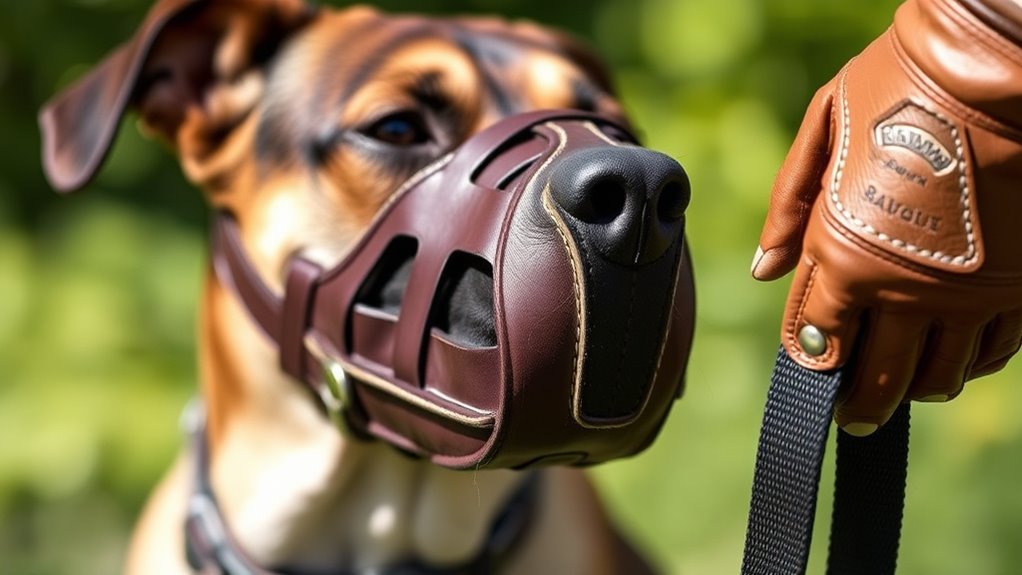

You should use muzzles, leashes, and safety restraints whenever your pet needs control or protection, such as during walks, vet visits, or during behavioral issues. Choose the right restraint tools based on your pet’s specific needs and behavior. Introduce these tools gradually, using positive reinforcement to build comfort and cooperation. Proper use and training make certain safety for both your pet and those around you—discover more tips to keep everyone secure.
Key Takeaways
- Use muzzles for pets with aggressive tendencies or during stressful situations, ensuring proper fit and gradual introduction.
- Leashes are essential for outdoor safety; choose appropriate types like harnesses or head collars for better control.
- Introduce safety restraints gradually with positive reinforcement to foster comfort and acceptance in pets.
- Restraints such as car harnesses and travel crates should be used consistently and paired with training to reduce anxiety.
- Always observe your pet’s behavior to determine when and how to safely implement muzzles, leashes, and other restraints.
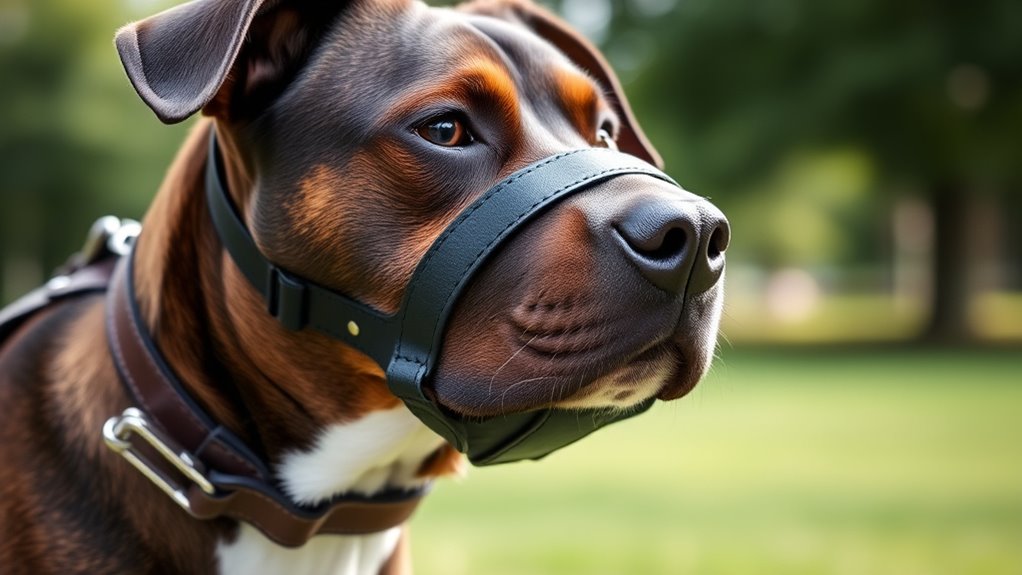
When it comes to keeping your pet safe, using the right tools is essential, and pet muzzles, leashes, and safety restraints play a crucial role. These tools are not just about control; they also influence your pet’s behavior and safety during various situations. Understanding animal behavior and training techniques helps you determine when and how to use these restraints effectively, ensuring your pet’s well-being and your peace of mind.
Using proper tools like muzzles, leashes, and restraints ensures your pet’s safety and effective behavior management.
If your pet demonstrates aggressive tendencies or nervousness around other animals or people, a muzzle can be a valuable safety tool. However, it’s important to recognize that muzzles are not a quick fix for behavioral issues—they should be integrated thoughtfully into training techniques aimed at modifying animal behavior. Proper training involves positive reinforcement, patience, and consistency. For example, if your dog tends to bark excessively or shows signs of fear-based aggression, you can gradually desensitize them through controlled exposure and rewarding calm behavior. Using a muzzle during these training sessions can prevent injury and help your pet associate restraint with positive experiences, reducing anxiety over time.
Leashes are perhaps the most common safety restraint, and they serve multiple purposes, from walk safety to controlling impulsive actions. Your choice of leash and how you use it directly impacts your pet’s behavior. Proper leash training reinforces good manners, like walking calmly and ignoring distractions, which is rooted in understanding animal behavior and applying effective training techniques. When your pet pulls or lunges, it’s often a sign they’re overwhelmed or not yet trained to manage their impulses. Consistent, gentle correction paired with rewards for desired behavior helps teach your pet to walk politely. Using a harness or head collar can also provide better control and reduce strain, especially for strong or energetic animals.
Safety restraints extend beyond leashes and muzzles; they include car harnesses and crates designed to keep your pet secure during travel or when unsupervised. These tools should be introduced gradually, paired with positive reinforcement, and used as part of your broader training strategy. Understanding your pet’s individual needs and behavior patterns allows you to select the appropriate restraint and train your animal to accept it comfortably. For instance, some animals may resist wearing a harness initially, but with patience and proper training techniques—like offering treats and starting with short periods—you’ll help them associate restraints with safety and positive experiences.
Frequently Asked Questions
Are There Specific Muzzles for Different Dog Breeds?
Yes, there are breed-specific muzzles designed to fit different dog breeds comfortably. These custom fit restraints guarantee your dog’s safety and comfort, especially for breeds with unique snout shapes. By choosing the right breed-specific muzzle, you provide a secure and humane restraint that suits your dog’s size and behavior. Always measure accurately and select a muzzle tailored to your dog’s breed for the best fit and safety.
How Do I Train My Dog to Wear a Muzzle Comfortably?
Think of training your dog to wear a muzzle like teaching a new dance move. Start with positive reinforcement, offering treats and praise during muzzle fitting. Gradually increase the duration, ensuring the muzzle fits comfortably and doesn’t cause discomfort. Watch your dog’s behavior closely, and adjust as needed. Patience is key—your goal is to make wearing a muzzle a natural, stress-free part of their routine.
Can Leashes Be Used for Cats or Other Pets?
Yes, leashes can be used for cats and other small pets. You should select the right cat accessories, like small pet leashes, designed specifically for their size and behavior. Use a harness instead of a collar for better control and comfort. Start training your pet indoors to get accustomed to the leash, then gradually introduce outdoor walks. Always supervise your pet to guarantee safety and positive experiences.
What Materials Are Safest for Pet Safety Restraints?
You should choose safety restraints made from durable, hypoallergenic materials to guarantee your pet’s safety and comfort. According to durability testing, high-quality nylon and leather outperform cheaper options, reducing breakage risks. Hypoallergenic options like soft silicone or natural fibers help prevent allergies or skin irritation. With 70% of pet owners prioritizing safety, selecting the right materials creates a secure and comfortable restraint, keeping your pet safe during walks or travel.
How Often Should I Replace or Adjust Pet Restraints?
You should regularly replace or adjust your pet restraints through routine restraint maintenance and safety checks. Inspect them before each walk for signs of wear, tears, or looseness. Replace any damaged restraints immediately to guarantee safety. Adjust straps or fittings as your pet grows or if they become uncomfortable. Regular maintenance prevents accidents and keeps your pet secure during outings, giving you peace of mind.
Conclusion
Using pet muzzles, leashes, and safety restraints isn’t just about keeping your furry friend safe—it’s about preventing chaos on a scale that could shake the very ground you walk on. When you know when and how to use them, you’re not just protecting your pet; you’re becoming a superhero in their eyes. So gear up, stay vigilant, and turn everyday outings into safe adventures they’ll remember (or maybe just forget if they’re too busy having fun)!