To store your pet’s medications for emergencies, keep them in a cool, dry, and secure location away from sunlight, humidity, and children or pets. Use airtight containers or the original packaging, and label each clearly, especially if you have multiple pets. Regularly check for expiration dates, signs of deterioration, and container integrity. Following these steps helps guarantee quick access and medication effectiveness when needed most—more tips on how to optimize your pet’s emergency prep come up next.

Get garden gear delivered free — and shop member deals
- Fast, free delivery on millions of items
- Access to Prime Big Deal Days deals on October 6–7
- Prime Video, Amazon Music and more included
Key Takeaways
- Store medications in a cool, dry, and dark place away from sunlight and humidity.
- Use labeled, airtight containers or original packaging for easy identification.
- Keep medications separate from food and household items to prevent contamination.
- Regularly check expiration dates and discard expired or deteriorated supplies.
- Secure medications out of children and pets’ reach in a dedicated, accessible location.
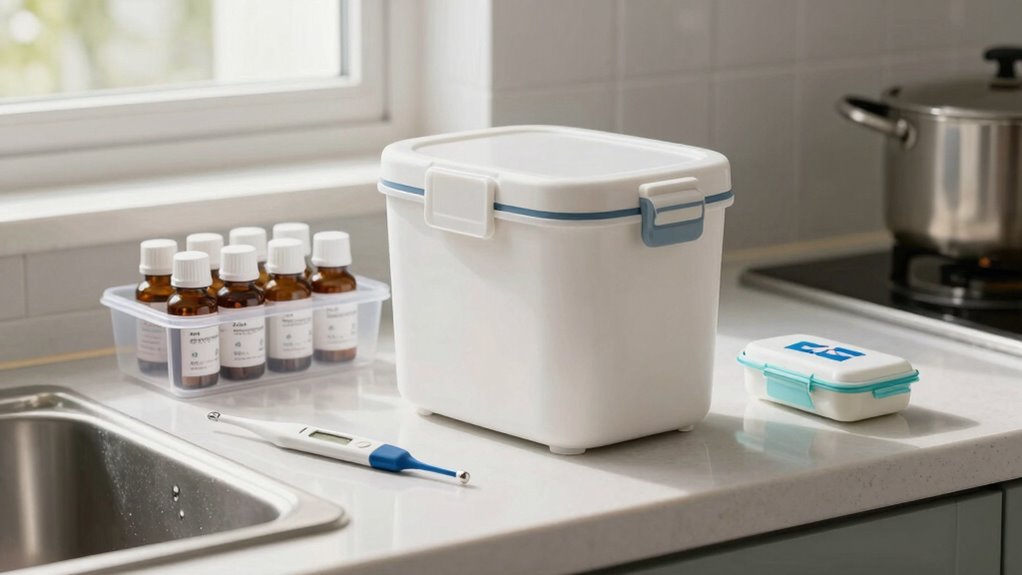
Proper storage of pet medications is vital to guarantee their effectiveness and safety. When it comes to emergencies, you want to be confident that any medication you keep on hand will work when needed most. One of the most important aspects of storage safety is paying attention to medication expiration dates. Expired medications can lose potency or become harmful, so regularly checking labels and discarding outdated supplies is essential. Keeping track of expiration dates prevents you from administering ineffective treatment or risking adverse reactions. It’s a good idea to set a reminder to review your pet’s medication stash every few months, making sure everything is current and safe to use.
In addition to monitoring expiration dates, proper storage techniques help preserve medication integrity. Store pet medications in a cool, dry place away from direct sunlight, heat sources, and humidity, which can degrade their effectiveness. Avoid storing medicines in the bathroom or kitchen where temperature fluctuations and moisture are common. Instead, choose a dedicated, secure cabinet or container, out of reach of children and pets, to prevent accidental ingestion or misuse. Use airtight containers or original packaging with labels intact to keep medications protected from air and contaminants. This not only maintains medication stability but also makes it easier to identify medications quickly during an emergency. Proper medication storage is essential for maintaining their safety and effectiveness over time. Additionally, understanding medication stability can help you better manage storage conditions suited to each medication’s needs. Being aware of storage guidelines can further ensure that you are following best practices for each medication type. Proper knowledge about medication shelf life can help you recognize when medications are nearing expiration and need replacement.
It’s equally important to educate yourself about the specific storage needs of each medication. Some drugs require refrigeration, while others are stable at room temperature. Always follow the storage instructions provided by your veterinarian or indicated on the label. Proper storage safety also involves keeping medications away from food and beverages to prevent cross-contamination or accidental ingestion. Additionally, consider medication labeling practices to ensure clarity and prevent mix-ups, especially if you have multiple pets or medications. If you have multiple pets, consider using separate containers or clearly labeling medications to avoid mix-ups. Regularly inspecting your pet’s medications ensures you catch any potential issues early, such as discoloration or unusual odors, which can indicate deterioration.
pet medication storage container
As an affiliate, we earn on qualifying purchases.
As an affiliate, we earn on qualifying purchases.
Frequently Asked Questions
How Often Should I Check Expired Pet Medications?
You should check your pet medications at least every six months to guarantee medication safety. Regular inspections help you spot expired or damaged medications, preventing potential harm. Follow proper storage tips, like keeping medications in a cool, dry place and away from children and pets. By staying vigilant and reviewing expiration dates regularly, you ensure your pet’s medications are safe and effective when emergencies arise.
Can I Store Pet Medications With Human Medicines?
You shouldn’t store pet medications with human medicines because it can compromise medication safety. Mixing them increases the risk of accidental ingestion or misuse. Follow proper storage tips by keeping pet medications in a separate, secure container away from children and pets. Use a designated, cool, dry place to maintain their effectiveness. Always check expiration dates regularly, and consult your vet for guidance on safe storage practices to protect your pet’s health.
What Should I Do if My Pet Ingests Expired Medication?
If your pet ingests expired medication, contact your veterinarian immediately. Watch for signs of pet poisoning, such as vomiting, diarrhea, or lethargy. Do not try to induce vomiting unless instructed. Proper medication disposal is vital to prevent accidental ingestion, so dispose of expired drugs safely. Prompt veterinary care can prevent serious health issues and guarantee your pet gets the appropriate treatment. Always keep emergency numbers handy.
Are There Specific Storage Containers for Pet Medications?
Think of storing pet medications like guarding a treasure chest—secure and well-organized. You should use container options designed for storage safety, such as childproof pill bottles or airtight containers, to prevent accidental ingestion or spoilage. Keep these containers in a cool, dry place, away from pets and children. Proper storage guarantees your pet’s medications stay effective and safe, ready to help in an emergency when you need them most.
How to Identify if Pet Medication Has Been Compromised?
To identify if pet medication has been compromised, check for changes in color, texture, or odor—these can indicate contamination or spoilage. Always follow medication safety and storage tips, like keeping medications in a cool, dry place and away from sunlight. If you notice any inconsistencies or doubts about the medication’s integrity, consult your veterinarian before administering it. Proper storage helps maintain medication effectiveness and keeps your pet safe.
airtight pet medication storage box
As an affiliate, we earn on qualifying purchases.
As an affiliate, we earn on qualifying purchases.
Conclusion
Storing your pet’s medications properly can make all the difference in emergencies. Imagine rushing your injured dog to the vet, only to realize you don’t have their essential medication nearby. By organizing a dedicated, accessible storage space now, you guarantee quick response when it matters most. Take Sarah’s story—she saved her cat’s life by promptly giving the saved medication from her emergency kit. Don’t wait; prepare today to protect your furry friend tomorrow.
As an affiliate, we earn on qualifying purchases.
As an affiliate, we earn on qualifying purchases.
Fall yard work Picks
leaf blowers
As an affiliate, we earn on qualifying purchases.