
Planning for multiple pets in emergencies is challenging because each animal has unique needs, behaviors, and temperaments. You must prepare tailored emergency kits, manage varying personalities, and keep everyone calm during chaos. Organizing multiple evacuation routes and supplies adds complexity, and practicing these plans is essential. It’s easy to overlook details, but by understanding these factors, you can create effective strategies. Keep exploring to discover tips that make this process more manageable and guarantee your pets’ safety.

Get garden gear delivered free with Prime
- Fast, free delivery on millions of items
- Prime Video, Amazon Music and more included
- Member-only deals all year
Key Takeaways
- Managing diverse pet personalities and behaviors requires tailored handling and calm environments during emergencies.
- Multiple customized emergency kits are necessary to meet each pet’s specific needs and prevent confusion.
- Coordinating evacuation plans for several pets involves more organization and practice to avoid chaos.
- Recognizing species-specific behaviors ensures effective rescue techniques and reduces safety risks.
- Regular drills and updates improve preparedness, making multi-pet emergencies less overwhelming and more manageable.
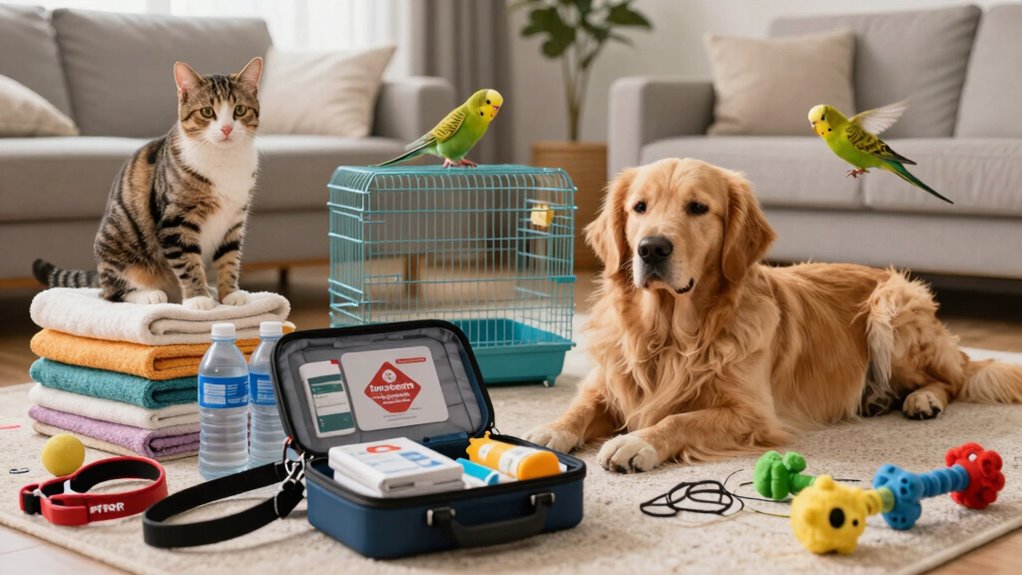
Have you ever considered how prepared your pets are for an emergency? When you have multiple animals, planning for unexpected situations becomes more complex. Each pet has unique needs, temperaments, and health considerations, which means your approach to pet safety must be thorough and adaptable. It’s not just about having one emergency kit; it’s about creating a complete plan that accounts for everyone’s well-being. Preparing emergency kits for each pet is a good start, but it’s not enough. You need to think about how to move everyone quickly and safely, how to communicate with them during chaos, and how to guarantee they stay calm and contained.
Emergency kits are essential, but their effectiveness hinges on how well you tailor them to each pet’s needs. For example, some pets might require specific medications, special food, or familiar comfort items. When you’re assembling these kits, consider including leashes, harnesses, and enough supplies for several days. It’s also wise to keep a recent photo of each pet in case you get separated. These kits should be easily accessible and portable, so you can grab them quickly in a crisis. But even with well-prepared kits, managing multiple pets during an emergency can be intimidating. You have to stay calm and organized to keep everyone safe.
Thinking ahead also means knowing your pets’ personalities. Some animals may panic or become aggressive when frightened, making safe evacuation challenging. You’ll need to plan how to handle each one, maybe with crates or carriers that they’re familiar with. Keeping pets in a designated safe space during an emergency can prevent further stress or injury, but only if they’re comfortable and accustomed to that space beforehand. The challenge is guaranteeing everyone stays together and that no pet slips away in the chaos. Practice drills can help familiarize your pets with what to do during an emergency, reducing panic when it actually happens. Additionally, understanding the importance of biodiversity can help you recognize how different animals have unique needs that must be respected during rescue efforts. Recognizing species-specific behaviors** can also improve your ability to respond effectively during a crisis. Moreover, understanding traditional skills can assist in developing practical rescue techniques tailored to various animals and environments. Developing animal handling techniques can also greatly improve your confidence and safety during rescue situations. Being aware of different species’ needs** can further help in tailoring your emergency response to ensure every animal’s safety.
Multi-pet emergency planning may seem intimidating, but the key is consistency and preparation. Regularly update your emergency kits, review your plan, and practice evacuation routes with your pets. Remember, pet safety isn’t just about having supplies—it’s about understanding your animals’ behaviors, creating calm environments, and being ready to act quickly. The effort you put into planning now could be the difference between a safe rescue and a stressful, disorganized scramble during a crisis. Stay proactive, stay calm, and guarantee your pets are as prepared as possible for whatever emergencies may come your way.
Popular right now

Dyson Big Ball Multi Floor Canister Vacuum, Yellow

Sony WH-1000XM4C Wireless Noise-Cancelling Headphones, Black

Shark Navigator Robot Vacuum with Self-Empty Base, Dark Grey (RV2120AE)
As an affiliate, we earn on qualifying purchases.
Frequently Asked Questions
How Do I Prioritize Pets With Different Emergency Needs?
You should prioritize pets with the most urgent emergency needs first, like those with health issues or special care requirements. Keep their safety supplies ready and include them in your emergency drills. During a crisis, stay calm and quickly assess each pet’s needs, ensuring everyone’s safety. By planning ahead and practicing, you’ll be better equipped to handle different emergency situations and protect all your pets effectively.
What Supplies Are Essential for Multiple Pets?
Imagine you’re on a 24-hour call in a sci-fi emergency. You’ll need essentials like extra leashes, food, water, and first aid supplies for each pet. Don’t forget pet transportation gear and emergency sheltering supplies—like crates, blankets, and sanitation items—to keep everyone safe. These supplies guarantee you can evacuate efficiently and provide comfort, no matter the situation. Preparing in advance helps keep your pets secure during chaos.
How Can I Create a Unified Emergency Plan?
You should create a unified emergency plan by outlining pet evacuation routes and assembling a portable kit for all your pets. Keep veterinary contacts and medication information handy, and designate a safe place for your pets during emergencies. Practice the plan regularly, guaranteeing everyone in your household knows their role. This preparedness helps minimize chaos, keeps your pets safe, and ensures quick action when disaster strikes.
How Do I Manage Pets With Special Health Issues?
Over 40% of pets have health issues requiring special care, so managing them during emergencies can be tricky. To do this, keep a detailed record of their pet medication and specific needs. You should also regularly monitor their health, noting any changes. Have a plan to quickly access their medication and contact your vet. Preparing these steps guarantees you can keep your pets safe and healthy in any crisis.
What Are the Best Ways to Keep Pets Calm During Emergencies?
You can keep your pets calm during emergencies by maintaining a calm demeanor yourself, as pet behavior often reflects your emotions. Use reassuring voices and gentle petting to comfort them. Prepare an emergency communication plan that includes familiar sounds or toys to reduce stress. Keep their favorite comfort items nearby, and practice calming techniques regularly. Staying organized and calm helps your pets feel secure, even amid chaos.
Conclusion
Remember, when it comes to multi-pet emergency planning, it’s better to be safe than sorry. You might think you have it all covered, but unexpected situations can arise quickly. As the saying goes, “A stitch in time saves nine,” so take the time now to prepare thoroughly. Your pets depend on you to keep them safe, and a well-thought-out plan guarantees you’re ready for whatever comes your way.