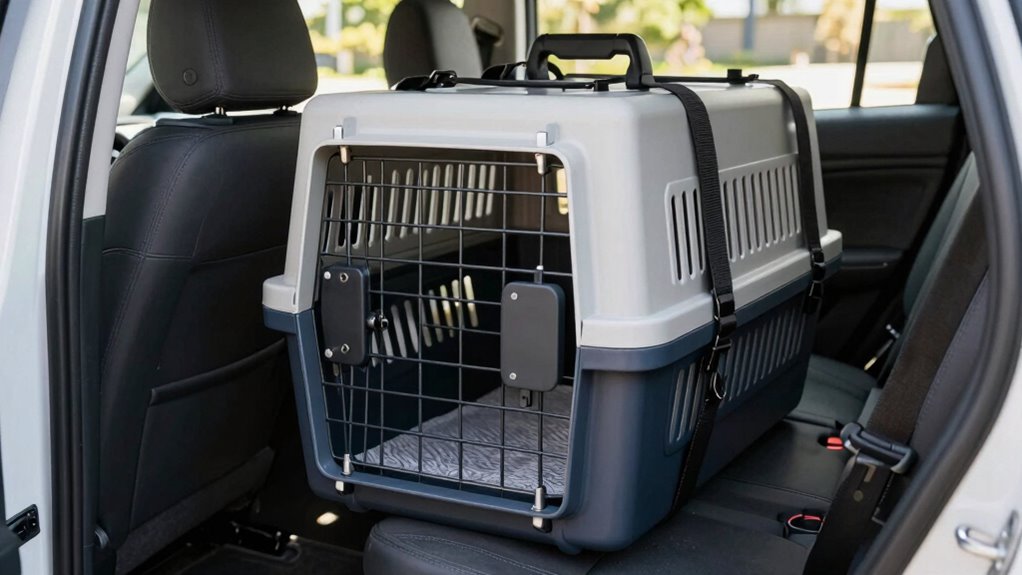

To keep your dog safe during sudden stops, securely fasten the crate using seat belts or straps to prevent shifting or tipping. Choose a sturdy crate with durable materials, such as reinforced metal or heavy-duty plastic, to withstand impacts. Guarantee good ventilation for comfort and safety. Place the crate on a stable, non-slip surface, and use pads to prevent sliding. Properly setting up the crate can greatly reduce injury risks—discover more tips that ensure your pet’s safety.
Key Takeaways
- Secure the crate with seat belts or straps to prevent shifting during sudden stops.
- Place the crate on a stable, non-slip surface to minimize sliding or tipping.
- Ensure the crate has reinforced corners and solid construction for impact resistance.
- Use secure door latches to prevent accidental opening during travel.
- Properly position the crate in a stable area, avoiding obstructed ventilation or unstable placement.
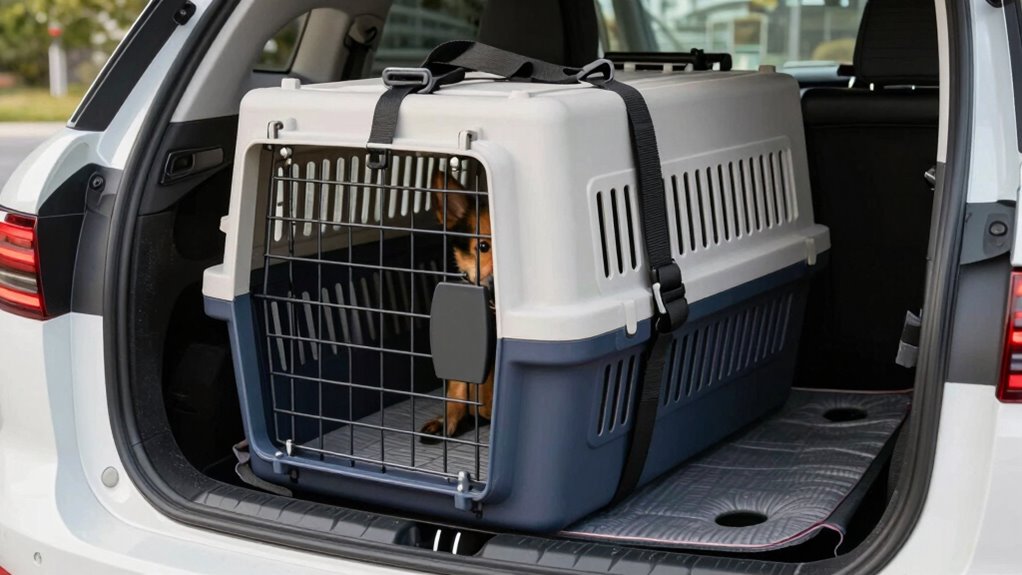
Have you ever wondered how to keep your dog safe during travel? One of the most critical factors is choosing a well-designed travel crate that offers proper safety features. Ensuring your dog’s crate has good crate ventilation is essential, especially during long trips. Proper ventilation helps maintain airflow, preventing overheating and making your pet more comfortable. Look for crates with multiple air vents or mesh panels that allow for continuous airflow. Not only does good ventilation keep your dog cool, but it also reduces stress and helps them breathe easily in confined spaces. When selecting a crate, pay attention to the material durability. A sturdy, durable crate withstands sudden stops and minor impacts, providing a safe environment for your pet. Lightweight plastic crates might be easier to carry, but they need to be robust enough to endure rough handling or unexpected jolts. Metal crates, especially those made from high-quality steel or aluminum, tend to offer superior durability and stability. These materials resist bending or breaking under pressure, which is crucial in case of abrupt stops or accidents. The durability of the crate also ensures that it remains intact, preventing any sharp edges or broken parts from harming your dog.
When setting up the crate, consider how the materials and design work together to maximize safety. For instance, a crate with reinforced corners and a solid construction reduces the risk of collapse or deformation during sudden movements. Make sure the crate’s door latches securely, preventing accidental openings while on the road. Additionally, check that the crate’s ventilation openings are not easily blocked or obstructed, as this could compromise airflow and your pet’s comfort. Proper setup involves placing the crate in a stable position where it won’t slide or tip during sudden stops. Use non-slip mats or pads underneath to prevent movement and provide extra stability. You should also secure the crate with seat belts or straps if possible, especially during high-speed travel, to keep it from shifting unexpectedly. Incorporating ventilation considerations into your setup can significantly improve your dog’s comfort and safety on the move.
In essence, choosing a crate with excellent crate ventilation and strong material durability forms the foundation of safe travel for your dog. These elements work together to create a secure, comfortable environment that can withstand the rigors of road travel. When you prioritize these features, you’re not just complying with safety standards—you’re actively protecting your beloved pet from injury or discomfort, even in the event of sudden stops or accidents. Proper setup and thoughtful selection of materials ensure peace of mind, allowing you to focus on enjoying your journey together.
Frequently Asked Questions
How Often Should I Check the Crate for Damage?
You should check your crate for damage after every trip and at least once a month when not in use. Regular crate inspections help catch any cracks, loose screws, or weak spots early, ensuring damage prevention. By staying vigilant and maintaining your crate, you reduce the risk of injury during sudden stops or accidents. Consistent checks keep your dog’s travel safe and secure, giving you peace of mind every time you hit the road.
Can I Use a Crate for Multiple Dogs?
Is your car a moving zoo? Using one crate for multiple dogs isn’t ideal, as each needs the right crate size and secure crate placement. You risk injury or stress if dogs are cramped or uncomfortable. Instead, get individual crates tailored to each dog’s size, ensuring safety and comfort. Proper crate setup minimizes chaos and keeps all pups secure during sudden stops or sharp turns.
What Materials Are Safest for Travel Crates?
For safe travel crates, choose materials that are chew-proof and durable, like heavy-duty plastic or metal, to prevent damage during sudden stops. Guarantee the crate has good ventilation to keep your dog comfortable and prevent overheating. Avoid flimsy or easily chewable materials. Look for crates with secure latches and sturdy construction, so your dog stays safe and secure throughout the journey. Proper material choices are key to safe, stress-free travel.
How Do I Train My Dog to Feel Comfortable in a Crate?
To crate train your dog and boost their comfort, start slowly by introducing the crate as a positive space. Use comfort strategies like placing treats, toys, and a cozy blanket inside. Gradually increase the time your dog spends in the crate, always rewarding calm behavior. Be patient and consistent, and never force your dog inside. Over time, they’ll associate the crate with safety and comfort, making travel much easier.
Are There Specific Sizes Recommended for Different Dog Breeds?
Think of your dog’s crate as a cozy nest—it should snugly fit but not be cramped. Breed-specific dimensions guide you to the perfect size, ensuring comfort and safety. Follow crate size guidelines carefully; a too-small space can cause stress, while a too-large one might compromise safety during sudden stops. Measure your dog carefully, considering height and length, then choose a crate that offers space to stand, turn, and lie down comfortably.
Conclusion
By securing your dog’s crate properly, you’re building a fortress on wheels that shields them from chaos like a sturdy ship weathering a storm. When sudden stops hit, your setup acts as a gentle guardian, cradling your furry friend in a safe harbor amidst turbulent waves. With these tips, you create a calm, protective cocoon—transforming your car into a safe voyage where your dog can rest easy, no matter how wild the ride gets.