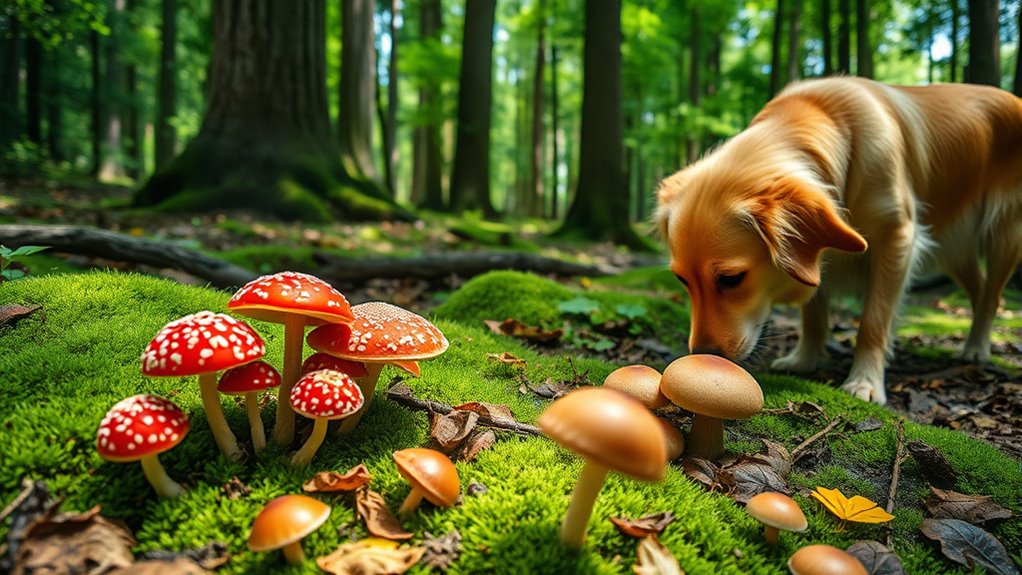

On the trail, it’s vital to distinguish safe mushrooms from scary ones for your dog’s safety. Many toxic fungi resemble edible varieties, so avoid letting your dog sniff or nibble on wild mushrooms. Look out for bright colors, cup-shaped caps, rings, and fragile textures, which can indicate danger. Using identification tools and staying vigilant can prevent poisoning. Keep your dog close and cautious—if you’d like tips on spotting toxic mushrooms, there’s more to uncover below.
Key Takeaways
- Recognize common toxic mushrooms like death caps and destroying angels, which can resemble safe varieties.
- Use identification tools and field guides to distinguish safe from hazardous fungi during outdoor walks.
- Avoid letting dogs sniff or nibble on wild mushrooms, as toxicity can occur even with small ingestion.
- Watch for visual cues such as bright colors, smooth pale caps, and fragile textures that may indicate danger.
- Keep dogs on leashes and supervise closely to prevent accidental ingestion of potentially poisonous fungi.
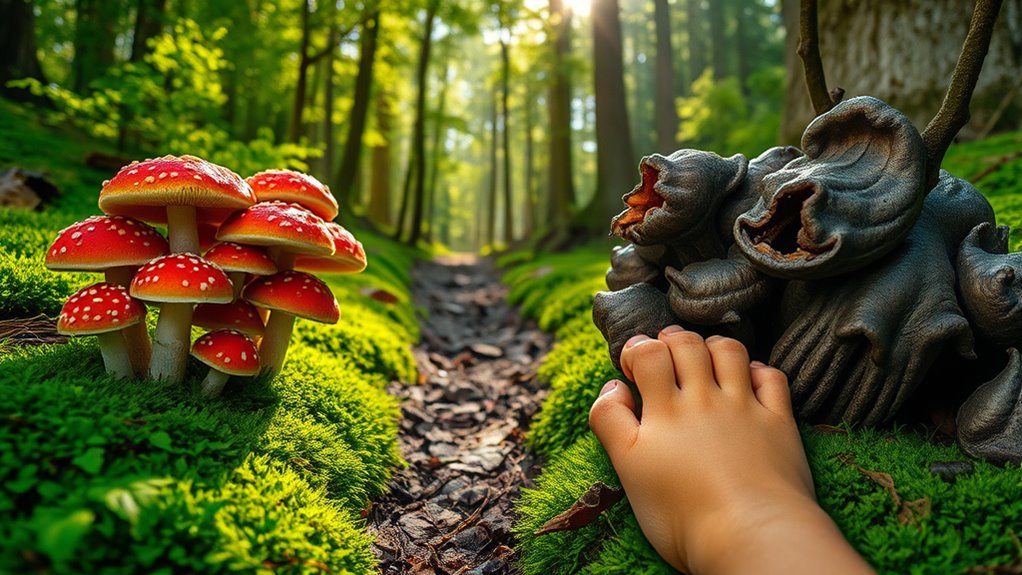
Have you ever wondered if mushrooms could be a healthy addition to your dog’s diet? While some pet owners consider incorporating safe fungi into their pup’s meals, it’s essential to understand that not all mushrooms are harmless. In fact, many mushrooms you might find on a walk could be poisonous varieties that pose serious health risks to your dog. Being able to identify these toxic types is fundamental for keeping your furry friend safe during outdoor adventures. Poisonous varieties often look similar to edible ones, which makes identification tips a valuable tool. For example, some toxic mushrooms have bright colors, such as red or yellow caps, but don’t rely solely on color cues. Many deadly fungi are dull or blend into the environment. Instead, pay attention to features like gills, stem shapes, and the presence of a ring or cup around the stem, as these details can help distinguish safe from dangerous species. Learning to recognize common poisonous mushrooms in your area, like death caps or destroying angels, is essential. These varieties often have a smooth, white or pale appearance, and their spore prints are typically white or light-colored. Always avoid mushrooms with a cup-shaped cap, a prominent ring on the stem, or a fragile, paper-like texture. Additionally, high-quality identification tools can significantly improve your ability to differentiate safe from toxic fungi. It’s best to err on the side of caution—if you’re unsure about a mushroom’s identity, don’t let your dog near it. The risks of poisoning are severe, with symptoms ranging from vomiting and diarrhea to liver failure or even death. Remember that even small amounts of some toxic mushrooms can be dangerous, so vigilance is key. If your dog accidentally ingests a mushroom and shows signs of distress, contact your veterinarian immediately. Carrying a field guide or using a mushroom identification app can be helpful tools when hiking, but they shouldn’t replace proper training or expert advice. Ultimately, the safest approach is to prevent your dog from eating any wild mushrooms altogether. While it might be tempting to let your pup explore their environment, keep them on a leash or close by and always monitor what they’re sniffing or nibbling. Education about poisonous varieties and identification tips can make a significant difference in avoiding emergencies. Remember, it’s better to be cautious and keep your dog safe than to risk exposure to toxic fungi that could compromise their health. So, as you venture out on the trail, stay vigilant, learn to recognize the dangerous types, and enjoy your outdoor adventures together without worry.
Frequently Asked Questions
How Can I Identify Dangerous Mushrooms in My Local Area?
When you’re mushroom foraging, it’s vital to recognize dangerous varieties. Start by researching local toxic mushrooms and familiarize yourself with their key features. Always examine mushrooms carefully, noting color, shape, and gill patterns. Use a reliable field guide or consult an expert to assist with toxic mushroom identification. Remember, if you’re unsure about a mushroom, it’s safest to avoid touching or consuming it to prevent poisoning.
Are There Any Safe Mushrooms That Dogs Can Eat?
You ask if any safe mushroom types are edible fungi that dogs can eat. While some mushrooms are safe, it’s best to avoid giving your dog any wild fungi unless identified as edible. Many safe mushroom varieties are not suitable for dogs, and accidental ingestion of even small amounts can be risky. Always consult a vet before offering your dog any mushrooms, and stick to store-bought, pet-safe treats instead.
What Immediate Steps Should I Take if My Dog Ingests a Mushroom?
Imagine a ticking clock, signaling danger when your dog ingests a mushroom. If this happens, act fast. Remove your dog from the area and don’t try to induce vomiting unless instructed by a vet. Call your vet immediately for guidance on emergency treatment. Monitor your dog closely for symptoms like vomiting, diarrhea, or lethargy, and bring a sample of the mushroom if possible. Prompt action can prevent severe mushroom poisoning.
Can Mushrooms Cause Long-Term Health Issues in Dogs?
Mushrooms can cause long-term health issues in dogs, especially if they contain toxins. You might notice toxicity symptoms like vomiting, diarrhea, or lethargy, which could lead to chronic health effects if untreated. To protect your dog, always monitor for signs of poisoning after foraging or walking on trails. Prompt veterinary care is essential to prevent potential long-lasting damage and guarantee your furry friend’s health remains safe.
Are There Specific Seasons When Poisonous Mushrooms Are More Common?
Poisonous mushrooms tend to appear more frequently during certain seasons, especially in late summer and fall. Seasonal variations affect the mushroom lifecycle, leading to a surge in toxic varieties when conditions are moist and warm. As you hike, be aware that these mushrooms thrive during these times, increasing the risk for your dog. Always stay vigilant, avoid foraging, and keep your pet on a leash to prevent accidental ingestion.
Conclusion
Now that you know the difference between safe and dangerous mushrooms, you’ll be more vigilant on your next hike. But always remember, even the most familiar-looking fungi can hide deadly secrets. Will your quick eye spot the hidden threat before it’s too late? Stay alert, trust your instincts, and keep your furry friend safe—because one small mistake could change everything in an instant. The trail is beautiful, but danger lurks in the most unexpected places.