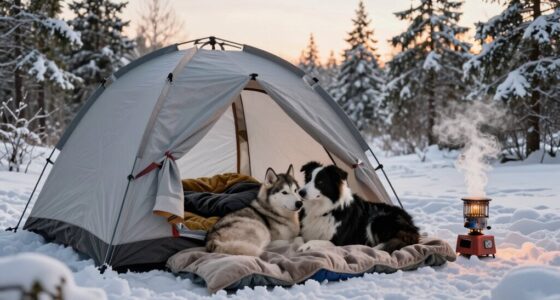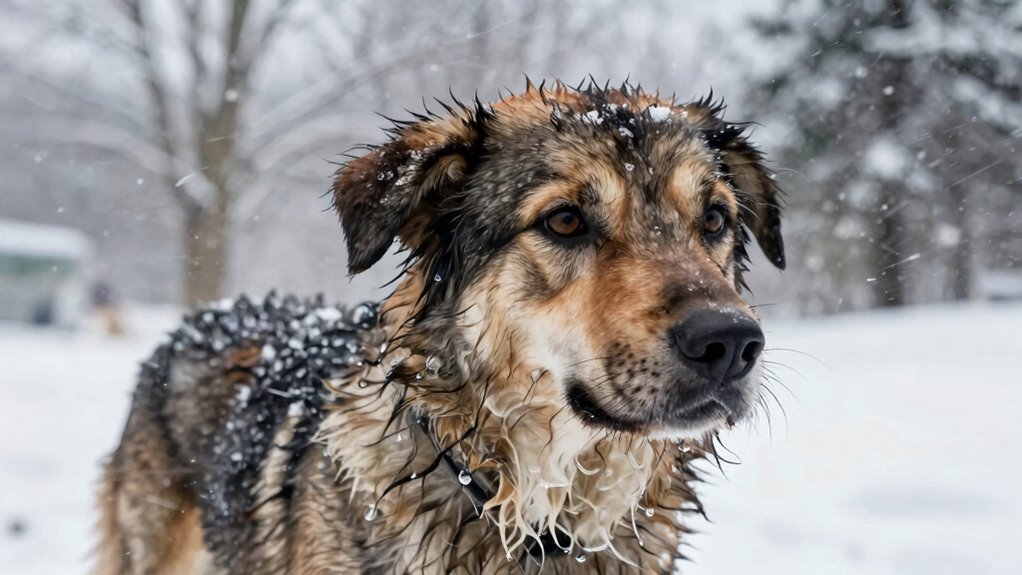

When it’s cold and windy, wind and wet fur make it harder for your pet to stay warm. Wet fur pulls heat away quickly, increasing the risk of hypothermia. Wind blows away the insulating air trapped in their coat, making it even colder. To keep your pet safe, you need to protect them from moisture and wind by providing proper shelter and keeping them dry. If you want to learn how to best safeguard your pet, continue exploring ways to improve their outdoor comfort.

Get garden gear delivered free with Prime
- Fast, free delivery on millions of items
- Prime Video, Amazon Music and more included
- Member-only deals all year
Key Takeaways
- Wind increases heat loss by removing warm air around the pet’s body, reducing insulation effectiveness.
- Wet fur loses insulating properties, making it harder for pets to retain body heat.
- Wet fur pulls heat away, significantly raising the risk of hypothermia in cold, windy conditions.
- Proper shelter design and placement protect pets from wind and moisture, maintaining dryness and warmth.
- Insulating shelters with weatherproof materials and elevating them helps prevent dampness and heat loss.

As temperatures drop, it’s essential to guarantee your pets stay safe and warm during cold weather. Cold, windy days can quickly turn dangerous for animals that aren’t properly protected. Wind and wet fur considerably diminish your pet’s ability to retain heat, making it critical to adapt your approach. You need to think beyond just keeping them indoors; outdoor pets require specific shelter strategies, and providing a winter coat can make all the difference. When fur becomes wet from rain, snow,, or ice, it loses its insulating properties. Wet fur pulls heat away from your pet’s body, increasing the risk of hypothermia. That’s why guaranteeing your animal stays dry is the top priority. A well-designed shelter should shield against wind and moisture, acting as a barrier that prevents the elements from penetrating. Use insulated dog houses or build a shelter with sturdy materials, and elevate it off the ground to avoid dampness from snow or puddles. Adding a weatherproof door flap can keep wind and rain out, creating a cozy space where your pet can rest comfortably. Additionally, understanding how fur’s insulating properties are affected by wetness can help you better protect your pet during harsh weather conditions. Proper shelter placement can also significantly enhance their protection by shielding them from the worst weather. Ensuring the shelter is in a location protected from prevailing winds can further increase its effectiveness. Incorporating knowledge about climate considerations can help you tailor your pet’s shelter needs more effectively. Recognizing the importance of proper insulation in shelter design can also make a significant difference in keeping your pet warm.
As an affiliate, we earn on qualifying purchases.
Frequently Asked Questions
How Can I Tell if My Pet Is Too Cold?
You can tell if your pet is too cold by watching for shivering, curling up, or seeking warmth. If your pet shows these signs, consider adding pet clothing or bringing them indoors near indoor heating. Also, check their ears and paws for coldness or redness. Ensuring they stay dry and warm helps prevent hypothermia. Regularly monitor their behavior to keep them comfortable and safe in cold weather.
Are Some Breeds More Vulnerable to Cold Weather?
In the age of the internet, you know some breeds are more vulnerable to cold weather. Breed susceptibility varies, with small, thin-coated, or short-haired breeds risking hypothermia faster. Their coat insulation isn’t enough to ward off harsh elements. You should pay extra attention to breeds like Chihuahuas, Greyhounds, and Whippets, ensuring they stay warm and dry. Keep their shelter cozy, especially during wind and wet conditions.
What Signs Indicate My Pet Is Suffering From Hypothermia?
If your pet shows signs like shivering, lethargy, weakness, or clumsiness, they might be suffering from hypothermia. You should immediately provide pet clothing or shelter options to help keep them warm. Move them to a dry, warm place, and gently warm their body with blankets or warm water bottles. Seek veterinary care promptly, as hypothermia can worsen quickly without proper intervention.
How Does Wind Affect My Pet’s Ability to Stay Warm?
Wind chill considerably impacts your pet’s ability to stay warm, as it strips away fur insulation and accelerates heat loss. When wind blows, it cools the surface of their body rapidly, making even short exposures dangerous. To protect them, keep your pet indoors or provide windproof shelter, and consider using a pet sweater or blanket. Remember, wind makes cold weather much more challenging for your pet’s survival.
Can Wet Fur Cause Long-Term Health Issues for Pets?
A wet fur can lead to long-term health issues for your pet, as it compromises fur insulation and coat waterproofing. When their coat stays soaked, it’s like throwing good money after bad—your pet’s body struggles to stay warm, increasing risks of hypothermia or respiratory problems. Continuous exposure can weaken their immune system, so quick drying and proper waterproofing are essential to prevent ongoing health concerns.
As an affiliate, we earn on qualifying purchases.
Conclusion
Remember, facing frosty fields and windy weather demands diligence and dedication. When your pet’s fur gets wet and wind whips around, their warmth and wellbeing waver. Protect your pet by promptly drying and sheltering them from the storm. Stay vigilant, stay vigilant, stay vigilant! Your vigilance can make the difference between disaster and comfort, ensuring your furry friend stays safe, warm, and happy despite the harshest winter weather.
As an affiliate, we earn on qualifying purchases.
pet door flap for weather protection
As an affiliate, we earn on qualifying purchases.
As an affiliate, we earn on qualifying purchases.
Fall yard work Picks
leaf blowers
As an affiliate, we earn on qualifying purchases.