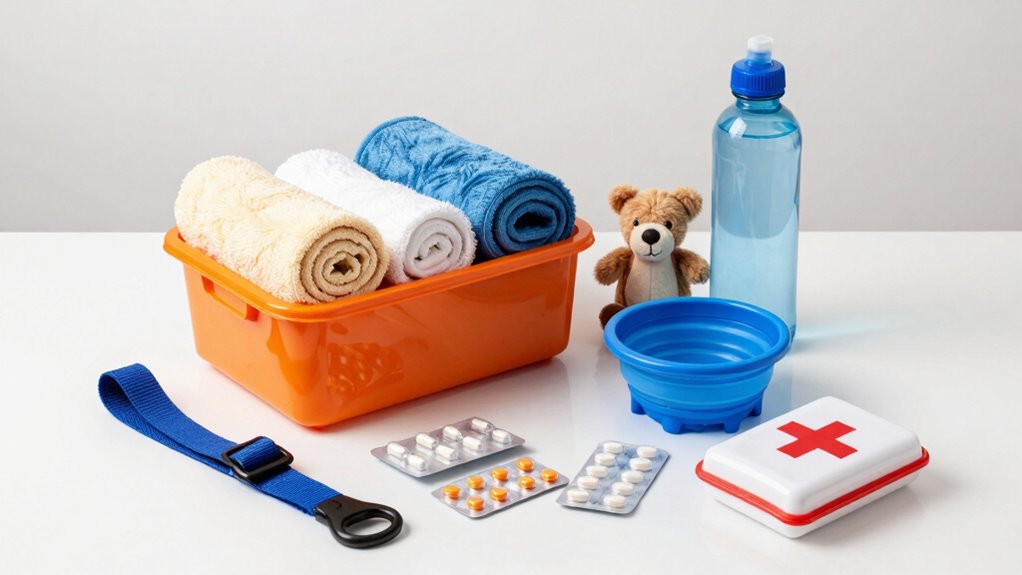

To prepare your 72-hour pet kit, pack enough food, water, and familiar comfort items like toys or blankets to reduce stress. Include a pet-specific first aid kit, necessary medications, and copies of medical records. Make sure to have secure carriers, leashes, and updated ID tags for safe travel. Don’t forget sanitation supplies and personal pet photos. Staying organized and knowing local shelters will help keep your pet safe—keep going to learn more essential tips.

Get garden gear delivered free with Prime
- Fast, free delivery on millions of items
- Prime Video, Amazon Music and more included
- Member-only deals all year
Key Takeaways
- Include enough food and water for 3 days, stored in airtight containers and collapsible bowls.
- Pack a pet-specific first aid kit, medications, and medical records for quick access.
- Ensure updated ID tags, microchip info, and a recent photo for identification.
- Use a sturdy carrier, leashes, harnesses, and comfort items to secure and calm your pet.
- Organize sanitation supplies, familiar toys, and blankets to reduce stress during emergencies.
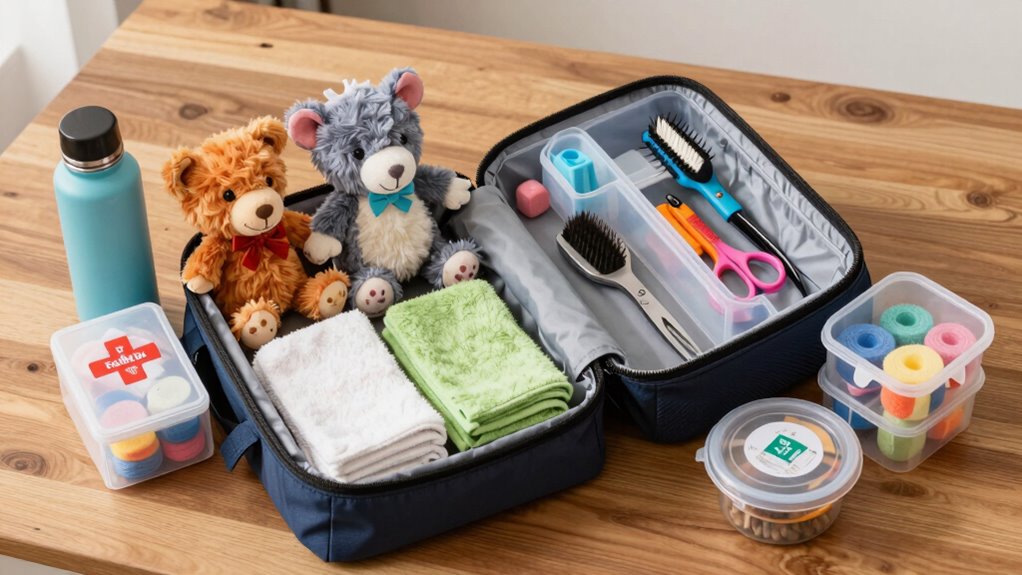
When preparing a pet kit, having the right contents guarantees you’re ready for any situation. Emergency preparedness is fundamental, especially during unexpected events like natural disasters or travel disruptions. A well-stocked 72-hour pet kit provides peace of mind, ensuring your pet’s needs are met without scrambling at the last minute. It’s equally important to include travel essentials, whether you’re evacuating or just heading out for a long trip. Your goal is to create an all-encompassing kit that covers basic needs, safety, and comfort.
Start with enough food and water to sustain your pet for at least three days. Pack dry kibble in airtight containers and include a collapsible water bowl for easy feeding on the go. Don’t forget to carry extra water, especially if you’re in an area prone to power outages or contaminated supplies. It’s wise to include familiar items like a favorite toy or blanket, which can help reduce stress during chaotic situations and provide comfort. Additionally, understanding pet-specific needs can help you tailor your kit to better support your pet’s health and emotional well-being. Including emotional comfort items can also significantly ease your pet’s stress during emergency situations. Being aware of specific health conditions your pet may have allows you to prepare appropriate supplies in advance.
Ensure three days of food and water, plus comfort items like toys or blankets for stress relief during emergencies.
First aid supplies are an integral part of your emergency preparedness. Stock a pet-specific first aid kit with bandages, antiseptic wipes, tweezers, and any medications your pet needs. Include your veterinarian’s contact information and a copy of medical records, just in case you need to visit an unfamiliar vet. Leashes, harnesses, and a secure carrier are travel essentials that keep your pet safe and contained during transit. These should be sturdy, comfortable, and easy to carry.
Consider adding sanitation supplies like waste bags, paper towels, and disinfectant wipes to maintain hygiene. If your pet has special needs or medical conditions, include any necessary supplies, such as medication, insulin, or special diet foods. Remember, your pet’s comfort is just as indispensable as their health, so pack a cozy bed or blanket to help them feel secure. Additionally, ensuring proper indoor air quality can help reduce stress and promote health during stressful situations. It’s also beneficial to familiarize yourself with local emergency services and shelters that accommodate pets, should evacuation become necessary. Proper planning and organization of these items can save valuable time in stressful moments.
Finally, don’t forget to prepare for identification and safety. Attach updated ID tags to your pet’s collar and consider microchipping as a permanent form of identification. Keep a recent photo of your pet in the kit, which can be invaluable if you get separated. Having these essentials organized and easily accessible ensures that, in any emergency or travel scenario, your pet’s well-being remains a priority. Overall, a 72-hour pet kit is a practical, life-saving tool that combines emergency preparedness with travel essentials to keep your furry friend safe and comfortable no matter what happens.
As an affiliate, we earn on qualifying purchases.
Frequently Asked Questions
How Often Should I Update My Pet’s Emergency Kit?
You should update your pet’s emergency kit at least every six months. Regular updates guarantee your pet hydration supplies are fresh and emergency contacts are current. Check expiration dates on food and medications, replace worn items, and reassess your pet’s needs. Keeping your kit up-to-date helps you respond quickly and effectively during an emergency, giving you peace of mind knowing your pet’s essentials are always ready when you need them most.
Can I Include Medications in the Kit?
Including medications in your pet’s emergency kit is vital, like packing an umbrella on a rainy day. Always store medications properly, following vet consultation for correct dosage and storage guidelines. Avoid keeping medications in the kit for long periods, as they can expire or degrade. Consult your vet regularly to update medication storage and guarantee you have the right prescriptions ready in case of an emergency.
What if My Pet Has Special Dietary Needs?
If your pet has special dietary needs, you should include their specific food and any supplements they require in your kit. Consider their custom nutrition needs and pack enough for at least 72 hours, plus a little extra. Clearly label these items to prevent confusion. It’s also helpful to include instructions for feeding, ensuring caregivers know how to meet your pet’s unique dietary considerations during an emergency.
Should I Customize the Kit for Different Pets?
Yes, you should customize supplies for each pet. It might seem like extra work, but tailoring your kit with pet-specific items guarantees their safety and comfort during emergencies. You can include favorite foods, medications, or specific toys. Customizing supplies helps address unique needs, especially for pets with special dietary or health requirements. This way, you’ll be prepared to handle any situation, giving your pets the best care possible.
How Do I Store the Kit to Keep It Accessible?
You should store your pet kit in a designated, easily accessible location like a closet or near your main exit. Use clear containers or bins to keep items organized and visible. Accessibility tips include labeling the kit clearly, keeping it at a height that’s easy to reach, and regularly checking that supplies are up-to-date. This way, you can grab it quickly during an emergency without searching.
As an affiliate, we earn on qualifying purchases.
Conclusion
With your 72-hour pet kit fully stocked, you’re prepared for emergencies more effectively than a fortress is guarded. Remember, this kit isn’t just a box of supplies; it’s your pet’s lifeline in chaos. Keep it accessible, up-to-date, and ready to deploy at a moment’s notice. When disaster strikes, you’ll be the hero your furry friend believes you are—more powerful than the mightiest storm, ensuring their safety and comfort when it matters most.
As an affiliate, we earn on qualifying purchases.
As an affiliate, we earn on qualifying purchases.
Columbus Day / Indigenous Peoples' Day Picks
long weekend sales
As an affiliate, we earn on qualifying purchases.