
Proper ventilation is key to keeping your wall tent safe, comfortable, and free of moisture. It helps clear out stale air, smoke, and harmful gases, reducing the risk of mold and fire hazards. Strategic vents and airflow control ensure you stay warm in winter and cool in summer. Good ventilation boosts air quality and safety while making your outdoor experience more enjoyable. To discover how to set up an effective system, continue exploring what’s best for your needs.

Get garden gear delivered free — and shop member deals
- Fast, free delivery on millions of items
- Access to Prime Big Deal Days deals on October 6–7
- Prime Video, Amazon Music and more included
Key Takeaways
- Proper ventilation prevents stale air buildup, ensuring a fresh, healthy environment inside wall tents.
- Strategic placement of vents facilitates effective airflow, reducing smoke and harmful gas accumulation.
- Adjustable vents allow climate control, maintaining comfort and safety across different weather conditions.
- Safe ventilation setup includes secure pathways and separation from flammable materials to prevent fire hazards.
- Effective airflow reduces moisture, mold, and mildew, prolonging tent durability and enhancing overall safety.
Have you ever struggled with stale air or excess condensation in your wall tent? It’s a common problem that can make your outdoor experience uncomfortable and even unsafe. Proper ventilation isn’t just about comfort; it’s also about safety. When you’re inside a wall tent, especially if you’re using a stove or heater, good ventilation becomes critical for fire safety. Without it, there’s a risk of dangerous buildup of smoke, carbon monoxide, or other harmful gases. Ventilation installation isn’t complicated, but it’s crucial to do it right. When you set up effective airflow pathways, you reduce the chances of accidental fire hazards and keep the air fresh.
Proper ventilation is essential for safety and comfort inside your wall tent, especially when using stoves or heaters.
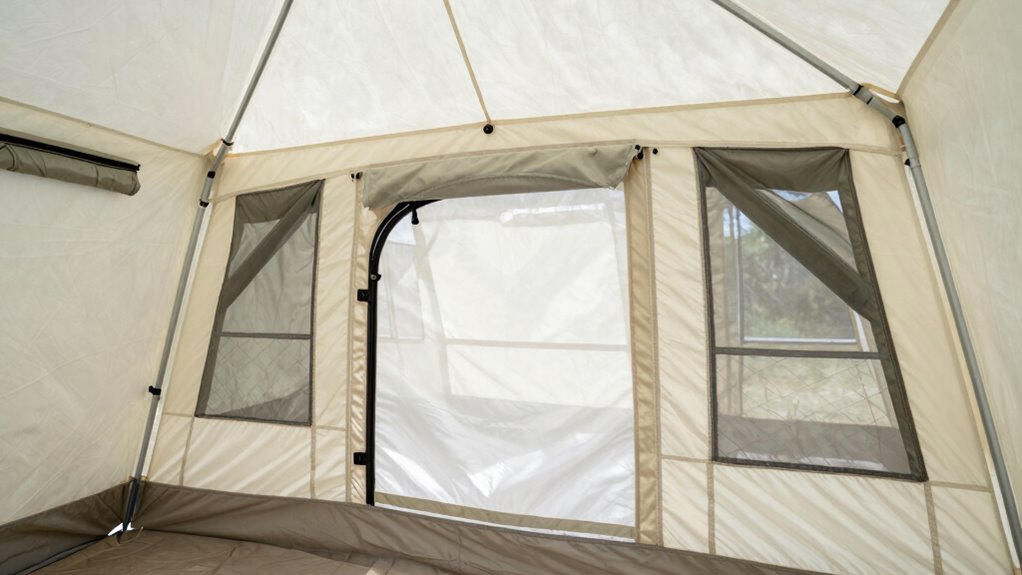
Installing vents or windows strategically allows fresh air to flow in while letting stale air escape. This natural airflow helps maintain a healthier environment inside your tent, discouraging mold and mildew caused by excess humidity. When condensation forms on the walls, it’s often a sign that your tent isn’t ventilated enough. Over time, moisture buildup can weaken your tent’s fabric, lead to mold growth, and create a damp, uncomfortable atmosphere. Proper ventilation reduces these issues by continuously exchanging indoor air with the outside, preventing excess moisture from settling. Additionally, understanding how air quality impacts your health emphasizes the importance of proper ventilation in confined spaces. Ensuring adequate ventilation pathways is essential for maintaining a safe and healthy environment inside your tent.
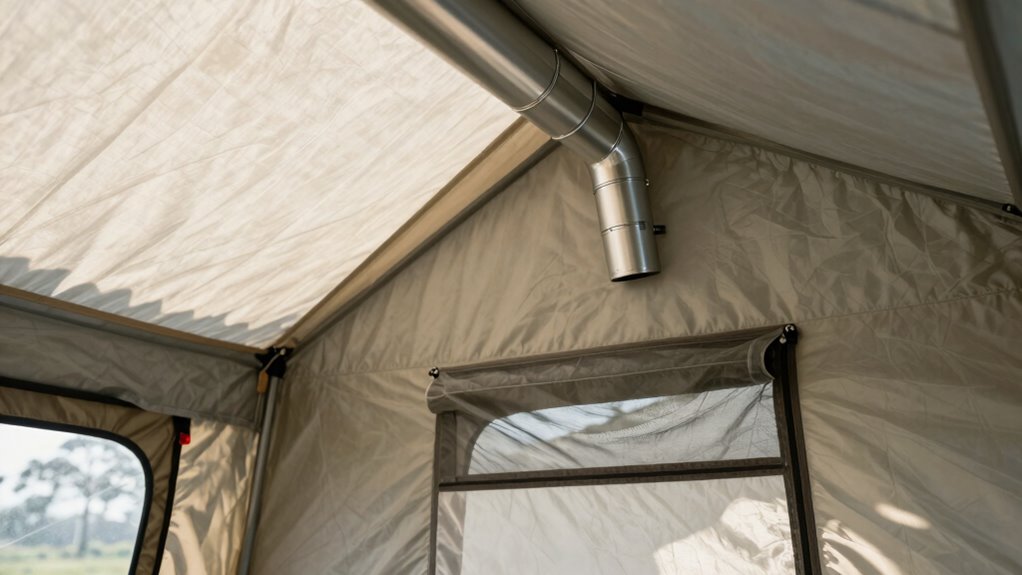
You should also prioritize safety features during ventilation installation. For example, if you’re using a stove or heater, installing a dedicated vent or chimney ensures that harmful gases exit safely outside, greatly lowering fire safety risks. Never underestimate the importance of keeping flammable materials away from heat sources and ensuring that your ventilation pathways are clear and secure. Well-placed vents not only improve air quality but also serve as an essential part of fire safety measures. When airflow is managed correctly, it minimizes the chances of overheating or smoke buildup, which could become dangerous. Additionally, installing ventilation equipment properly ensures maximum efficiency and safety in your setup. Properly designed ventilation systems also take into account climate considerations, ensuring optimal airflow adjustment based on seasonal changes.
In addition, consider the climate and your specific needs when designing your ventilation system. In colder weather, you might need adjustable vents to control airflow without letting in too much cold air. In warmer conditions, open vents can help cool down the interior naturally. For optimal safety and comfort, it’s beneficial to learn about natural ventilation techniques that can enhance airflow without relying solely on mechanical systems. Regardless of the season, effective ventilation installation plays a crucial role in creating a safe, comfortable space inside your wall tent. It helps you breathe easier, keeps condensation at bay, and ensures that you’re protected from potential fire hazards. Good airflow isn’t just a luxury—it’s a necessity for safe, enjoyable outdoor adventures.
As an affiliate, we earn on qualifying purchases.
Frequently Asked Questions
How Often Should I Clean My Wall Tent’s Ventilation System?
You should clean your wall tent’s ventilation system at least once every three to four months, depending on usage and environment. Follow a regular cleaning schedule for ventilation maintenance, especially after heavy rain or dusty conditions. Check vents for debris, dust, or blockages, and clean them with a soft brush or cloth. Proper ventilation maintenance guarantees ideal airflow, keeps your tent fresh, and enhances safety and comfort during your outdoor adventures.
Can Ventilation Affect the Insulation Efficiency of My Wall Tent?
Yes, ventilation can affect the insulation efficiency of your wall tent. Poor or excessive ventilation may create airflow interference, which reduces the insulation impact by allowing drafts or heat loss. Properly balanced ventilation guarantees fresh air without disrupting insulation, maintaining warmth and comfort. You should regularly check and adjust vents to prevent ventilation interference, helping your tent stay cozy and energy-efficient, especially during colder months.
Are There Specific Ventilation Types Suited for Cold Weather?
Yes, certain ventilation types are better suited for cold weather. Look for systems that facilitate controlled cold air exchange, which helps prevent condensation without losing valuable winter insulation. Options like adjustable vents or chimney-style exhausts allow you to manage airflow effectively, ensuring fresh air flows in while retaining warmth. Proper ventilation keeps your tent comfortable and safe, reducing moisture buildup and maintaining ideal winter insulation during cold conditions.
How Do I Troubleshoot Poor Airflow in My Tent?
Think of your tent’s airflow like a river’s current—when it slows, comfort and safety suffer. To troubleshoot poor airflow, check for obstructions, ensuring vents and windows are fully open. Use ventilation accessories like fans or vent caps to boost circulation. Airflow optimization depends on maintaining clear pathways and proper placement of these accessories. Regularly inspect and adjust to keep your tent’s atmosphere fresh, safe, and comfortably breathable.
What Safety Precautions Should I Take With Tent Ventilation?
To guarantee ventilation safety and maintain proper tent airflow, you should always keep vents clear of obstructions, monitor for condensation, and avoid using open flames inside the tent. Always check that your ventilation system is functioning correctly before occupancy. Additionally, use carbon monoxide detectors if you’re using fuel-powered equipment. These precautions help prevent suffocation risks and ensure a safe, comfortable environment during your outdoor adventures.
As an affiliate, we earn on qualifying purchases.
Conclusion
Proper wall tent ventilation isn’t just about comfort—it’s essential for your safety. Did you know that poor air quality can cause headaches, dizziness, or worse? Ensuring good airflow helps keep mold, smoke, and harmful gases at bay, creating a healthier environment for you and your loved ones. Investing a little time in ventilation now means you can enjoy your outdoor adventures worry-free, knowing you’re protected from unseen dangers. Prioritize ventilation—your well-being depends on it.
As an affiliate, we earn on qualifying purchases.
As an affiliate, we earn on qualifying purchases.
Halloween Picks
halloween
As an affiliate, we earn on qualifying purchases.