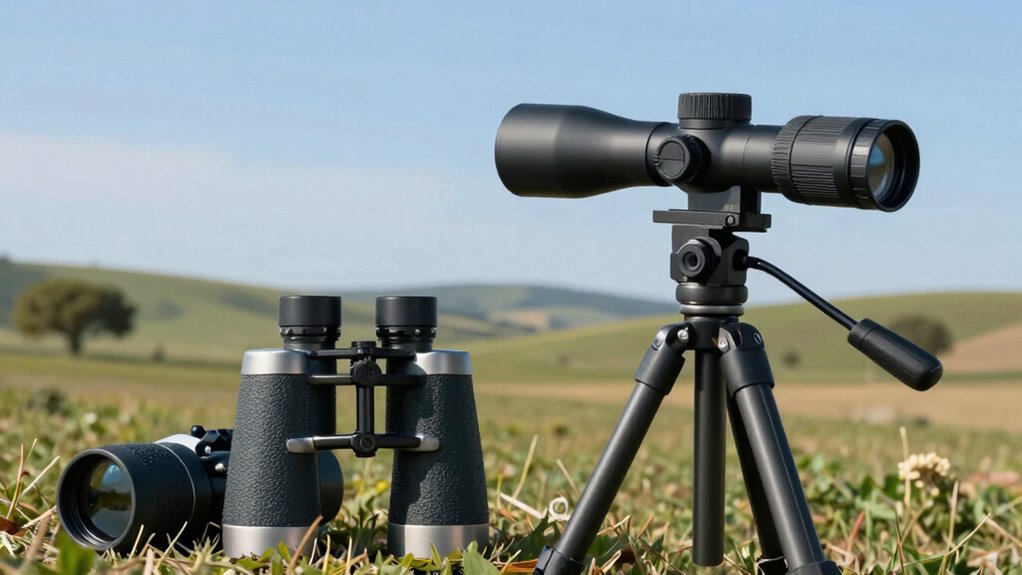

In open country, your choice depends on how you’ll use the tools. Binoculars are lightweight and great for quick scanning and tracking moving animals or scenery, offering a wider field of view. Spotting scopes provide higher magnification for detailed, long-distance observation but require more setup and stability. If you prefer fast glimpses, binoculars are ideal. For more in-depth exploration options and tips, keep exploring how each tool can best fit your outdoor adventures.

Get garden gear delivered free — and shop member deals
- Fast, free delivery on millions of items
- Access to Prime Big Deal Days deals on October 6–7
- Prime Video, Amazon Music and more included
Key Takeaways
- Binoculars offer wider fields of view for quick scanning, making them ideal for open country observation.
- Spotting scopes provide higher magnification for detailed, long-distance viewing, suitable for specific distant subjects.
- Binoculars are lightweight and portable, ensuring ease of handling during active outdoor exploration.
- Spotting scopes require stable support and setup, better for detailed examination after locating a target.
- Choice depends on whether quick, broad glimpses or detailed, long-range observation suits your open country activity.
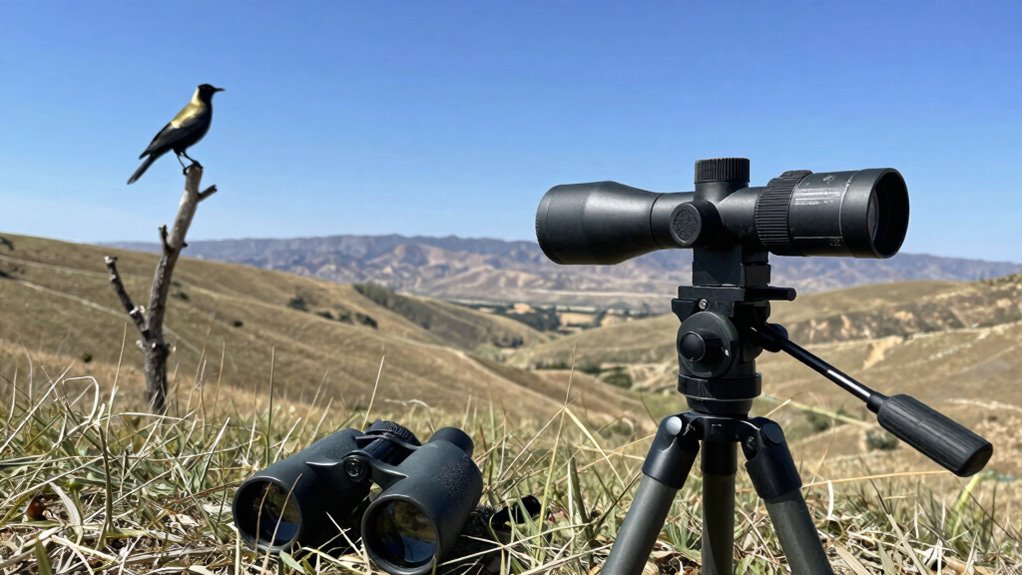
When choosing between a spotting scope and binoculars, understanding their differences can considerably enhance your viewing experience. In open country settings, these tools serve distinct purposes, and knowing how their features compare helps you select the right one. One key difference lies in magnification. Spotting scopes typically offer higher magnification levels—often ranging from 15x to 60x or more—allowing you to see distant objects in incredible detail. Binoculars, on the other hand, usually provide lower magnification, generally between 8x and 12x, which offers a broader perspective but less detail at long distances. If your primary goal is to observe wildlife or landscape features from afar, a spotting scope’s magnification differences give you a closer look, but it may come with a narrower field of view. Conversely, binoculars excel at providing wider field of view options, making it easier to scan large areas quickly and track moving subjects.
Your choice also depends on the terrain and activity. In open country, where you might be watching birds, wildlife, or distant scenery, binoculars are lightweight, portable, and quick to use, offering a wide field of view that helps you locate subjects easily. They’re perfect for fast-paced observation, where you need to scan large areas without losing sight of your target. Spotting scopes, however, are more suited for detailed examination once you’ve identified a subject. Their higher magnification allows you to scrutinize distant objects with precision, but they tend to be bulkier, require a tripod or stable support, and have a narrower field of view. This means you’ll spend more time adjusting your position to keep your target in sight. Additionally, understanding magnification and field of view can significantly influence your choice, especially in vast landscapes. Considering the light-gathering ability of each tool can also impact visibility, especially in low-light conditions. Moreover, considering ease of use and portability can make a substantial difference for outdoor enthusiasts on the move.
In open country, the decision hinges on what you value most. If you want quick, versatile scanning with easy handling, binoculars are your best bet. If you prefer detailed observation and don’t mind setting up a sturdy support, a spotting scope will serve you well. While their magnification differences are a major factor, don’t overlook field of view options—wider views make spotting and tracking easier, especially in vast landscapes. Ultimately, the right tool depends on how you plan to explore the outdoors: binoculars for quick, wide glimpses, and spotting scopes for detailed, long-range study.
best binoculars for wildlife observation
As an affiliate, we earn on qualifying purchases.
As an affiliate, we earn on qualifying purchases.
Frequently Asked Questions
Which Is More Durable for Rugged Outdoor Use?
For rugged outdoor use, binoculars are generally more durable because of their material resilience. They’re designed to withstand bumps, drops, and harsh weather conditions better than spotting scopes. Binoculars often feature rubber armored coatings that absorb shocks, making them ideal for rough terrains. Spotting scopes, while sturdy, tend to be more delicate due to their glass and precision components. So, if durability is your priority, go with high-quality, rubber-coated binoculars.
Can Spotting Scopes Be Used for Nighttime Viewing?
You can use spotting scopes for nighttime viewing, but don’t expect night vision capabilities. They excel in low light scenarios, like dawn or dusk, providing brighter images than binoculars. While they don’t replace night vision devices, a spotting scope’s large objective lens helps gather more light, making it easier to see in low light conditions. For true nighttime viewing, consider adding a night vision accessory for enhanced clarity.
Are Binoculars Better for Quick, Casual Observations?
Binoculars are better for quick observations and casual viewing because they’re lightweight, portable, and easy to grab on the go. When you want to quickly scan your surroundings or catch a glimpse of wildlife without fuss, binoculars give you immediate access and a wide field of view. They’re perfect for casual outings, birdwatching, or outdoor adventures where convenience and speed matter most.
How Do Weather Conditions Affect Each Tool’s Performance?
Weather conditions can turn your gear into a wild card. Rain and fog create a weather impact that clouds visibility factors, making it harder to see clearly through both binoculars and spotting scopes. Wind can shake your view, while glare from bright sunlight hampers your vision. To get the best performance, choose waterproof, fog-proof models and adjust your expectations based on current weather. Adaptability is key in open country adventures.
What Is the Typical Weight Difference Between Them?
You’ll find that binoculars are generally lighter, with weight comparisons ranging from 1 to 3 pounds, making them highly portable and easy to carry for long hikes. Spotting scopes are heavier, often weighing between 3 to 5 pounds or more, which affects their portability. This difference in weight means binoculars are more convenient for open country adventures where mobility matters, while spotting scopes suit stationary spotting tasks better.
high magnification spotting scope
As an affiliate, we earn on qualifying purchases.
As an affiliate, we earn on qualifying purchases.
Conclusion
So, which will you choose for your next adventure— the commanding presence of a spotting scope or the nimble versatility of binoculars? Imagine yourself in the open country, eyes scanning the horizon as the landscape unfolds before you. Will you focus on distant details or swiftly switch views? Either way, the right tool promises to reveal secrets hidden beyond the eye’s reach, inviting you to explore the wild with anticipation building with every glance.
As an affiliate, we earn on qualifying purchases.
As an affiliate, we earn on qualifying purchases.
Fall Picks
fall essentials
As an affiliate, we earn on qualifying purchases.