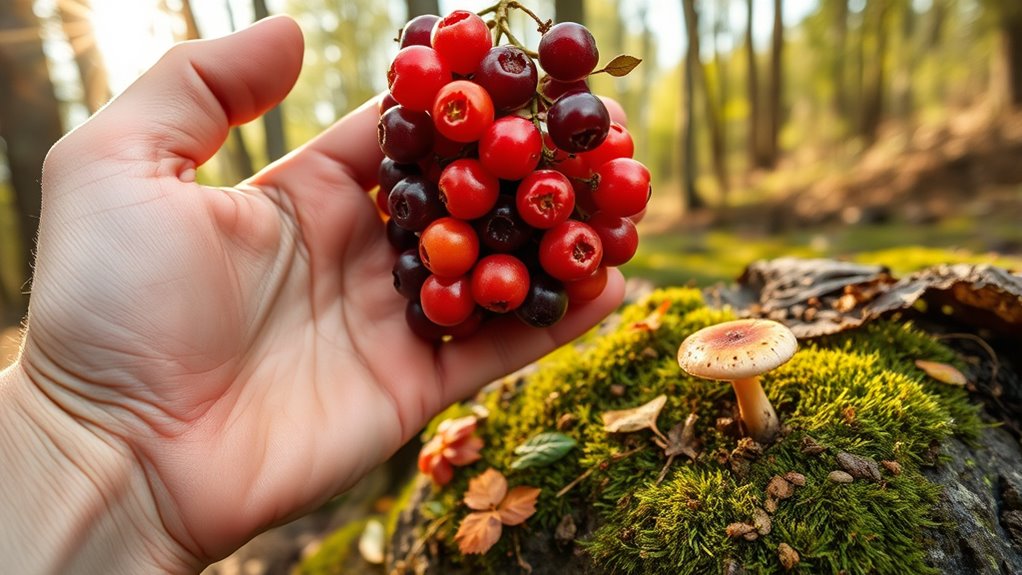

To determine edibility without a field guide, focus on reliable visual indicators like leaf shape, growth habit, and unique traits such as milky sap or textured stems. Always verify seasonal changes that may alter appearance. Conduct a simple spot test by rubbing a small part of the plant to observe reactions like color changes or irritation, but remember, no test is completely fail-safe. Keep learning more about plant signs to stay safe and confident in your foraging skills.
Key Takeaways
- Focus on reliable visual and physical indicators like growth habit, leaf shape, and distinctive traits rather than appearance alone.
- Use the “touch, smell, and taste” test cautiously—only after confirming non-toxic traits and avoiding known poisonous plants.
- Identify plants by their unique features, such as milky sap, stem texture, or leaf arrangement, that are consistent across seasons.
- Cross-reference multiple signs and traits rather than a single characteristic to improve accuracy in edibility judgment.
- Always consider seasonal changes and local variations to avoid misidentification, and gather knowledge about your area’s flora beforehand.
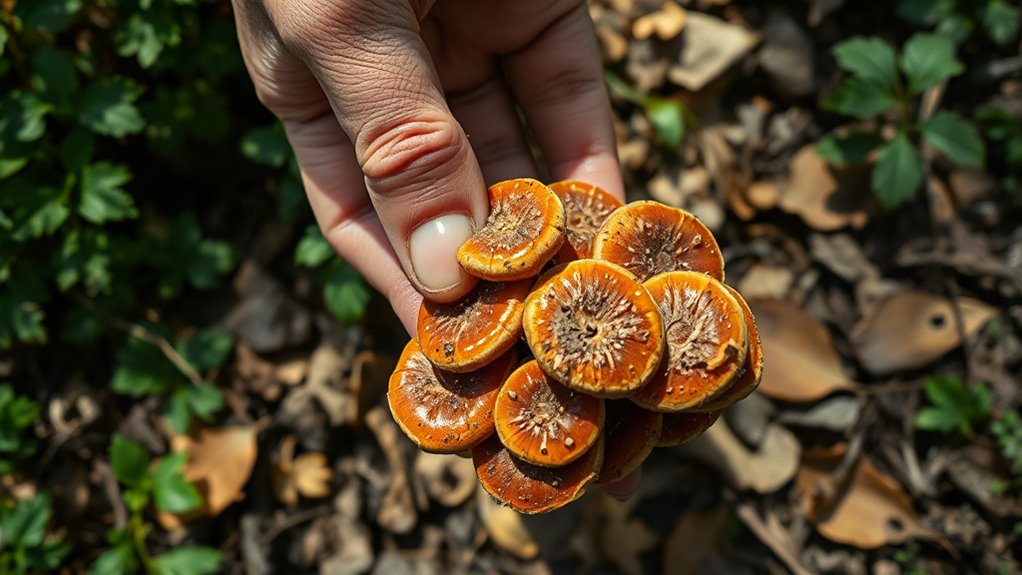
When foraging in the wild, it’s essential to determine whether a plant is edible before consuming it. Relying solely on visual identification can be risky because many edible plants have toxic look-alikes that closely resemble them. These confusing relatives often share similar shapes, colors, or textures, making it tricky to tell them apart without careful observation. That’s why understanding potential toxic look-alikes is critical—they can turn a safe foraging experience into a dangerous one if mistaken for something edible. Additionally, plants can change their appearance with seasonal variations, which adds another layer of complexity. A plant that’s safe to eat in early summer might look different or become less recognizable in fall or winter, so your identification skills need to adapt with the seasons.
To navigate these challenges, you should focus on common, reliable indicators of edibility rather than just the plant’s outward appearance. Start by examining the plant’s growth habit—whether it’s a vine, shrub, or herb—and pay attention to its leaves, flowers, and stems. Many edible plants have distinctive features like unique leaf patterns or specific flower arrangements that can help distinguish them from toxic look-alikes. For example, the shape of the leaves, the presence of milky sap, or the texture of the stem can provide clues. Be cautious, though—never trust a single characteristic. Instead, look for a combination of traits and consider how they align with known edibility indicators.
Recognizing the importance of color accuracy and other visual clues can greatly improve your chances of safe identification. Seasonal variations can also influence how plants look, so it’s essential to stay updated on how specific species change throughout the year. Some plants may produce different foliage or flowers depending on the season, making identification more complex. Recognizing these variations helps you avoid misidentification, especially when a plant’s appearance shifts considerably over time. It’s wise to gather knowledge about local flora and their seasonal cycles before venturing out.
Frequently Asked Questions
Can the No-Fail Field Test Be Used on All Wild Plants?
You might wonder if the no-fail field test works on all wild plants. While it’s a helpful tool for plant identification, it shouldn’t be relied on exclusively for safety precautions. Not every plant passes the test, and some can be toxic even if they seem safe. Always double-check with a reliable guide or expert, and never eat wild plants unless you’re 100% sure of their edibility.
How Long Does the Edibility Test Take?
You might wonder how long the edibility test takes, but it varies depending on the plant. Typically, you should set aside at least 15 minutes to observe for any adverse reactions after initial testing. The test duration includes a waiting period to make certain no allergic or toxic responses occur. Be patient and cautious, as rushing the process could lead to dangerous mistakes. Always prioritize safety over speed.
Are There Any Risks Using the No-Fail Field Test?
Using the no-fail field test carries risks because some toxic plants may not show clear toxicity signs. You might mistakenly eat something safe, or worse, ingest something harmful. Always follow safety precautions, like testing small amounts first and avoiding plants with uncertain identification. Remember, relying solely on this test isn’t foolproof—it’s best to cross-reference with other identification methods or consult an expert to ensure safety.
Can Children Safely Use This Test?
You should avoid letting children use this test independently because of child safety concerns. Even with supervision requirements, kids might misinterpret the results or rush, increasing the risk of poisoning. Always supervise children closely and educate them on safe foraging practices. Remember, this test isn’t foolproof, so it’s best to rely on adult judgment and proper identification methods to keep children safe in outdoor environments.
Does the Test Work for Fungi or Mushrooms?
Like a lighthouse guiding ships, understanding mushroom safety helps you avoid danger. This test doesn’t reliably work for fungi or mushrooms, since many edible fungi look similar to toxic ones. Relying solely on it risks poisoning. Always use proper identification methods or consult experts before foraging. Remember, mistaking an inedible mushroom for an edible one can be deadly, so never skip thorough research in your mushroom safety practices.
Conclusion
Just like Odysseus trusted his instincts on unfamiliar shores, trust your senses to guide you. By observing, smelling, and tasting cautiously, you can often determine if a plant’s safe to eat—no guide needed. Remember, even the wisest explorers relied on intuition and careful testing. So, stay alert, respect nature’s signals, and embrace your inner adventurer. With patience and awareness, you can navigate the wild like a seasoned traveler, confident in your own judgment.