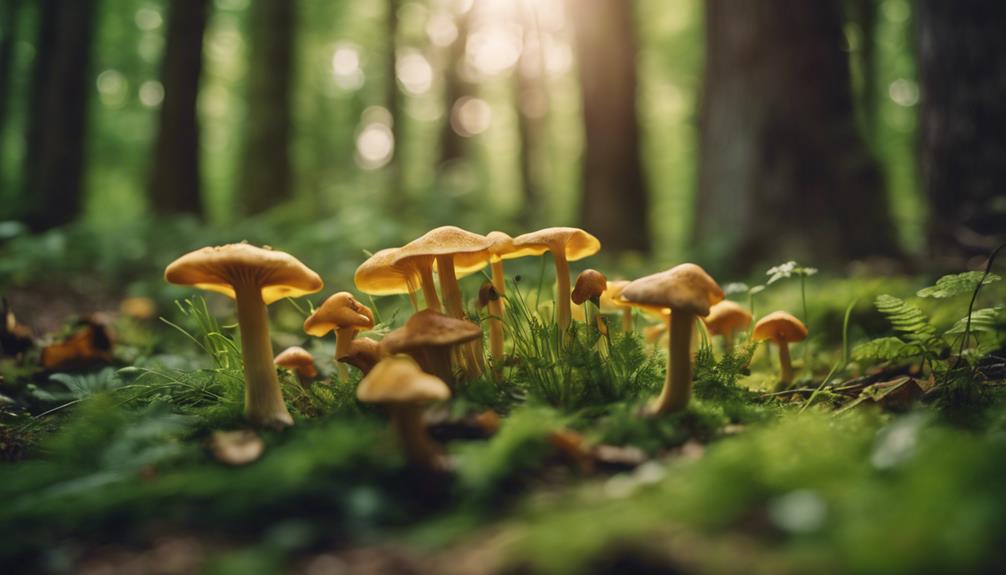
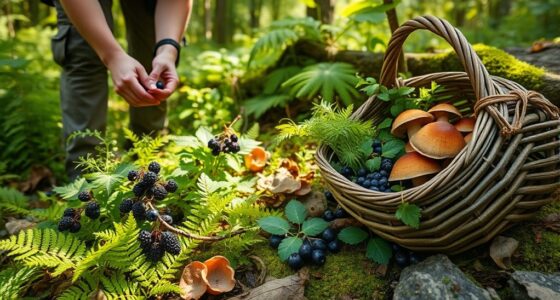
To make tinctures and infusions from wild herbs, start by carefully identifying safe, non-toxic plants and harvesting during peak times, like late morning during flowering. Rinse the herbs gently, then chop or crush them to release active compounds. For tinctures, fill a clean jar with herbs and cover them with alcohol, sealing tightly. For infusions, steep herbs in hot water or oil. Proper handling, storage, and respect for nature guarantee a potent remedy—continue to learn how to perfect your herbal preparations.

Get garden gear delivered free with Prime
- Fast, free delivery on millions of items
- Prime Video, Amazon Music and more included
- Member-only deals all year
Key Takeaways
- Properly identify and select healthy, flowering wild herbs, avoiding toxic look-alikes and contaminated areas.
- Harvest herbs during peak potency, using clean tools, and handle gently to preserve active compounds.
- Rinse herbs carefully, then chop or crush to increase surface area before preparing tinctures or infusions.
- Use quality materials like glass jars and fresh or properly dried herbs for effective extraction.
- For tinctures, soak herbs in alcohol; for infusions, steep herbs in hot or cold water, then strain and store appropriately.
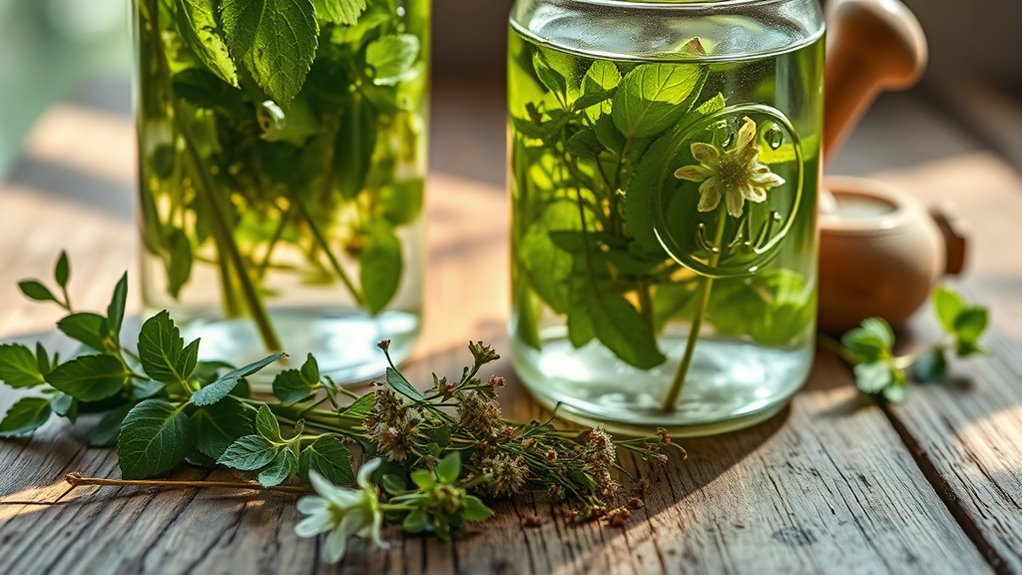
Wild herbs offer a simple and effective way to create tinctures and infusions that harness their natural healing properties. Before you start, it’s paramount to prioritize herbal safety. Not all wild plants are safe to consume, so proper identification is indispensable. Learn to distinguish beneficial herbs from toxic look-alikes, and consult reputable field guides or local experts if you’re unsure. Also, be aware of any environmental hazards, such as pollution or pesticide use, which can contaminate wild plants. Avoid harvesting from areas near busy roads, industrial sites, or heavily sprayed fields. Always respect local regulations about foraging, and never take more than you need to allow the plant populations to regenerate.
When it comes to harvesting tips, timing is key. Many herbs are most potent when harvested at specific times of day or stages of growth. Generally, late morning after dew has evaporated is ideal because the plant’s essential oils are at their peak. For most herbs, harvest during the flowering phase when their medicinal compounds are most concentrated. Use clean, sharp tools like scissors or knives to cut the plants, and handle them gently to avoid damaging the roots or stems. When collecting, choose healthy, vibrant specimens without signs of disease or pests. Always leave enough of the plant behind to guarantee sustainability and future growth.
Once you’ve gathered your herbs, proper preparation is indispensable. Rinse them gently with cool, clean water to remove dirt or insects, but avoid over-washing, which can leach out valuable oils. Pat them dry with a clean cloth or paper towel. To make tinctures, chop or crush the herbs to increase surface area, releasing their active constituents. For infusions, you can leave the herbs whole or broken, depending on the plant and your preference. Remember, the quality of your herbs directly impacts the potency and safety of your tinctures and infusions. Use fresh herbs when possible for a more potent extract, but dried herbs can work well too if stored properly. Additionally, using natural materials like glass jars or stainless steel tools helps maintain the purity of your herbal preparations.
Frequently Asked Questions
How Long Do Homemade Tinctures and Infusions Last?
Your homemade tinctures and infusions typically last about 1 to 3 years, depending on herbal preservation methods and storage conditions. To maximize shelf life, keep them in dark glass bottles away from direct sunlight and heat. Properly sealed, they remain potent and safe for use over time. Regularly check for signs of spoilage, like cloudiness or foul smell, and trust your senses to gauge their longevity.
Can I Mix Different Herbs in One Infusion?
Think of your infusion as a symphony—herb combinations are your instruments. Yes, you can mix different herbs, creating a harmonious blend of flavors and benefits. Focus on flavor blending and complementary properties to craft a balanced infusion. Experiment with herbs that enhance each other and match your intentions. Just remember, some herbs may clash, so trust your senses and start with small batches to perfect your herbal melody.
Are There Safety Concerns With Wild Herb Harvesting?
Wild herb safety is essential when foraging, so always follow proper foraging precautions. Be sure you can positively identify the herbs to avoid toxic plants, and harvest only from clean, pollution-free areas. Avoid taking too much, and steer clear of herbs near roads or industrial sites. Educate yourself or go with experienced foragers to minimize risks. Your safety depends on careful wild herb harvesting practices to enjoy the benefits safely.
What Are Common Mistakes to Avoid?
You should be careful to avoid common mistakes like inaccurate dosage and contamination. Always measure herbs precisely to guarantee dosage accuracy, preventing potential side effects. Wash and dry herbs thoroughly to prevent contamination, and use clean equipment throughout the process. Avoid overharvesting wild herbs, which can harm the environment and reduce plant populations. Staying vigilant about these mistakes helps you create safe, effective tinctures and infusions from wild herbs.
How Do I Identify the Right Herbs to Use?
Think of wild herbs as hidden treasures in a vast forest. To identify the right herbs, focus on key features like leaf shape, flower color, and scent—like reading a secret map. Prioritize herb identification and foraging safety by cross-referencing with trusted guides and local experts. Never consume a plant unless you’re 100% sure it’s safe, because mistaking one for another can be dangerous, even deadly.
Conclusion
Now that you know how to craft tinctures and infusions, imagine your wild herbs as hidden treasures waiting to be uncovered. Just like explorers who find gold in uncharted lands, you’re discovering nature’s secret remedies. With patience and care, your herbal creations can become powerful allies in your wellness journey. So, embrace the process, trust your instincts, and soon you’ll have a personal treasure trove of natural remedies ready to support you whenever needed.
Fall Picks
fall essentials
As an affiliate, we earn on qualifying purchases.