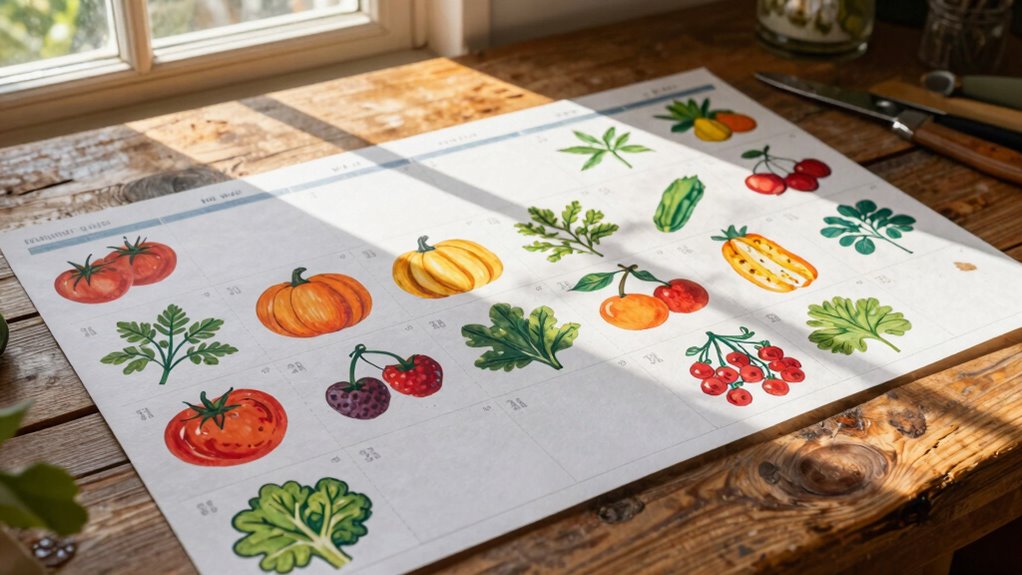

To build a personal harvest calendar, start by mapping out your local growing seasons and noting ideal planting and harvesting times for each crop. Track your planting dates, growth progress, and harvests using a notebook, app, or printable charts. Incorporate crop rotation and environmental factors to adjust your schedule effectively. By organizing your gardening efforts this way, you’ll prevent missed opportunities and boost productivity—keep going to discover more tips for a successful gardening plan.
Key Takeaways
- Map out your local growing seasons to plan planting and harvesting dates accurately.
- Record specific planting, flowering, and harvesting dates for each crop to track progress.
- Use digital tools or printable charts to organize and visualize your gardening schedule.
- Rotate crop families annually to maintain soil health and prevent pest buildup.
- Adjust your calendar based on environmental conditions and past records for optimal yields.
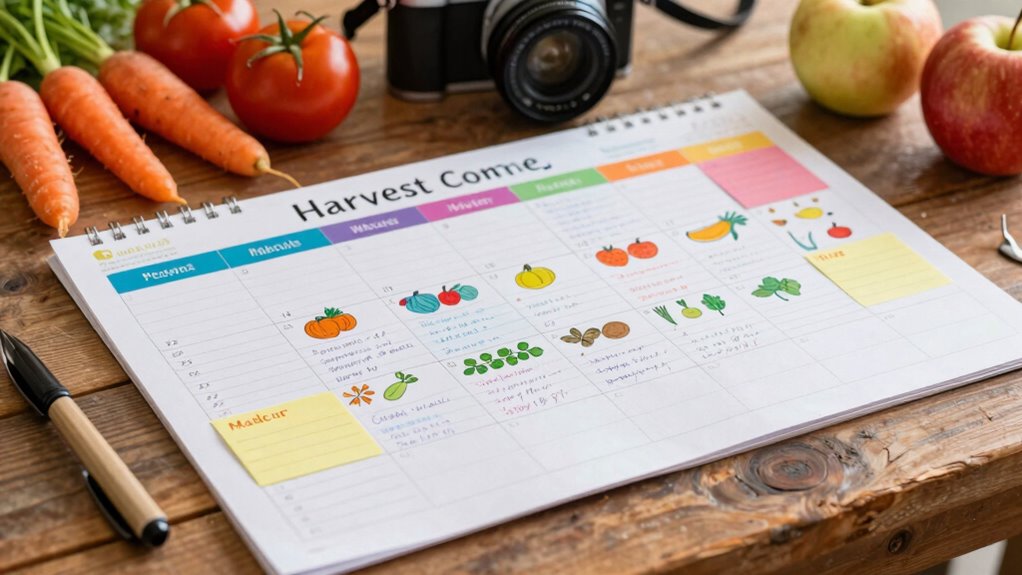
Have you ever wondered how to maximize your garden’s productivity throughout the year? The key is creating a personal harvest calendar that keeps you organized and ahead of the planting season. Relying solely on memory can lead to missed opportunities or crop failures, but a well-structured calendar transforms your gardening efforts into a smooth, predictable process. Start by mapping out your growing seasons based on your local climate, noting the best planting and harvesting times for each crop. Seasonal planning is crucial here; knowing when to start seedlings indoors versus direct sowing ensures you get the most out of your garden throughout the year.
Incorporating crop rotation into your calendar is equally indispensable. Not only does crop rotation help prevent soil depletion and reduce pest buildup, but it also improves your harvest quality over time. As you plan each season, assign specific areas of your garden to particular crop families, rotating them annually. This prevents the same nutrient from being depleted and disrupts pest life cycles, leading to healthier plants and higher yields. When you combine crop rotation with seasonal planning, you create a dynamic schedule that adapts to your garden’s needs, ensuring continuous productivity. Additionally, understanding your local climate and its impact on planting schedules can help you better anticipate your garden’s needs, making your planning more precise.
Building your personal harvest calendar involves more than just marking planting dates; it requires detailed tracking. Use a notebook, digital app, or printable chart to record your planting, flowering, and harvesting dates for each crop. Note the varieties you plant and any specific care instructions or observed issues. This record-keeping helps you identify patterns, improve timing, and adjust for next season. It also helps you consider your environmental conditions, allowing you to tailor your gardening strategies to your unique setting. Keeping detailed records also enables you to optimize your gardening strategy, aligning your efforts with the specific conditions of your environment. It also minimizes the mental clutter of trying to remember what you did last year, freeing you to focus on caring for your plants.

Legend Gardening Journal – 5-Year Garden Journal Planner & Log Book with Gardening Calendar & Plant Logs – Hardcover Garden Planner (Forest Green)
- Comprehensive Garden Planning: Includes seed selection, layout, and crop rotation
- Seasonal Task Tracking: Monitors watering, pruning, and fertilizing schedules
- Growth and Harvest Records: Logs germination, milestones, pollination, and harvest dates
As an affiliate, we earn on qualifying purchases.
As an affiliate, we earn on qualifying purchases.
Frequently Asked Questions
How Often Should I Update My Personal Harvest Calendar?
You should update your personal harvest calendar every time you complete a harvest or notice changes in harvest timing. This keeps it accurate for crop rotation planning and guarantees you’re prepared for future harvests. Regular updates help you track patterns, adjust planting schedules, and improve yield predictions. By staying consistent, you’ll develop a reliable system that adapts to seasonal shifts and crop variations, making your gardening more efficient.
Can I Customize the Calendar for Different Crops?
Absolutely, you can customize your calendar for each crop! Imagine having a superpower that lets you tailor crop planning and seasonal adjustments perfectly for every plant. You’ll track planting, harvesting, and even unexpected weather shifts, making your garden unstoppable. Personalizing your calendar means you’ll always stay ahead, optimizing growth and yields. It’s like creating a personalized blueprint for every crop, ensuring you maximize your harvest season after season.
What Tools Are Best for Tracking Harvest Dates?
You should use digital tools like spreadsheets or gardening apps to track harvest dates effectively. These tools let you customize for crop rotation, pest management, and seasonal changes. Set reminders for planting and harvesting, and note any pest issues or crop rotation plans. This way, you stay organized, optimize yields, and manage pests better, ensuring a successful growing season without relying solely on memory.
How Do I Handle Unexpected Weather Changes?
Think of weather unpredictability as a stormy sea, and your crops as a sturdy ship. To navigate unexpected weather changes, plan for crop resilience by planting diverse varieties and timing harvests carefully. Keep a flexible schedule, monitor weather forecasts, and have backup plans ready. This way, you stay afloat through surprises, ensuring your harvest remains steady despite the storms, turning challenges into opportunities for a resilient, bountiful yield.
Is There a Digital Version of a Harvest Calendar?
Yes, you can find digital templates for harvest calendars online. These templates let you customize harvest reminders based on your specific crops and planting schedule. By using a digital version, you stay organized and receive timely alerts, helping you manage your harvest more effectively. You’ll never forget an essential date and can easily adapt your calendar as weather or conditions change, making your harvest planning more reliable and stress-free.

Vegetable Garden Guide (3-Pack) – Laminated Companion Planting Chart, Seed Starting & Gardening Cheat Sheets for Beginners
- Complete Gardening Guides: Includes companion planting, seed starting, and basics
- Ideal for Beginners: Clear, easy-to-follow gardening instructions
- Quick-Reference Plant Chart: Instantly identify compatible plant pairings
As an affiliate, we earn on qualifying purchases.
As an affiliate, we earn on qualifying purchases.
Conclusion
By creating your own harvest calendar, you’ll reveal the secret to never forgetting a single crop again—imagine an unstoppable, all-knowing farming genius living inside your kitchen! This simple tool will turn you into a harvest hero, confidently planning and maximizing your yields. Say goodbye to missed opportunities and hello to a bountiful, thriving garden that practically grows itself. Get ready to dominate your planting season like a legendary farm master—your harvest will thank you!

Crop Rotation Checklist Poster – Organized Garden Decor – 13×19
- Crop Rotation Guide: Clear 4-step layout with arrows
- Glossy Print Quality: Vibrant colors and durability
- Ideal Display Size: 13×19 inches for easy reading
As an affiliate, we earn on qualifying purchases.
As an affiliate, we earn on qualifying purchases.

Clever Fox Gardener’s Journal – Guided Gardening Notebook to Plant Vegetables, Flowers & Herbs – 5-Year Garden Log Book for Beginners (Black)
- All-in-One Gardening Planner: Plan and log garden details easily
- 5-Year Garden Planning: Track multiple years of gardening activities
- Monitor Garden Health: Track soil pH, pests, diseases, and harvests
As an affiliate, we earn on qualifying purchases.
As an affiliate, we earn on qualifying purchases.