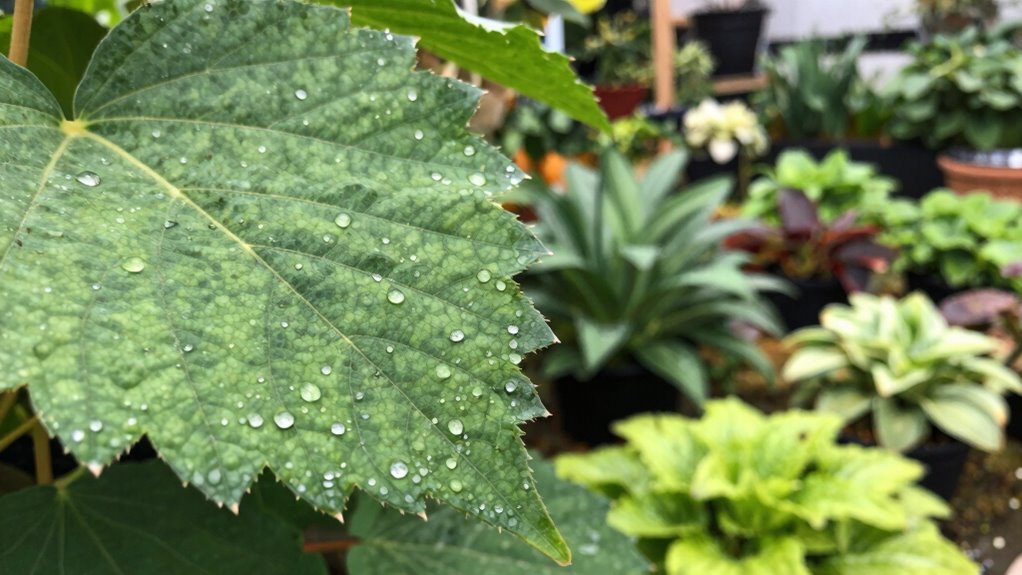

Both macro photos and wide shots help in plant identification, but each offers different benefits. Macro images highlight tiny details like leaf veins or flower patterns, which are essential for precise identification. Wide shots give context by showing the plant’s size, habitat, and growth form, helping you understand its environment. Using both styles together provides a complete picture, improving accuracy. To discover how combining these techniques makes identification easier, keep exploring further.

Get garden gear delivered free with Prime
- Fast, free delivery on millions of items
- Prime Video, Amazon Music and more included
- Member-only deals all year
Key Takeaways
- Macro photos highlight detailed features like venation and petal structure crucial for precise plant identification.
- Wide shots provide environmental context and growth form, aiding in ecological and habitat-based identification.
- Combining macro and wide shots offers a comprehensive view, improving overall accuracy in identifying plants.
- Macro images help distinguish subtle, minute traits often invisible in wider shots.
- Wide shots clarify plant interactions with surroundings, reducing ambiguity in identification.

When choosing between macro photos and wide shots, understanding their distinct purposes can considerably enhance your photography. Both styles serve different roles in documenting plants, especially when it comes to identification. Macro photography zooms in on the tiny details—like the texture of a leaf, the structure of a flower, or the intricate patterns on a seed pod. This approach allows you to capture minute features that aren’t visible to the naked eye, making it invaluable for identifying plants based on specific characteristics. On the other hand, wide shots provide context by showing the plant within its environment, revealing its habitat, surrounding vegetation, and overall growth form. This broader perspective can help you understand the plant’s ecological niche, which is often vital for proper identification. Utilizing effective photography techniques enhances both macro and wide shots. For macro photography, a steady hand or tripod is imperative to prevent blurring from slight movements. You’ll want to use a lens with a high magnification ratio, along with a small aperture (high f-number) to guarantee greater depth of field, keeping more of the tiny details in sharp focus. Good lighting is essential; natural diffused light minimizes shadows and highlights fine textures. For wide shots, a wider lens captures more of the plant and its surroundings, so you can demonstrate its natural growth habit and plant habitat. To get clear, sharp images, use a smaller aperture to increase depth of field, ensuring the entire plant is in focus. Incorporating a sense of scale—such as including a familiar object or ruler—helps viewers appreciate the plant’s size and context. Additionally, understanding plant identification techniques can significantly improve the accuracy of your observations and help you make better use of both macro and wide images. Recognizing the importance of visual cues in plant identification can further refine your photographic approach and improve the accuracy of your observations. Both styles serve distinct purposes in helping with plant identification. Macro images excel at highlighting specific identifying features—leaf venation, petal arrangement, or surface patterns—that are often overlooked in wider shots. These details are especially useful when consulting field guides or plant identification apps. A comprehensive understanding of plant morphology can help you focus on the most relevant features to capture. Moreover, paying attention to plant diversity can assist in narrowing down options and making more precise identifications. Wide shots, however, provide the environmental context that can eliminate ambiguity, showing how the plant interacts with its surroundings, nearby plants, or specific habitat types like wetlands, rocky slopes, or forest floors. Understanding habitat-specific features can enhance your ability to correctly identify plants in different environments. Together, these approaches complement each other: macro shots reveal the plant’s defining features, while wide shots situate it within its natural environment, giving you a well-rounded understanding essential for accurate identification.
Popular right now

iRobot Roomba 105 Vac Robot Vacuum

Ninja Foodi Air Fryer 10 Qt DualZone 6-in-1 Black DZ302

Philips 4400 Series Fully Automatic Espresso Machine with LatteGo Milk System
As an affiliate, we earn on qualifying purchases.
Frequently Asked Questions
How Do Lighting Conditions Affect Macro Versus Wide Plant Photos?
Lighting conditions greatly impact macro and wide plant photos by influencing clarity and detail. You should use effective lighting techniques and make exposure adjustments to capture true colors and textures. In macro shots, proper lighting highlights intricate features, while in wide shots, good lighting guarantees the entire scene is visible and vibrant. Poor lighting can cause shadows or overexposure, making identification harder, so adapt your technique for each shot type.
Can Macro Photos Reveal Hidden Plant Features for Identification?
You bet macro photos can reveal hidden plant features for identification. They zoom in on close-up details like leaf texture, tiny hairs, or unique seed structures that you might miss with wide shots. Think of it as shining a flashlight into a dark corner—these close-up shots uncover hidden features, giving you a clearer picture of the plant’s identity. Don’t overlook macro photography; it can be your secret weapon!
Are Wide Shots Better for Showing Plant Habitat Context?
Wide shots are better for showing plant habitat context because they capture the plant’s environment and scale. By including surrounding details, you can better understand the habitat and how the plant interacts with its ecosystem. This provides valuable habitat details that aid in identification. While macro photos reveal specific features, wide shots give you a broader view of plant scale and its natural setting, enhancing your overall identification accuracy.
Which Photo Type Is More Useful for Identifying Rare Plants?
Macro photos are more useful for identifying rare plants because they capture rare plant details that are essential for accurate identification. You focus on tiny features like leaf venation or flower structure, which wide shots might miss. Precision in capturing these details enhances identification accuracy, helping you distinguish rare plants from similar species. By zooming in on key features, you improve your chances of correctly recognizing and preserving these unique plants.
How Does Camera Stability Impact Macro Versus Wide Plant Photography?
Camera stability greatly impacts macro and wide plant photography by affecting focus accuracy and image sharpness. With macro shots, even slight camera movement causes blur because you’re capturing fine details, so use a tripod or stabilize your camera. In wide shots, stability remains important but is more forgiving, allowing for handheld shots. Maintaining stability ensures your images are clear, making plant identification easier regardless of shot type.
Conclusion
When choosing between macro photos and wide shots for plant identification, think of macro images as a magnifying glass revealing tiny, intricate details like a jeweler inspecting a gem. Wide shots, on the other hand, give you the full landscape, like a painter capturing the entire scene. Both are valuable tools—macro photos help with fine details, while wide shots show context. Use them together, and you’ll have a clearer picture, like a puzzle coming into focus.