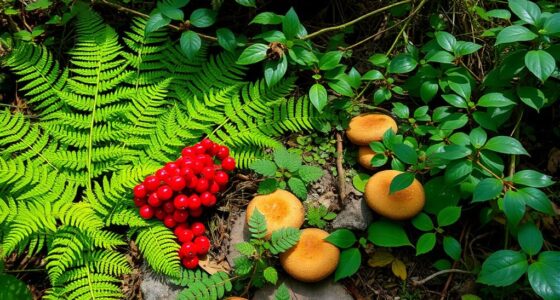
In hot weather, storing foraged foods correctly is key to keeping them fresh and safe. The “cool, dry, dark” rule helps by guiding you to find shaded, cool places (around 50-60°F), keep humidity low to prevent mold, and avoid exposing foods to sunlight or heat. Using breathable containers and drying herbs or mushrooms can extend their shelf life. If you keep these principles in mind, you’ll preserve your harvest longer—and there’s more to discover about making the most of your foraging in the heat.
Key Takeaways
- The “Cool, Dry, Dark” rule helps preserve foraged foods by preventing spoilage and slowing bacterial growth in hot weather.
- Keeping foods in a cool environment (50-60°F) reduces enzymatic activity and prolongs freshness.
- Dry conditions prevent mold and rot, especially important in humid climates.
- Darkness minimizes light exposure that can degrade nutrients and flavor.
- Using breathable containers and shaded storage areas maintains ideal conditions for safe, long-lasting foraging harvests.
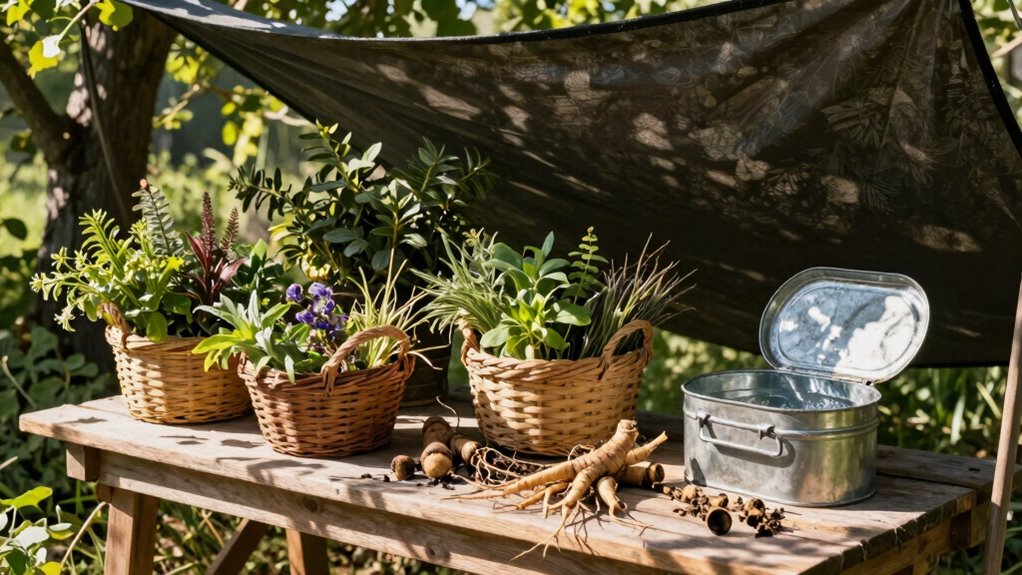
Foraging can be a rewarding way to gather fresh, natural foods, but proper storage is vital to keep your harvest fresh and safe. When you’re foraging, especially in hot weather, understanding how climate considerations impact your storage choices is essential. High temperatures and humidity can quickly spoil your wild edibles, so knowing how to preserve them effectively becomes a priority. Preservation techniques tailored to the climate help extend the shelf life of your foraged treasures and prevent spoilage or waste.
Proper storage and climate-aware preservation keep your foraged foods fresh and safe in hot weather.
In hot weather, the “cool, dry, dark” rule becomes your best friend. Keeping your harvest in a cool environment slows down enzymatic activity and bacterial growth, both of which accelerate spoilage. Climate considerations dictate that you avoid storing foods in places exposed to direct sunlight or heat sources, such as a sunny windowsill or a warm garage. Instead, find a shaded spot with steady, cool temperatures—ideally between 50 to 60°F (10 to 15°C). This helps maintain the freshness of delicate items like berries, greens, and fungi. Additionally, moisture and humidity levels matter. High humidity can lead to mold and rot, so it’s essential to keep your storage area dry. Using breathable containers, like mesh bags or baskets, allows airflow and reduces moisture buildup.
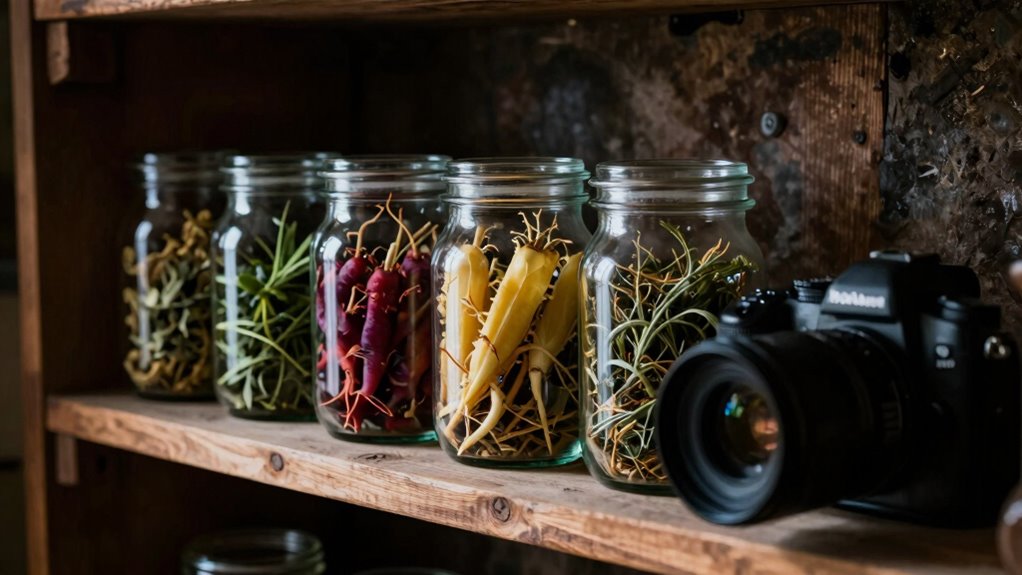
Preservation techniques are particularly useful when faced with hot climate conditions. For instance, you can refrigerate or cool your foraged foods as soon as possible to slow spoilage. If refrigeration isn’t an option, consider drying or dehydrating your harvest. Proper drying removes moisture, which is a primary factor in spoilage, and extends the usability of herbs, mushrooms, and berries. Air drying in a shady, well-ventilated space works well in warm climates. For fruits and vegetables, cold storage in a root cellar or cool basement can emulate a natural climate control, maintaining the “cool, dry, dark” environment that preserves freshness. Proper storage conditions play a critical role in maintaining the quality and safety of your foraged foods.
Additionally, using preservation techniques like fermentation or pickling can help you enjoy your foraged foods longer. These methods not only extend shelf life but also add unique flavors. In hot weather, always make certain your tools and storage containers are clean to prevent contamination. Combining climate considerations with appropriate preservation techniques ensures your foraged foods stay safe, nutritious, and delicious for as long as possible, no matter how high the outdoor temperatures climb.
Frequently Asked Questions
Can I Use Plastic Containers for Storing Foraged Foods?
Yes, you can use plastic containers for storing foraged foods, but guarantee they’re airtight to prevent moisture and pests. Avoid containers that block air circulation, as good airflow helps prevent mold and spoilage. Choose containers with venting options or leave a small opening if needed. Keep them in a cool, dry, dark place, following the “Cool, Dry, Dark” rule, to maximize freshness and safety.
How Long Can I Store Foraged Items Safely?
They say, “A stitch in time saves nine,” so act quickly. You can store foraged items safely for a few days up to a week if you maintain proper temperature control and use appropriate container materials. Plastic containers work if they’re airtight and kept in a cool, dark, dry place. Keep an eye on humidity and avoid exposure to heat, which can spoil your foraged treasures faster.
What Signs Indicate Spoilage in Stored Foraged Foods?
You’ll know stored foraged foods spoil when you see mold growth or detect a foul odor. Mold appears as fuzzy patches in various colors, indicating decay. If the food smells sour, rotten, or off, it’s best to discard it. Trust your senses—if anything seems unusual, don’t risk eating it. Proper storage helps prevent spoilage, but always check for these signs before consuming foraged items later.
Is Refrigeration Necessary for All Types of Foraged Foods?
Refrigeration isn’t necessary for all foraged foods, but it can extend their preservation methods and storage duration, especially for delicate items like berries or mushrooms. Certain foods, such as root vegetables, keep well in cool, dark, dry places without refrigeration. Consider the specific type of foraged food and its natural shelf life; some may spoil quickly, while others benefit from cold storage to maintain freshness and safety.
How Do Humidity Levels Affect Storage Quality?
Humidity levels profoundly impact storage quality by affecting moisture control. High humidity increases moisture, leading to mold, rot, and spoilage, while low humidity helps preserve freshness by preventing excess moisture. You should monitor humidity impact carefully, adjusting storage conditions to maintain ideal moisture levels. Using desiccants or dehumidifiers can help control humidity and keep your foraged foods fresh longer, especially in hot weather where moisture issues are more prevalent.
Conclusion
Remember, following the “cool, dry, dark” rule keeps your foraged finds fresh, like a secret tucked away in a treasure chest. Think of your storage as a cozy hideaway, shielding your bounty from the harsh sun and dampness. By respecting these simple guidelines, you turn your foraging harvest into a lasting treasure, preserving nature’s gift as reliably as a rainbow after a storm. Keep it cool, dry, dark—and let your foraged treasures shine.