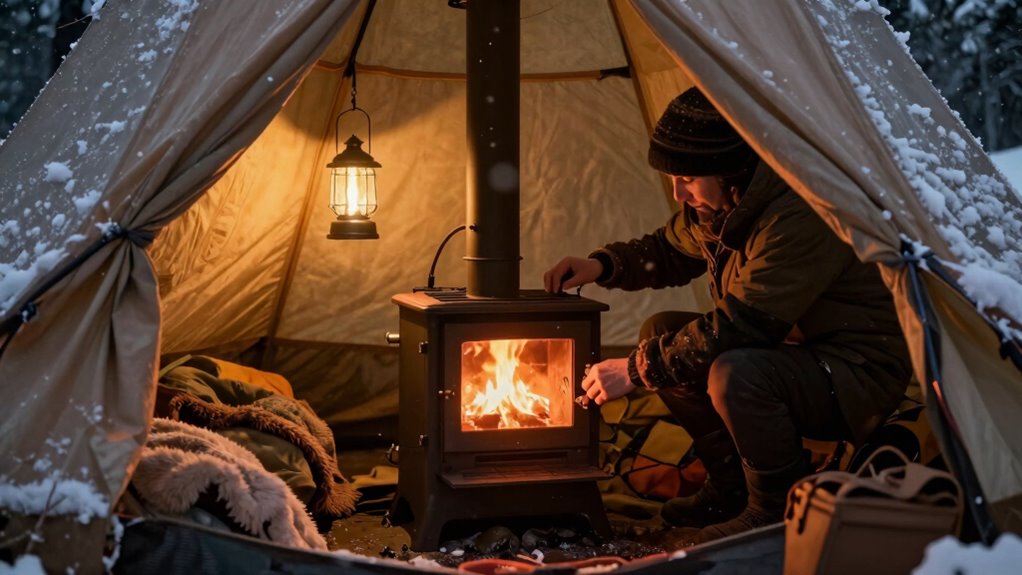

To keep your hot tent warm without overheating, balance insulation and ventilation carefully. Use insulation panels or reflective blankets to trap heat, while keeping vents slightly open to allow fresh air and moisture to escape. Adjust vents based on heat output to prevent stuffiness or gas buildup, and never seal them completely. Maintaining this balance ensures comfort and safety, helping you stay warm without risks. For more tips on managing heat effectively, explore further details ahead.

Get garden gear delivered free with Prime
- Fast, free delivery on millions of items
- Prime Video, Amazon Music and more included
- Member-only deals all year
Key Takeaways
- Use insulation panels and reflective blankets to retain heat and reduce reliance on high heater settings.
- Adjust ventilation vents to balance fresh air flow and prevent overheating or condensation buildup.
- Keep vents slightly open to allow heat escape while maintaining safe oxygen levels and reducing carbon monoxide risk.
- Seal gaps and leaks around zippers and seams to improve insulation efficiency without compromising airflow.
- Monitor internal temperature and ventilation to maintain comfort without overheating, ensuring safety and energy efficiency.
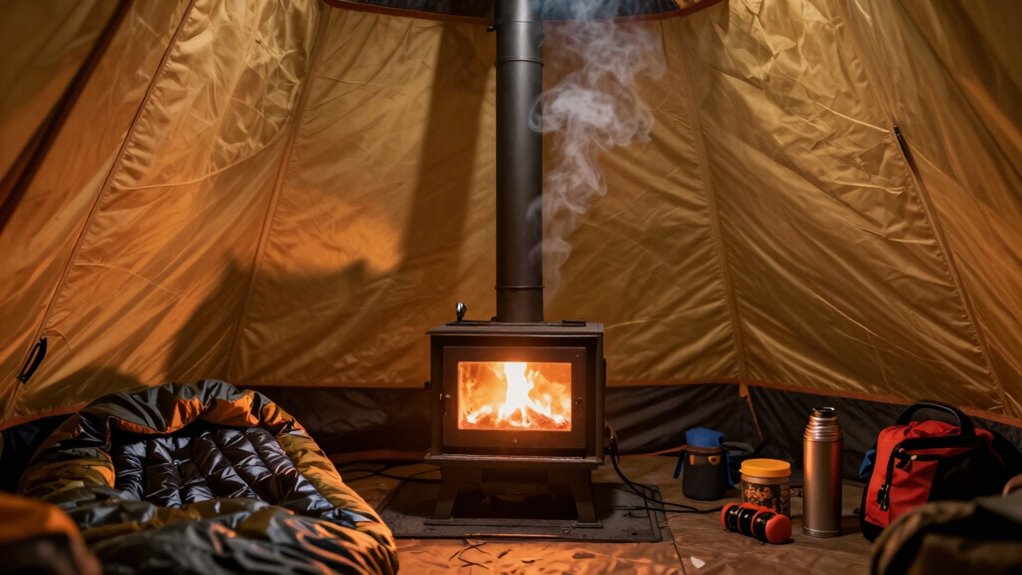
Ever wondered how to keep your hot tent warm without risking dangerous carbon monoxide buildup or overheating? The key lies in mastering insulation strategies and ventilation techniques. When you’re camping in cold weather, maintaining a comfortable temperature inside your tent requires a careful balance. Too much heat can turn your cozy shelter into a sauna, while too little leaves you shivering. The right approach ensures warmth without compromising safety.
Start by focusing on insulation strategies. The goal is to trap heat effectively while preventing cold drafts from seeping in. Use insulation panels or reflective blankets on the tent’s interior walls to reflect heat back inside. Adding a layer of foam or sleeping pads beneath your sleeping area can also insulate you from the cold ground. Consider sealing any gaps or leaks around zippers and seams with weatherproof tape or sealant, as drafts can sap your warmth quickly. Proper insulation reduces the amount of heat you need to generate, making your stove or heater more efficient and safer. Effective insulation is essential for conserving heat and reducing fuel consumption. Additionally, paying attention to airflow management can help optimize heat retention without sacrificing safety. Proper ventilation techniques are crucial for balancing heat and air quality, especially in small enclosed spaces.
Use reflective blankets and seal gaps to maximize insulation and keep warmth inside your tent safely.
Next, ventilation techniques are essential for maintaining safe air quality and temperature control. Even when it’s cold outside, your tent needs a continuous supply of fresh air to prevent carbon monoxide buildup. Crack open a small vent or window near the top of the tent to allow rising heat and moisture to escape. Simultaneously, keep an intake vent or lower opening open to bring in fresh air from outside. This airflow cycle ensures exhaust gases, like carbon monoxide, are vented away and that the air inside stays fresh. It also helps prevent condensation, which can dampen your gear and cause discomfort.
Combine these strategies by adjusting your vents based on the heat output inside the tent. If it gets too warm, slightly open vents to release excess heat and moisture. If it feels too cold, close vents a bit to trap more heat, but never completely seal them, as fresh air exchange is essential for safety. Remember, a well-insulated tent with effective ventilation allows you to run your heater at a lower setting, reducing the risk of overheating or dangerous buildup of gases. Understanding the importance of proper ventilation ensures a safe camping experience. Being aware of carbon monoxide risks is vital when using heaters indoors.
In essence, managing heat in a hot tent involves a delicate dance between insulation and ventilation. With thoughtful insulation strategies, you keep the warmth in, and with proper ventilation techniques, you keep the air safe and fresh. When you strike this balance, you’ll stay warm, comfortable, and safe throughout your outdoor adventure.
As an affiliate, we earn on qualifying purchases.
Frequently Asked Questions
How Do I Prevent Condensation Inside a Hot Tent?
To prevent condensation inside your hot tent, you should focus on effective ventilation strategies and moisture control. Keep vents open to allow moist air to escape and promote airflow, especially during cooking or sweating activities. Use a moisture barrier or breathable tent fabric to reduce humidity buildup. Additionally, insulate the tent properly and avoid over-heating, which increases condensation. Regularly removing excess moisture and maintaining proper ventilation will keep your tent dry and comfortable.
What Are the Safest Heating Options for a Hot Tent?
Playing it safe, electric heaters are your best bet for hot tents—they’re easy to control and reduce fire risk. Use proper ventilation strategies like vents or exhaust fans to avoid condensation buildup, and insulate with materials like foam or thermal blankets to keep warmth in without overheating. Don’t put all your eggs in one basket; combine insulation and ventilation for a cozy, safe environment that won’t turn into a sauna.
How Long Can I Run a Heater Continuously?
You can run a heater continuously for as long as you have proper ventilation strategies in place to prevent dangerous buildup of fumes and condensation. To maximize fuel efficiency and safety, monitor the heater regularly, guarantee good airflow, and avoid overloading the tent with heat. Some heaters have recommended continuous run times—always follow the manufacturer’s guidelines, and never leave a heater unattended for extended periods.
How Do I Monitor Tent Temperature Effectively?
You can effectively monitor your tent temperature by using a reliable digital thermometer placed centrally, giving you a clear picture of the climate. Incorporate ventilation strategies like adjustable vents and fans to prevent overheating, while insulation techniques help maintain consistent warmth. Regularly check your thermometer, and adjust vents or heater settings as needed. This way, you keep your space cozy without risking overheating, ensuring a comfortable, safe outdoor experience.
What Are the Signs of Overheating in a Hot Tent?
You’ll notice signs of overheating in your hot tent when condensation appears on the interior, and your breath fogs up the walls. You might also feel excessive heat near the stove or vents, causing discomfort. To prevent this, use ventilation strategies like opening vents or windows, and apply insulation techniques to balance warmth without trapping too much heat. Regularly monitor temperature and adjust airflow to keep your tent cozy but safe.
As an affiliate, we earn on qualifying purchases.
Conclusion
Just like a skilled conductor balances the orchestra’s melody, you must harmonize your hot tent’s heat. Keep the fire steady, vent wisely, and insulate well, so warmth flows smoothly without becoming a wildfire. Picture a cozy cabin nestled in a winter forest—comfortable and inviting, yet safe from the destructive blaze of overheating. With mindful heat management, you create a haven where warmth and safety dance in perfect harmony, ready to welcome you home after every winter adventure.
As an affiliate, we earn on qualifying purchases.
camping stove with safety features
As an affiliate, we earn on qualifying purchases.
As an affiliate, we earn on qualifying purchases.
Halloween Picks
halloween
As an affiliate, we earn on qualifying purchases.