When foraging with a partner, communicate openly and respectfully to cross-check plant IDs without arguments. Focus on sharing observations about leaf shape, smell, and color, using calm questioning to confirm identifications. Stay collaborative, listening carefully and avoiding blame. Use gentle reminders and mutual respect to prevent misunderstandings. Remember, teamwork and clear communication enhance safety and trust. If you want to master smooth cross-checking techniques, there’s more to explore ahead.

Get garden gear delivered free with Prime
- Fast, free delivery on millions of items
- Prime Video, Amazon Music and more included
- Member-only deals all year
Key Takeaways
- Use respectful language and focus on shared safety, not fault-finding.
- Cross-check details collaboratively, such as leaf shape and smell, without implying mistake.
- Confirm identifications through discussion rather than disagreement, fostering mutual learning.
- Agree on boundaries and guidelines beforehand to prevent conflicts during harvesting.
- Prioritize open, active listening and acknowledge each other’s input to maintain a positive teamwork dynamic.
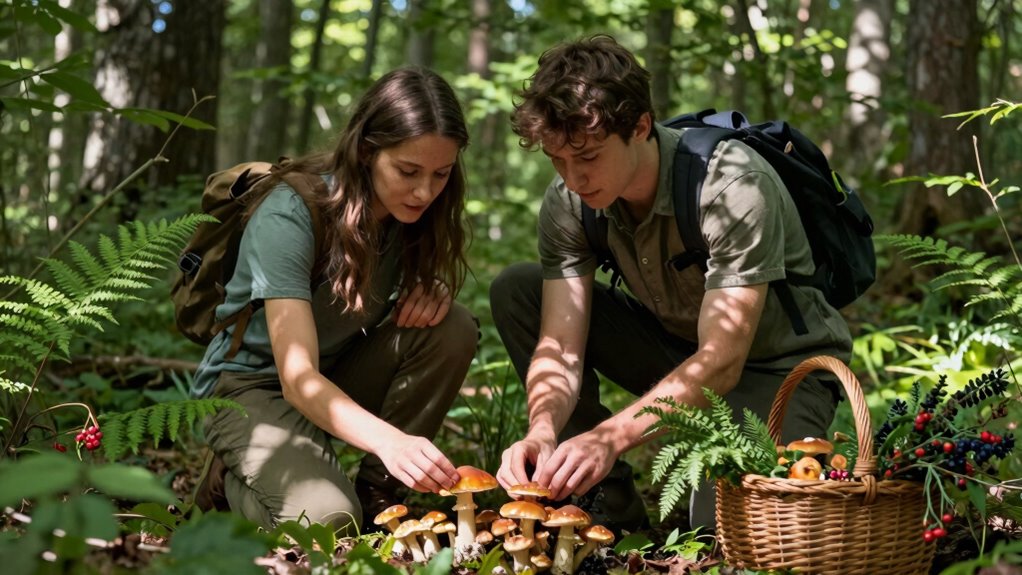
Have you ever considered how foraging with a partner can enhance your experience and safety? When you venture into the wild, having someone alongside you isn’t just about sharing the adventure — it’s also about improving your chances of identifying edible plants correctly and avoiding dangerous ones. With a partner, you can cross-check each other’s identifications, reducing the risk of mistakes that could lead to illness or injury. This teamwork creates a safety net, especially when wild safety is paramount. You can compare notes, double-check plant features, and confirm your findings before harvesting. It’s an effective way to build confidence and ensure you’re making responsible choices.
Foraging with a partner boosts safety, accuracy, and responsible harvesting through teamwork and shared knowledge.
Foraging with a partner also encourages ethical harvesting. When you work together, you’re more likely to follow sustainable practices, such as taking only what’s needed and avoiding overharvesting. Your partner can remind you to respect the environment and leave enough for the plants to regenerate. This mutual accountability helps uphold the principles of ethical harvesting, making sure you’re not damaging the ecosystem for future foragers. Plus, by discussing your intentions and methods, you can establish shared boundaries about how much to pick and which plants to leave untouched, fostering a mindset of stewardship.
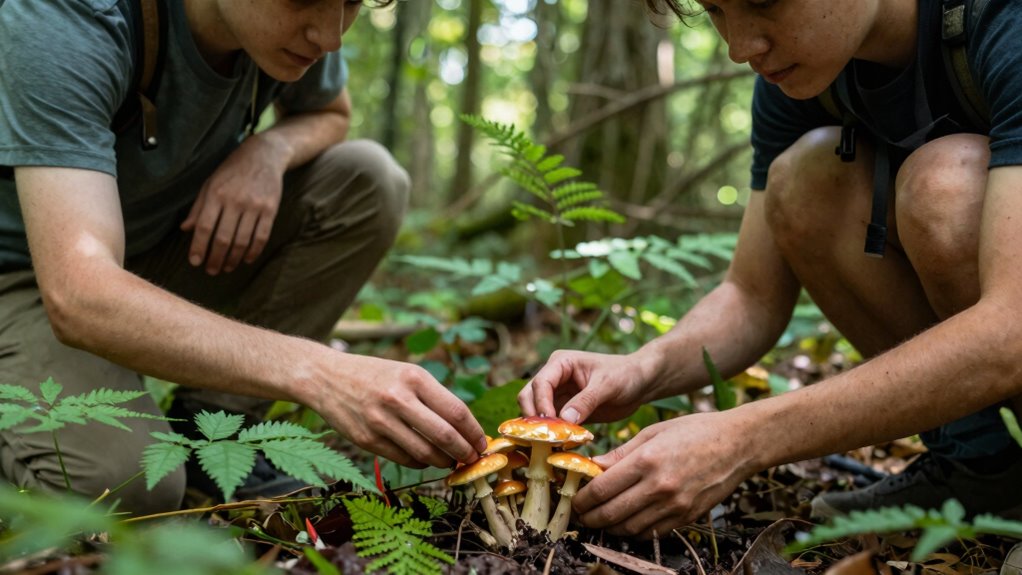
Cross-checking with a partner isn’t about pointing out mistakes or arguing; it’s about open communication. When you both share your observations and knowledge, it creates a collaborative atmosphere instead of a confrontational one. For example, if one person thinks a plant is edible, the other can double-check the features—leaf shape, smell, color—and confirm whether it’s safe. This process minimizes errors and ensures both of you are on the same page. It’s important to listen carefully and respect each other’s input, especially since wild safety depends on accurate identification. Additionally, a partner can help you remember key details about the plants you’re harvesting, which is especially important for maintaining biodiversity and sustainable practices in the wild. Sometimes, in the excitement of being outdoors, it’s easy to forget specific identification markers or safety tips. Your partner can serve as a backup, helping you recall information or reminding you of ethical harvesting practices. Recognizing the importance of accurate plant identification and proper knowledge sharing can further reduce risks and promote responsible foraging. Engaging in shared learning also allows you to deepen your understanding of local flora and plant features, which can be invaluable for future outings. Together, you can also share the workload—carrying tools, documenting your finds, and making sure you’re both following local regulations. This shared effort makes foraging more enjoyable, more responsible, and ultimately safer.
In the end, foraging with a partner isn’t just about having fun; it’s about creating a safer, more ethical experience. Cross-checking each other’s knowledge, respecting wild safety guidelines, and practicing ethical harvesting all contribute to a sustainable and rewarding adventure. When you approach foraging as a team, you’re more likely to learn, stay safe, and leave the environment better than you found it.
foraging plant identification guide
As an affiliate, we earn on qualifying purchases.
As an affiliate, we earn on qualifying purchases.
Frequently Asked Questions
How Do We Handle Disagreements About Identifying Edible Plants?
When you disagree on plant identification, stay calm and discuss each other’s observations carefully. Share what clues you’re using to distinguish edible vs. poisonous plants, like leaf shape or growth pattern. Cross-check with a reliable field guide or app together, rather than arguing. If uncertainty remains, don’t take the risk—it’s better to leave the plant untouched than accidentally consume something harmful. Clear communication keeps you both safe.
What Should We Do if One Person Feels Unsure During Foraging?
If you feel unsure during foraging, trust your instincts and communicate openly. Recognize that 80% of successful foraging relies on trust building and shared decision consensus. Pause to double-check your identification, and don’t hesitate to ask your partner for reassurance or to verify. This approach fosters confidence, reduces tension, and strengthens your partnership, ensuring both of you feel secure and informed while gathering edible plants.
How Can We Improve Communication When Spotting Different Foraging Options?
You can improve communication during plant recognition by actively listening and clearly sharing what you spot. Use simple communication strategies like pointing and describing key features to confirm identification. When disagreements arise, stay calm and ask your partner to show their perspective, fostering respectful dialogue. Practicing shared plant recognition skills helps both of you become more confident, reducing misunderstandings and ensuring safe, effective foraging together.
What Safety Measures Should We Establish Before Starting Foraging Together?
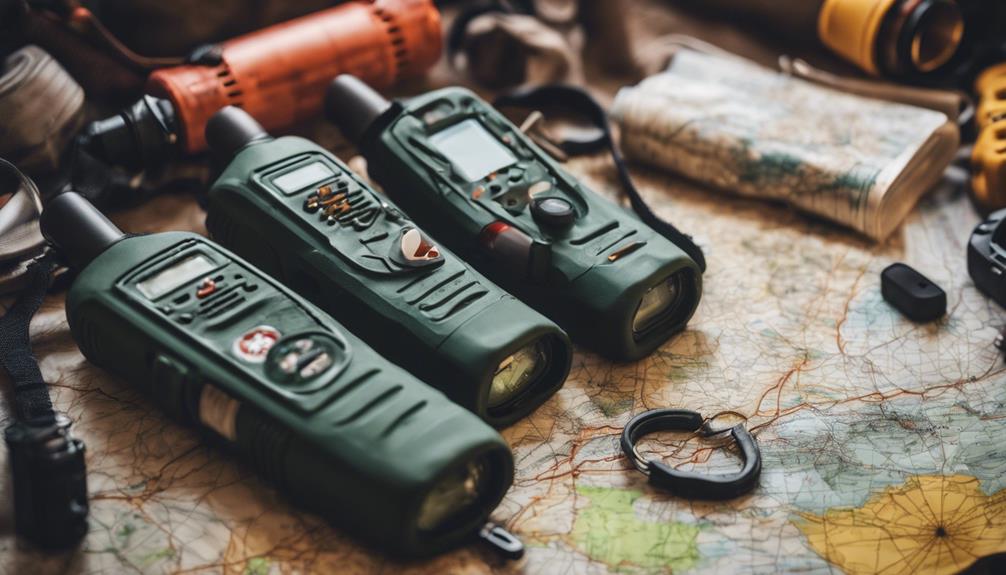
You should establish clear safety protocols before foraging together, like agreeing on boundaries, identifying safe zones, and confirming communication methods. Make sure both of you understand emergency plans, such as how to signal for help or contact emergency services. Carry a first aid kit and a charged phone. Regularly check in with each other during the foraging trip to stay safe, confident, and prepared for any unexpected situations.
How to Balance Shared Knowledge Without Overshadowing Each Other?
You can balance shared knowledge by sharing roles clearly and respecting each other’s expertise. Listen actively, and avoid dominating conversations. When unsure, ask questions instead of asserting, and acknowledge your partner’s experience. This way, you create a collaborative environment where both of you contribute equally, fostering mutual respect. Remember, valuing each other’s input helps prevent overshadowing and guarantees safe, effective foraging together.
As an affiliate, we earn on qualifying purchases.
Conclusion
You and your partner are like two explorers, each with your own map, yet sharing the same goal. When disagreements arise, remember that crossing paths isn’t a clash but a chance to learn. Like two rivers converging, your different perspectives can create a stronger flow. Embrace the harmony in your differences, and let patience be your compass. In unity, you find not just success, but a deeper connection that withstands any storm.
As an affiliate, we earn on qualifying purchases.
As an affiliate, we earn on qualifying purchases.
Fall yard work Picks
leaf blowers
As an affiliate, we earn on qualifying purchases.