
To stop spreading plant disease between patches, you need to regularly sanitize your tools. Start by cleaning off soil and debris, then apply a proven disinfectant like bleach or alcohol to all surfaces. Make sure to cover blades, handles, and prongs thoroughly, and follow the recommended contact time. Incorporating this routine into your daily tasks reduces the risk of pathogen transmission and keeps your crops healthy. Keep going to discover more effective sanitizing strategies.
Key Takeaways
- Always clean tools thoroughly with water or a brush to remove soil and debris before disinfecting.
- Use effective disinfectants like bleach solutions or alcohol, ensuring proper contact time for maximum pathogen kill.
- Sanitize tools after every use, especially when moving between different plant patches or handling infected plants.
- Regularly inspect and maintain tools to prevent damage and ensure they are in good condition for effective sanitizing.
- Incorporate routine tool sanitizing into daily work practices to prevent disease spread and protect crop health.
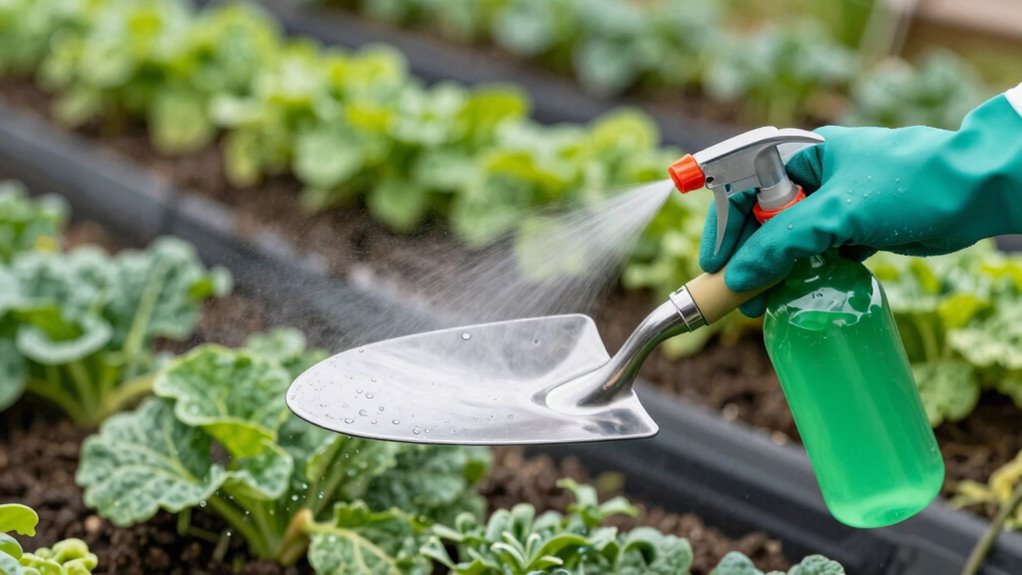
Field tool sanitizing is an essential step to prevent the spread of germs, contaminants, and pathogens during outdoor work. When you’re moving between different plant patches, you risk transferring harmful pathogens that can cause disease outbreaks. These pathogens can hitch a ride on your tools, soil, or plant debris and quickly spread from one area to another if you’re not careful. Implementing proper sanitizing protocols ensures you interrupt this cycle of pathogen transmission, keeping your crops healthy and reducing crop loss.
Prevent pathogen spread by sanitizing tools between plant patches to keep crops healthy and reduce disease outbreaks.
The key to effective sanitizing is understanding how pathogens spread and making it a routine part of your work process. After each task or before switching to a new patch, you should thoroughly clean and disinfect your tools. This isn’t just about wiping off dirt; it involves using the right disinfectants that are proven to kill or deactivate plant pathogens. Many farmers and horticulturists opt for solutions like bleach-based disinfectants, alcohol, or specially formulated sanitizers designed for agricultural use. These sanitizers are effective against a broad spectrum of pathogens, including bacteria, fungi, and viruses that threaten your plants.
Following a consistent sanitizing protocol minimizes the chances of pathogen transmission. This means establishing a step-by-step routine—clean your tools of soil and organic debris first, then apply the disinfectant, ensuring all surfaces are covered, especially blades, prongs, and handles. Let the disinfectant sit for the recommended contact time before wiping or drying. Remember, quick rinses or partial cleaning won’t cut it; thorough coverage is essential for effective pathogen control. Incorporating proper sanitation techniques into your routine further enhances your efforts to prevent disease spread.
Keeping your tools sanitized isn’t just about preventing disease—it also boosts your overall productivity. Sick plants can lead to significant setbacks, and controlling pathogen spread is one of the most effective ways to keep your crops thriving. Additionally, adhering to sanitizing protocols reduces the risk of cross-contamination, which can occur when tools are shared among workers or used across different sites. It’s a simple yet powerful step to safeguard your entire operation.
Incorporate sanitizing into your daily routine, especially after handling infected plants or working in contaminated areas. Regularly inspecting your tools and maintaining a supply of disinfectants ensures you’re always prepared. By controlling pathogen transmission through diligent sanitizing practices, you’re actively protecting your crops, improving yields, and maintaining a healthier growing environment. It’s a small investment of time that yields big dividends in crop health and productivity.
Frequently Asked Questions
How Often Should I Sanitize My Tools During the Planting Season?
You should sanitize your tools frequently during planting season, ideally after every patch or crop. This tool sterilization frequency helps prevent the spread of plant pathogens and guarantees healthy growth. Use a disinfectant solution or heat sterilization methods to clean pruning shears, trowels, and other equipment. Regular sanitation reduces disease transmission and keeps your garden or farm thriving, safeguarding your plants throughout the season.
Are Homemade Sanitizing Solutions Effective for Cleaning Tools?
Are homemade sanitizing solutions effective? They can be, if you choose the right ingredients. DIY disinfectants and natural cleaning solutions like diluted vinegar or baking soda can help reduce the spread of plant diseases. However, they may not be as reliable as commercial disinfectants, especially against resistant pathogens. Always test homemade solutions first, and consider using proven commercial products for thorough sanitation, especially during critical planting times.
What Are the Best Storage Practices for Sanitized Tools?
You should store sanitized tools in designated tool storage areas that are clean and dry to prevent recontamination. Use sanitized containers or racks at your sanitizing stations to keep tools organized and accessible. Always verify tools are completely dry before storage, and avoid touching cleaned surfaces with unclean hands to maintain sanitation. Proper storage practices help prevent the spread of plant diseases and keep your tools ready for safe use.
Can Sanitizing Tools Prevent All Types of Plant Diseases?
Sanitizing tools considerably reduces the risk of spreading plant diseases, but it can’t prevent all types of pathogens. Proper sanitizing guarantees pathogen elimination and helps prevent cross contamination between patches. However, some diseases are caused by resistant spores or viruses that require specific treatments. To maximize protection, combine sanitizing with good hygiene practices, careful handling, and crop rotation. This complete approach offers the best defense against diverse plant diseases.
Is There Eco-Friendly Equipment Available for Tool Sanitization?
Absolutely, eco-friendly equipment exists for tool sanitization. You can opt for biodegradable disinfectants that break down naturally, reducing environmental impact. Reusable cleaning methods, like cloths and brushes, also support sustainability by minimizing waste. These green options are effective at sanitizing tools without harming the environment, allowing you to maintain plant health responsibly. Embracing eco-conscious choices makes your gardening practices safer for the planet and more sustainable in the long run.
Conclusion
By regularly sanitizing your tools, you prevent the spread of plant diseases between patches. For example, imagine you’re working on two vegetable plots; without cleaning your tools, a fungal infection from one could easily transfer to the other, ruining your harvest. Always wipe or disinfect tools between uses to protect your crops and guarantee healthy growth. Taking this simple step saves time, money, and your plants’ health in the long run.