To create a local wild food calendar, start by researching seasonal patterns for key edible plants and fungi in your area. Use guides, local experts, and nature groups to identify peak harvest times and habitats. Track when specific plants appear and note their growth stages to plan harvests. Keep a visual chart or journal to record your findings and improve your foraging skills over time. Continue exploring to discover safe and sustainable harvesting methods tailored to your region.
Key Takeaways
- Research local plant growing seasons through guides, experts, or nature clubs to identify peak harvesting times.
- Compile a list of native edible plants and note their seasonal availability and growth stages.
- Develop a visual seasonal chart or calendar marking when each plant is ripe and ready for foraging.
- Consider habitat types and plant lifecycle stages to optimize harvest timing and success.
- Regularly observe and document local flora to refine your calendar and deepen ecosystem understanding.

Creating a local wild food calendar helps you connect with nature’s seasonal offerings and enjoy fresh, foraged ingredients throughout the year. To do this effectively, you need to understand the foraging seasons in your area and identify the edible plants available during each period. Start by researching local guides, talking to experienced foragers, or joining nature clubs to gather information about when certain plants are ripe and safe to harvest. Knowing the foraging seasons ensures you harvest at the peak of their flavor and nutritional value, while also respecting sustainable foraging practices.
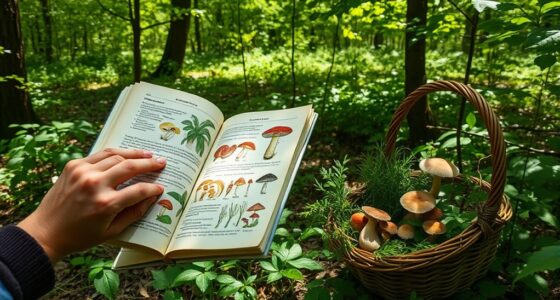
Once you have a good grasp of the seasonal timeline, focus on identifying edible plants in your region. These might include wild berries in summer, greens like dandelion or chickweed in spring, and fungi in fall. Keep a detailed list of these plants and note their typical harvesting times. Use field guides, plant identification apps, or attend foraging workshops to improve your skills. Remember, accurate identification is essential; consuming mistaken or toxic plants can be dangerous. Always double-check your findings before harvesting or eating wild foods.
Identify and harvest wild berries, greens, and fungi with care and proper knowledge.
Next, create a monthly or seasonal chart that outlines what edible plants are available in each period. This visual aid will serve as your go-to reference, helping you plan foraging trips around the best times to find specific plants. As you go through the year, document your experiences, noting when you find certain plants and how they look at different stages of growth. This personalized calendar will become a valuable resource, making foraging more intuitive over time.
In addition to tracking plant availability, consider the habitat and environment for each edible plant. Some thrive in open fields, while others grow in shaded woodland areas. Knowing where to look saves time and increases your chances of success. Also, pay attention to the plant’s lifecycle—some are only available for a short window, so timing your harvest is vital.
Creating a wild food calendar isn’t just about gathering ingredients; it’s about building a deeper relationship with your local ecosystem. By understanding the foraging seasons and the edible plants that flourish during each period, you can enjoy a diverse, seasonal diet that’s fresh, sustainable, and rewarding. Over time, this practice enhances your knowledge of native flora and fosters a respectful, responsible approach to wild food foraging. Incorporating knowledge about foraging seasons can improve your success rate and ensure sustainable harvesting practices.
Frequently Asked Questions
How Can I Identify Edible Wild Plants Safely?
You can identify edible wild plants safely by learning plant identification through reputable field guides and local expert advice. Always double-check features like leaves, stems, and flowers before consuming. Follow safety precautions, such as avoiding plants with milky sap or bad odors, and never eat anything you’re unsure about. Practice caution, start with small samples, and consider taking a wild food foraging course to boost your confidence and knowledge.
What Tools Are Best for Foraging Wild Foods?
Think of your tools as trusted companions on your wild food journey. A sharp, sturdy knife helps with wild food identification and harvesting safely, while scissors make delicate foraging safer and more precise. A woven basket keeps your finds fresh without damage. Don’t forget a field guide for quick reference and gloves for protection—these foraging safety tips guarantee you enjoy nature’s bounty confidently and responsibly.
How Do Seasonal Changes Affect Wild Food Availability?
Seasonal changes considerably impact wild food availability as they influence plant growth cycles. During seasonal foraging, you’ll notice certain plants flourish in spring and early summer, while others peak in fall. By tracking these cycles, you can time your foraging trips to harvest the freshest, most abundant foods. This knowledge helps you sustainably gather wild edibles throughout the year, ensuring a rich and diverse wild food experience.
Are There Legal Restrictions on Foraging in My Area?
While wild food foraging offers adventure, legal restrictions keep it safe. You need to check if you require foraging permits in your area, as these vary widely. Foraging on private property without permission can lead to fines or legal trouble, so always seek permission first. Before heading out, research local regulations to make sure you’re respecting laws and protecting the environment, making your foraging both fun and lawful.
How Do I Preserve Wild Foods for Year-Round Use?
To preserve wild foods for year-round use, you should focus on effective wild food storage and preservation techniques. You can dry herbs, berries, and mushrooms, then store them in airtight containers. Freezing is also a great option for leafy greens and berries. Canning jams, pickles, or stews made from wild ingredients extends their shelf life. Properly storing your harvest guarantees you’ll enjoy your wild foods long after the foraging season ends.
Conclusion
By mapping out your local wild food calendar, you become both explorer and guardian of nature’s hidden bounty, much like a modern-day Robin Hood. As seasons shift, so do your opportunities to gather, savor, and share these gifts. Embrace this journey, and you’ll reveal nature’s secrets, turning each harvest into a story worth telling. Remember, with patience and curiosity, you’re not just collecting food—you’re reconnecting with the wild’s ancient rhythm.