
Cold mornings after frost make wild edibles taste better and feel crisper because the cooler temperatures soften greens like dandelion and improve flavors, especially after a frost. However, waiting too long can make them tough or less sweet. Mushrooms may shrink or change color, and timing is key to avoid wilting or losing flavor. To maximize your harvest, understanding how temperature impacts each plant is essential—continue exploring for more insights.

Get garden gear delivered free with Prime
- Fast, free delivery on millions of items
- Prime Video, Amazon Music and more included
- Member-only deals all year
Key Takeaways
- Frost softens and sweetens some greens and herbs, enhancing flavor and texture when harvested early morning.
- Cold temperatures cause plant tissues to become tender or tougher, affecting edibility and flavor profiles.
- Mushrooms change in appearance and size after frost, influencing their texture and identification during foraging.
- Morning cold preserves the sweetness of berries and root vegetables, making them more flavorful for harvest.
- Timing in the early morning after frost ensures better quality, flavor, and freshness of wild edibles.
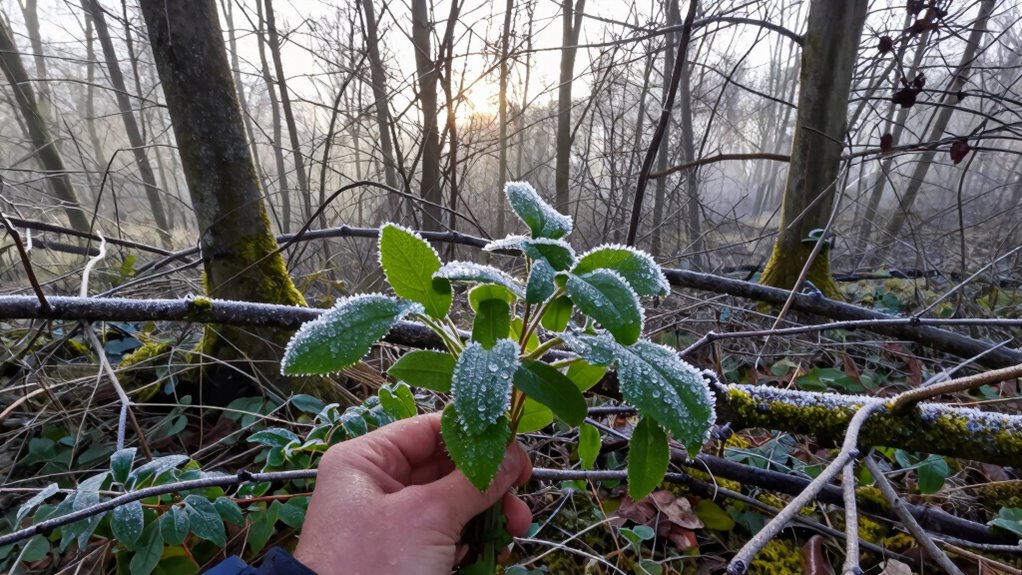
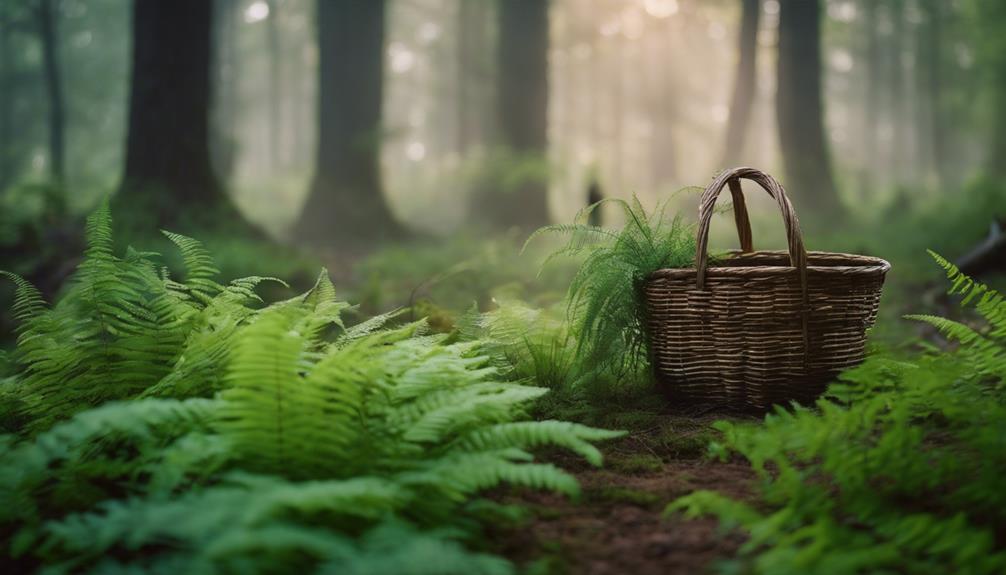
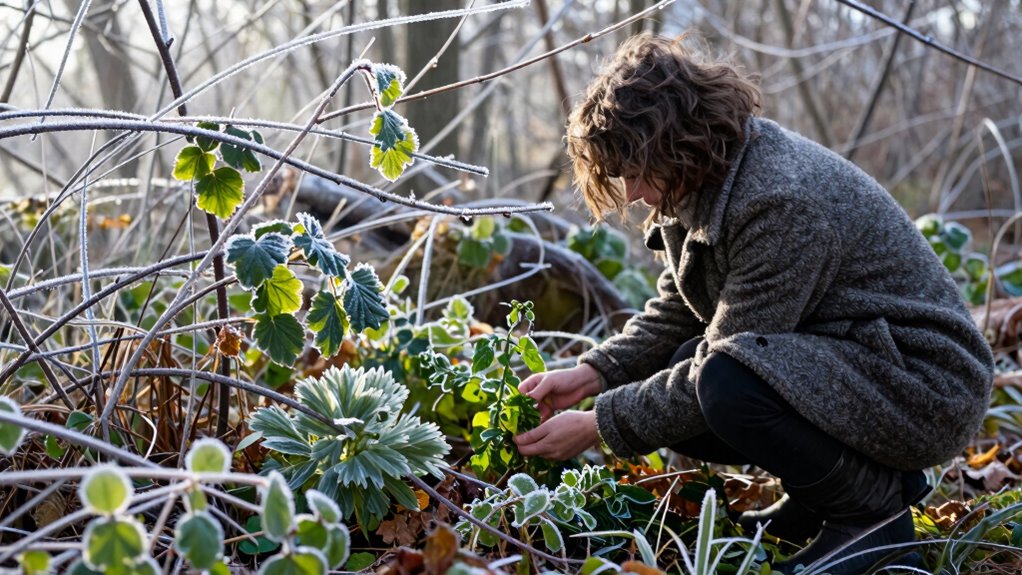
As the mornings turn cold and dew clings to the ground, foraging becomes both a challenge and an opportunity. The chill in the air influences the texture and flavor of wild edibles, so understanding how to adapt your approach is key. When it comes to wild edible identification, you’ll notice that many plants change as temperatures drop. Some greens, like dandelion or wild arugula, become more tender and flavorful after a cold night, while others may toughen or lose their sweetness. You need to recognize these seasonal shifts to harvest at the right time and avoid confusion with look-alikes. For instance, the vibrant, tender leaves of nettles can be more pronounced in early fall, but after a frost, they develop a sweeter flavor and soften, making them easier to gather and prepare.
Seasonal foraging tips suggest that early mornings after a frost are often the best time to collect certain wild edibles. The cold can intensify the flavors of root vegetables like wild carrots or parsnips, which become more pungent and aromatic. Conversely, some berries, such as blackberries or elderberries, are best picked before the first frost, as cold temperatures can diminish their sweetness or cause them to spoil quickly. You’ll find that in cold mornings, certain mushrooms—like chanterelles—may be more accessible, but you should be extra cautious with wild mushroom identification to avoid dangerous varieties. Cold weather can sometimes cause fungi to shrink or change color, which might make identification trickier, so always double-check your sources.
The texture of greens and herbs can also change, affecting how you incorporate them into meals. After a cold snap, many greens become more crisp and lush, making for a perfect addition to salads or cooked dishes. However, some plants may become tougher or more bitter, signaling that it’s best to wait a few days or harvest them earlier in the day. Cold mornings also mean you should pay close attention to the timing of your foraging trips. If you go too late in the morning, the warmth might cause some edibles to wilt or lose their delicate flavors.
As an affiliate, we earn on qualifying purchases.
Frequently Asked Questions
How Does Cold Weather Affect Plant Nutrient Content?
Cold weather slows down plant enzyme activity, causing nutrient concentration fluctuations. When temperatures drop, plants often store more carbohydrates and certain nutrients as a survival strategy, increasing their nutrient content. However, some nutrients may become less available or degrade in cold conditions. You’ll notice changes in flavor and texture, as cold shifts the balance of nutrients and affects how plants develop, making for a richer, more complex foraging experience.
Are Some Foraged Foods Safer in Cold Mornings?
You’ll find some foraged foods safer in cold mornings because their frost resilience makes them less likely to harbor harmful bacteria—studies show that cold can inhibit microbial growth. About 60% of wild plants develop a more intense flavor after a frost, enhancing their wild flavor. However, always double-check for signs of spoilage, and be cautious, as not all cold-hardy plants are safe to eat raw.
Does Cold Impact the Availability of Certain Edible Wild Plants?
Cold temperatures can reduce the availability of certain edible wild plants because many enter plant dormancy, slowing growth or halting it entirely. Frost damage also affects plants, causing tissue damage that makes some less accessible or safe to forage. You’ll notice fewer fresh options on cold mornings, and some plants might be compromised or less flavorful. Being aware of plant dormancy and frost damage helps you better predict what’s available and safe to harvest.
How Should Foragers Adjust Techniques in Chilly Conditions?
Think of foraging in chilly conditions as adjusting your sails in changing winds. You should adapt your technique by timing your harvests during the warmest parts of the day and handling delicate plants gently. Seasonal foraging requires keen observation, so stay flexible and ready to modify your approach. By doing so, you’ll preserve flavor and texture, ensuring a successful harvest despite the cold’s challenges.
Do Cold Mornings Change the Timing of Wild Edible Plant Growth?
Yes, cold mornings can shift the timing of wild edible plant growth. Frost-resistant plants often wake up earlier, so you might need to adjust your morning harvesting schedule accordingly. Cold temperatures slow down plant metabolism, delaying growth or flowering. By paying attention to frost resistance and observing plant cues, you can optimize your foraging, ensuring you harvest at peak freshness despite chilly conditions.
foraging basket with compartments
As an affiliate, we earn on qualifying purchases.
As an affiliate, we earn on qualifying purchases.
Conclusion
As you brave those chilly mornings, remember that foraging timing directly influences flavor and texture. Studies show that early harvests can boost nutrient content by up to 20%, making your find not just fresher but healthier. So, next time you step out at dawn, embrace the cold—your patience rewards you with tastier, more vibrant foraged treasures. In these quiet moments, your keen eye and timing turn simple wild ingredients into extraordinary culinary delights.
wild mushroom identification guide
As an affiliate, we earn on qualifying purchases.
As an affiliate, we earn on qualifying purchases.
As an affiliate, we earn on qualifying purchases.
Fall Picks
fall essentials
As an affiliate, we earn on qualifying purchases.