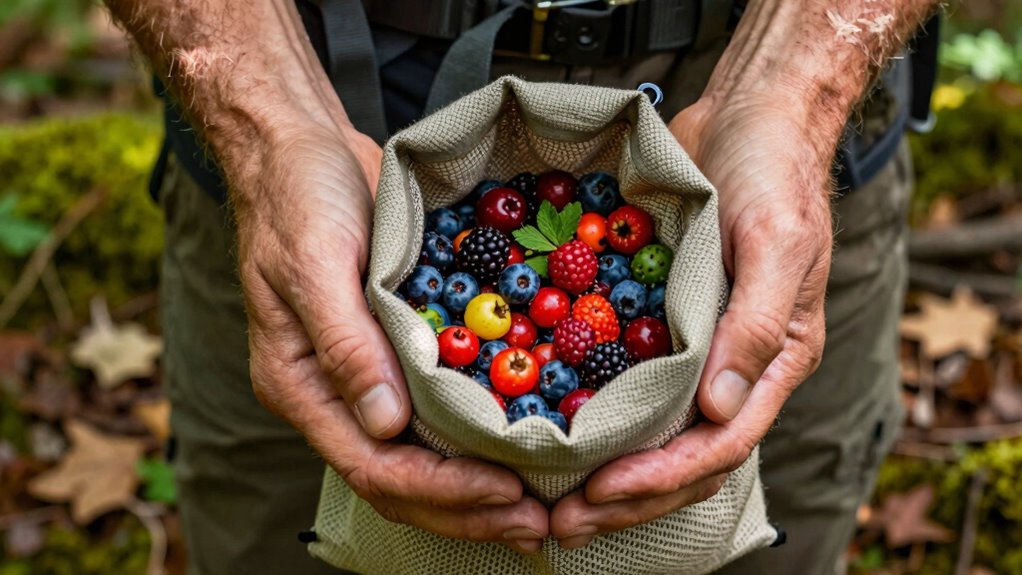

To carry wild food without crushing your best finds, choose soft, breathable containers like mesh baskets, cloth bags, or paper bags that allow air circulation and reduce pressure. Handle everything gently and avoid stuffing containers too full. Use shallow containers or wide baskets to prevent stacking damage, and store fragile items—like berries and greens—carefully on top or separately. If you want to discover more tips on preserving quality during transport, keep exploring these strategies.

Get garden gear delivered free with Prime
- Fast, free delivery on millions of items
- Prime Video, Amazon Music and more included
- Member-only deals all year
Key Takeaways
- Use soft, flexible, and breathable containers like mesh baskets or cloth bags to prevent crushing and promote air circulation.
- Handle all foraged items gently, placing fragile finds on top or separately to avoid unnecessary pressure.
- Store delicate items in paper bags or with paper towels to absorb moisture and prevent spoilage during transport.
- Avoid overstuffing containers; keep them shallow to prevent stacking damage and bruising.
- Transport items carefully, using containers that distribute weight evenly and support the preservation of quality.

When you’re out foraging, the thrill of discovering fresh wild food can be overwhelming, but it’s essential to handle your finds carefully to avoid crushing or damaging them. Properly carrying your wild harvest isn’t just about convenience; it’s about maintaining foraging safety and ensuring your finds stay fresh and intact. Using the right techniques helps you preserve the quality of your foraged items and makes your next steps, whether cooking or storing, much easier. Being mindful of sustainable living practices during foraging can also help protect local ecosystems and ensure future abundance. Start by choosing the right container. Soft, flexible bags or mesh baskets are ideal because they allow air circulation, preventing moisture buildup that could lead to spoilage. Avoid plastic bags for fragile items like berries or delicate greens, as they can crush easily. Instead, opt for a wide, flat basket or a cloth bag with a sturdy handle—these distribute weight evenly and reduce pressure on your finds. When carrying items like mushrooms, use shallow containers to prevent stacking, which can cause bruising and spoilage.
Pay attention to how you pack your foraged goods. Handle everything gently, placing fragile items on top or separately, and avoid stuffing your container. When collecting, use your hands rather than forceps or tools that could damage the produce. If you’re gathering soft berries or leafy greens, keep them loose to prevent squishing. For tougher items like nuts or roots, a sturdy container is sufficient, but still handle with care. Proper foraging safety means being attentive and deliberate in your handling to avoid accidental bruising or contamination. Additionally, cleanliness is crucial to prevent the spread of bacteria and mold that could spoil your harvest. Using Proper handling techniques and cleaning your tools regularly helps reduce the risk of contamination and spoilage during transport. Maintaining a clean workspace while processing your foraged foods also minimizes the chance of introducing contaminants.
Preservation techniques are vital once you’ve collected your bounty. If you don’t plan to use your finds immediately, store them properly. For delicate produce, like berries or herbs, refrigerate in breathable containers lined with paper towels to absorb excess moisture. Mushrooms should be kept in paper bags, not plastic, to prevent them from becoming slimy. Hardy roots or nuts can be stored in cool, dry places in mesh bags or baskets. These methods help extend the freshness and prevent spoilage, especially if you’re making multiple trips or harvesting in bulk. Proper storage methods are essential to maximize the shelf life of your foraged foods and ensure they remain safe to eat.
As an affiliate, we earn on qualifying purchases.
Frequently Asked Questions
What Are the Safest Containers for Wild Food Storage?
You should choose reusable containers made from food-grade materials like glass or BPA-free plastic for safe wild food storage. These containers help with food preservation by keeping your finds fresh and protected from contamination. Avoid flimsy or non-food-safe options, as they can crush delicate items or leach harmful substances. Using sturdy, well-sealed containers guarantees your wild food stays intact and safe for future use, making your foraging trip more successful and worry-free.
How Do I Prevent Animals From Stealing My Foraged Food?
Imagine your foraged treasures as a shining treasure chest, tempting every critter nearby. To prevent wild food theft, use animal deterrent techniques like hanging your harvest in scent-proof bags or high in trees out of reach. Secure containers, place food in areas with minimal animal activity, and consider natural repellents like strong scents. By outsmarting their nose and reach, you keep your bounty safe from sneaky foragers.
Can I Carry Wild Food in a Backpack Without Damage?
Yes, you can carry wild food in a backpack without damage by choosing a sturdy, well-organized bag. Use breathable containers or mesh bags for delicate items, and pack heavier, sturdier foods at the bottom. Remember to follow foraging ethics by respecting plant populations and not overharvesting. This way, you conserve wild food nutrition and guarantee sustainable foraging practices while keeping your finds safe and intact during transport.
What Techniques Help Keep Fragile Wild Edibles Intact?
Imagine delicate wild edibles as glass treasures, fragile and precious. To guarantee them remain intact, use soft, padded containers or line your backpack with cloth to cushion each find. Secure items gently with mesh or breathable bags, avoiding crushing forces. Prioritize foraging safety by accurately identifying edible plants, and handle them with care. These techniques assure your bounty stays pristine, allowing you to enjoy your harvest without damaging its natural beauty.
Are There Specific Clothing Tips for Carrying Wild Food?
You should wear clothing layers with deep pockets or dedicated carrying pouches to keep wild food safe. Use soft fabric layers that won’t crush delicate finds, and opt for pouches with secure closures to prevent items from falling out. Keep fragile foods close to your body for added protection, and avoid bulky outerwear that might crush or damage your harvest. This way, you preserve your bounty while staying comfortable.
As an affiliate, we earn on qualifying purchases.
Conclusion
Think of your foraging basket as a fragile nest, cradling your precious finds like delicate eggs. Handle each item with care, giving your wild treasures the respect they deserve. By gently placing your bounty in a sturdy, padded container, you’re safeguarding your future meals. Remember, every careful step you take is like tending to that nest — ensuring your wild food treasures hatch into a delicious feast rather than a crushed disappointment.
As an affiliate, we earn on qualifying purchases.
As an affiliate, we earn on qualifying purchases.
Halloween Picks
halloween
As an affiliate, we earn on qualifying purchases.