
TL;DR

Get garden gear delivered free with Prime
- Fast, free delivery on millions of items
- Prime Video, Amazon Music and more included
- Member-only deals all year
Gardening Know How recommends five September tasks to help hostas prepare for winter: divide mature clumps if needed, remove damaged leaves, water when the soil dries, check for slugs and snails, and let healthy foliage die back naturally. These are seasonal care recommendations, not a guarantee of how plants will grow next year.
Gardening Know How has outlined five September care steps for hostas as they prepare for winter dormancy: divide and transplant overgrown clumps when needed, remove damaged foliage, water if the soil is dry, check for slugs and snails, and let healthy leaves die back naturally. The advice focuses on supporting established plants through seasonal change; it does not promise that any single task will guarantee vigorous growth next year.
The report says September can be a suitable time to divide hostas that have become large or crowded. Gardeners are advised to dig up a clump, use a clean, sharp knife to separate it, and make sure each division has healthy roots and part of the crown with stems. Replant divisions at the same depth as the original plant and keep them watered until dormancy. The report says the timing may give divisions a chance to establish while soil remains warm, though local weather and growing conditions vary.
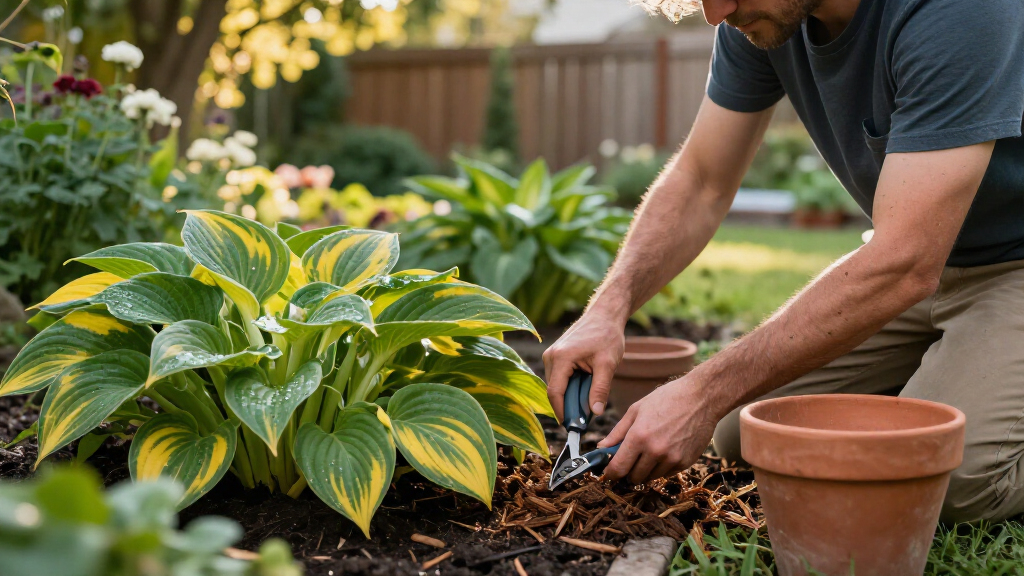
For routine care, the report recommends removing leaves that have yellowed early or show pest or disease damage, while leaving healthy green foliage in place. It says those leaves continue photosynthesis and help the plant store energy. Damaged material should be cleared from around the base; the report advises disposing of diseased leaves with yard waste rather than adding them to compost.
Hostas may still need water in cooler weather. The report suggests checking the soil and watering deeply at the soil line when the top inch or two feels dry, rather than watering shallowly every day. It also recommends inspecting plants for holes and slime trails associated with slugs and snails, clearing debris where pests can hide, and handpicking them when seen. Any bait should be used according to its label.
Preparing Hostas for Dormancy
These tasks address two competing needs in fall: hostas are entering dormancy, but their roots and remaining healthy leaves still benefit from appropriate care. Keeping soil adequately moist and controlling leaf damage may help plants remain in better condition as growth slows. Removing diseased material can also reduce the amount of affected foliage left around the plants.
The recommendation to avoid cutting all foliage too early is especially relevant for gardeners who want a tidy late-season bed. According to the report, healthy leaves should remain until they naturally yellow and wilt; the plants’ appearance may decline before winter, and that change is part of their seasonal cycle. Dividing is optional and directed at clumps that need it, rather than a requirement for every hosta each September.
Why September Care Differs
Hostas are grown mainly for their foliage, and their leaves change as the season ends. The Gardening Know How report describes September as a period when plants begin preparing for dormancy. The timing of that process depends on local conditions, so the calendar date alone does not establish when every plant should be cut back or divided.
The report’s five recommendations are seasonal garden guidance, not findings from a cited trial. It says cooler temperatures and more frequent rain in many areas can make early fall less stressful for transplants, but it does not specify a climate zone or give a single date that applies everywhere. Gardeners should use local conditions and the state of their plants to decide whether a task is appropriate.
“The goal is to support the plants, not keep them looking perfect until winter.”
— Gardening Know How
Local Timing and Plant Needs
The report does not give region-specific dates, soil conditions, or weather thresholds for dividing, watering, or cutting back hostas. It also does not quantify how much these tasks affect growth the following year. Results will depend on local conditions, including rainfall, temperature, plant health, and whether a clump actually needs division. The source offers general care recommendations rather than a guarantee of next season’s outcome.
Monitor Plants Through Fall
As autumn progresses, gardeners can keep checking soil moisture, watch for slug and snail activity, and remove foliage that is clearly damaged or diseased. Healthy leaves should be left until they have mostly yellowed, browned, and wilted. After a hard frost, when foliage has died back, it can be trimmed and cleared; the report says healthy, dead foliage may be composted, while diseased material should be disposed of separately.
Anyone dividing a clump should continue watering the new divisions as needed until dormancy. The next visible sign of how the plants fared will come with new growth in spring, but the report provides no forecast for individual gardens.
Key Questions
Should I cut back all hosta leaves in September?
No, not while leaves are still healthy and green. Gardening Know How says to let them continue photosynthesis and wait until they have mostly yellowed, browned, and wilted before trimming them.
Do I need to divide hostas every year?
No. The report recommends considering division if a clump has become large or overgrown; it does not describe annual division as necessary.
How can I tell whether hostas need water?
Check the soil near the plants. The report advises watering deeply at the soil line when the top inch or two feels dry, while taking recent rain into account.
What signs can indicate slugs or snails?
Holes in leaves and slime trails are signs cited in the report. It suggests clearing debris around plants and handpicking pests when found. Use any bait according to its product label.
Source: rss
Fall Picks
fall essentials
As an affiliate, we earn on qualifying purchases.