This checklist is for gardeners who want to start seeds indoors and organize the essentials before planting. It covers a few tools and supplies that can help shape a seed-starting setup, along with guidance for choosing a grow light panel when you are comparing options. Start with your space and the seeds you plan to grow.

Get garden gear delivered free with Prime
- Fast, free delivery on millions of items
- Prime Video, Amazon Music and more included
- Member-only deals all year
The sections follow common parts of a seed-starting setup: trays, heat, lighting, growing medium, soil blocks, and humidity covers. Each one has a different role, so consider how the pieces will work together on your shelves or growing surface. Fit and compatibility matter across the setup.
Use the checklist to compare dimensions, quantities, and the features stated in each product name. Check whether trays, domes, mats, and lights suit the area you have available, and plan how you will water and monitor seedlings. Choose for your setup rather than buying every item at once.
Seed Starting Trays
Trays give you a defined place to sow and organize seeds, so their footprint and layout should suit the space where you plan to grow. The listed pick is an Epic Gardening seed-starting grow light, described as a full-spectrum LED with adjustable features; the product name does not identify it as a tray. Treat it as a lighting option and choose trays separately based on the number of seedlings and the dimensions of your shelf or bench. Match tray dimensions to the space you can actually use.
A common buying mistake is assuming that a light and tray are a matched set, or choosing a tray before checking how it will sit beneath your lighting. Compare the tray’s cell layout and overall dimensions with your planting plan, then confirm that any dome or heat mat you select is compatible. Consider how you will reach seedlings for watering and whether the trays can be moved without crowding nearby plants. Check the full setup before ordering, including the available growing area and how many trays it can hold.
What to look for:
- Tray footprint that fits your shelf or bench
- Cell layout suited to your planned seed quantity
- Compatibility with any humidity dome you plan to use
- Room for watering access and seedling growth
Epic Gardening Seed Starting Grow Light – Full-Spectrum LED with Adjustable Heig

This full-spectrum LED grow light is designed for optimal seedling growth, featuring adjustable height, an integrated watertight tray, and a built-in timer. It provides energy-efficient, long-lasting illumination suitable for indoor gardening in small spaces.
Pros:
- Full-spectrum LED provides optimal light for healthy seedling growth
- Adjustable height and built-in timer offer customizable light cycles
- Integrated watertight tray keeps indoor gardening tidy and organized
- Energy-efficient with long-lasting performance
Cons:
- Limited to small-scale indoor gardening
- No waterproof feature for outdoor use
- Requires electrical outlet for operation
Best for: Gardeners comparing lighting while planning trays separately
Not ideal for: Shoppers expecting this named pick to be a seed-starting tray
Bottom line: The listed pick is a grow light, so choose a tray that fits your growing space and seed plan.
Seedling Heat Mats
Heat mats are one option to consider when planning a seed-starting station, particularly if you want a dedicated warming surface for trays. The listed product is a four-pack of Hydrofarm propagation heat mats, each named as 12 by 48 inches. Those dimensions and the pack quantity are useful starting points for planning, but the product name does not specify temperature controls or tray compatibility. Measure your growing area and compare it with the mat dimensions before choosing a location.
A frequent mistake is focusing only on how many mats come in a pack without checking how they fit the trays and shelves already on hand. Lay out the intended arrangement and consider access to the trays for watering and monitoring. If you are comparing control features or electrical details, consult the product listing rather than assuming them from the name. Also consider whether a four-pack makes sense for your available space and planting plans. Check dimensions and controls against your setup so the mats you choose work with the way you intend to organize seedlings.
What to look for:
- The stated 12 by 48-inch dimensions
- Whether the mat footprint suits your shelves or bench
- Compatibility with your tray layout
- Control and electrical details in the product listing
- Whether a four-pack suits your planned setup
Hydrofarm 12 x 48-Inch Propagation Heat Mats (4 Pack)
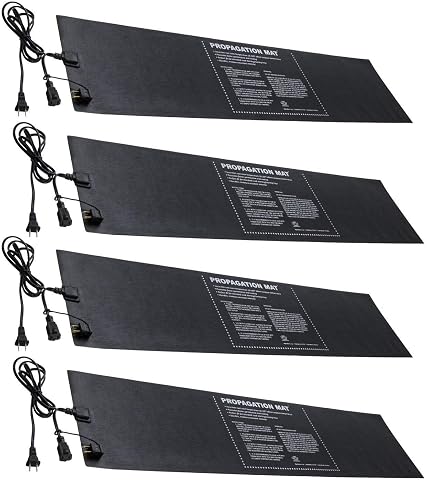
This 4-pack of Hydrofarm propagation heat mats provides bottom heat to enhance germination and rooting for seedlings. Each mat measures 48 inches by 12 inches, warming the root area 10-20 degrees above ambient temperature, and can be daisy-chained to save outlets.
Pros:
- Enhances germination and rooting by providing consistent bottom heat
- Heavy-duty, moisture-resistant construction for durability
- Can be daisy chained to reduce power outlets needed
- Ideal size for placing two trays end-to-end
Cons:
- Requires placement under fluorescent fixtures for optimal use
- Limited to seedling propagation, not suitable for other plant stages
- Power cords are only 6 feet, may require extension cords for some setups
Best for: Gardeners organizing several propagation surfaces
Not ideal for: Anyone whose shelf or tray layout cannot accommodate the stated dimensions
Bottom line: Measure your growing area and confirm controls and compatibility before settling on this four-pack.
Grow Light Panels
Grow light panels can be a useful category to compare when natural light and your growing space do not line up with your seed-starting plans. This checklist has no specific panel pick, so treat this section as buying advice rather than a product recommendation. Start by measuring the area you want to illuminate and noting where trays will sit. Plan around your growing area and the layout of your seedlings.
A common mistake is choosing a panel based on its name or appearance without checking its stated coverage, mounting method, and adjustment options. Compare the product specifications with your shelf dimensions and the distance available between the panel and seedlings. Check whether the panel can be positioned securely and adjusted as your setup requires. If you already have trays, use their footprint to guide your comparison; if you do not, sketch the intended arrangement first. Verify coverage and mounting in the product details, since this checklist does not identify a particular panel or provide specifications for one.
What to look for:
- Coverage information that suits your planned tray area
- Mounting method compatible with your shelf or growing space
- Adjustment options described by the manufacturer
- Dimensions that fit your available clearance
- Product specifications that match your intended setup
Seed Starting Mix
A seed-starting mix is the growing medium you will use for sowing, so consider its format and how it fits your planting routine. The listed product is an AC Infinity Instant Potting Mix Kit described as buffered coco coir bricks with a two-plan designation in the product name. The name does not specify the complete kit contents or preparation steps, so check the listing for those details before use. Confirm the format and instructions suit your plans.
A common mistake is assuming a product described as potting mix will behave exactly like every other seed-starting medium, or overlooking the work required to prepare a brick format. Read the product details for preparation, quantity, and intended use, then compare those with the number of trays or soil blocks you plan to fill. Consider where you will prepare and store the mix, and whether the format fits your workspace. Plan the amount and preparation before sowing, and follow the product directions rather than relying on the name alone.
What to look for:
- Coco coir brick format as stated in the name
- Preparation and use directions in the product listing
- Kit contents and quantity details
- Suitability for your planned trays or soil blocks
- Storage and workspace needs for preparing the mix
AC Infinity Instant Potting Mix Kit, Buffered Coco Coir Bricks, 2-Plant Set
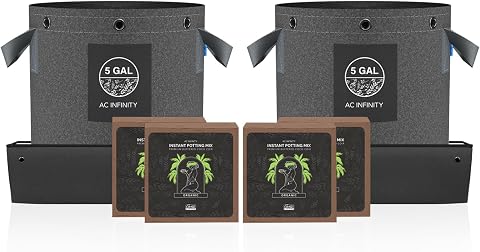
This potting kit includes four organic coco coir bricks that expand to 3 gallons each, along with two reusable fabric pots and dual trays. It helps germinate seeds effectively, improves nutrient uptake, and maintains pH stability for healthy plant growth.
Pros:
- Includes all necessary components for starting plants
- Buffered coco coir improves nutrient absorption
- Reusable fabric pots promote healthy root development
- Easy to prepare and use within 30 minutes
Cons:
- Requires space for expanding coir bricks
- May be more suitable for small-scale gardening
Best for: Gardeners considering coco coir bricks for seed starting
Not ideal for: Anyone needing a ready-to-use mix without checking preparation requirements
Bottom line: Review the kit contents and preparation instructions to see whether this coco coir format fits your workflow.
Soil Block Makers
Soil block makers let you compare an alternative way to form planting blocks, and size options are central to choosing a tool that fits your routine. The listed pick is a TILLERMAN heavy-duty soil blocker bundle described as including large and small two-inch soil blocks. The name gives a useful size cue, but it does not spell out the full bundle contents or operating details. Check the included sizes against your intended planting plan.
A common mistake is assuming that a bundle’s size labels explain exactly how many blocks it makes or how it works with a preferred mix. Read the product listing for the included components and instructions, then consider how the blocks will fit the trays or growing area you use. Compare the stated dimensions with your available space and think about how you will handle the formed blocks during sowing and moving seedlings. Confirm dimensions and contents before buying, and check that your selected mix is suitable for the tool according to its instructions.
What to look for:
- Large and small sizes stated in the product name
- The specified two-inch block dimension
- Bundle contents and operating instructions
- Fit with your trays and available growing area
- Mix guidance in the product details
TILLERMAN Heavy Duty Soil Blocker Bundle – Large & Small 2-Inch Soil Block Maker
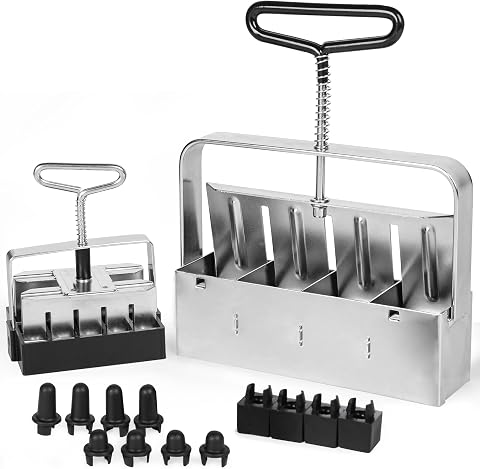
This heavy-duty soil blocker set includes large and small soil makers with interchangeable tips, designed for efficient seed starting and transplanting. Made from durable, rust-proof stainless steel with ergonomic handles, it promotes healthy root growth and reduces transplant shock, making it ideal for indoor and outdoor gardening.
Pros:
- Durable and rust-proof stainless steel construction
- Ergonomic, non-slip handle for comfortable use
- Includes multiple interchangeable tips for various seed sizes
- Reduces transplant shock and promotes healthy root growth
Cons:
- May be more expensive than plastic alternatives
- Requires cleaning after use to prevent soil buildup
Best for: Gardeners comparing large and small soil block options
Not ideal for: Shoppers who need exact bundle contents without consulting the listing
Bottom line: Check the included components and dimensions to confirm this bundle suits your trays and planting plan.
Seedling Humidity Domes
Humidity domes can be part of a tray setup, so compare their height and fit with the containers you plan to use. The listed product is a five-pack of 1020 seed-starting trays with tall 7.3-inch humidity domes and no holes. Its name supplies several practical details: a 1020 format, a stated dome height, and a five-pack quantity. Check the 1020 footprint against your growing area and other equipment.
A common buying mistake is assuming every tray, dome, and heat mat will fit together just because they are used for seed starting. Confirm the stated dimensions and compatibility in the listing, including whether the no-hole design and dome height suit your needs. Consider the shelf clearance available above the trays, as well as how you will access the seedlings for watering and monitoring. Verify fit and clearance before choosing this set, especially if you already have trays or covers you want to use alongside it.
What to look for:
- The stated 1020 tray format
- 7.3-inch dome height and shelf clearance
- No-hole design as listed
- Five-pack quantity suited to your plans
- Compatibility with your heat mats and growing area
1020 Seed Starting Trays with Tall 7.3" Humidity Dome, No Hole, 5-Pack

This set includes five durable 1020 seed starting trays with extra-tall 7.3-inch humidity domes that provide optimal conditions for seed germination and early plant growth. The transparent domes allow maximum light transmission and easy monitoring, while the no-hole design supports clean, controlled watering.
Pros:
- Extra-tall humidity domes improve germination success
- Transparent design allows easy monitoring of seedlings
- Heavy-duty construction resists damage and supports repeated use
- No-hole base facilitates clean watering and hydroponic setups
Cons:
- No drainage holes may require careful watering to prevent overwatering
- No included seed trays or inserts for individual seedlings
Best for: Gardeners seeking a stated 1020 tray and dome format
Not ideal for: Anyone whose shelf clearance or existing trays do not fit the set
Bottom line: Confirm the 1020 footprint, dome height, and compatibility with your setup before choosing this five-pack.
Build your setup in a practical order: first measure the growing area and choose trays, then decide how you will light and organize them. Add a growing medium and any heat mats or humidity domes that fit your specific plan. If you want to use soil blocks, check the tool dimensions and mix guidance together. Let your space guide the order and select only the supplies your seed-starting routine calls for.
Use product listings to confirm dimensions, included components, preparation directions, and compatibility before placing an order. A few careful checks can make it easier to assemble a setup that fits your shelves and planting plans. Start with the essentials, then add tools as your routine takes shape. Happy seed starting!