
TL;DR

Get garden gear delivered free with Prime
- Fast, free delivery on millions of items
- Prime Video, Amazon Music and more included
- Member-only deals all year
A Country Living report identifies four mistakes that can leave newly planted trees and shrubs struggling: untreated circling roots, planting too deeply, insufficient establishment watering and mulch piled against the trunk. Its guidance is to inspect roots, keep the root flare visible, water according to soil moisture and keep mulch off the bark.
A Country Living gardening report identifies four fall planting mistakes that can leave trees and shrubs struggling after they are put in the ground: failing to address circling roots, planting too deeply, not watering enough during establishment, and piling mulch against the trunk. The advice matters to people planting this season because problems may develop below ground even when a plant initially appears healthy.
The report says roots that have grown around the inside of a nursery pot may keep circling after planting if left untreated. Over time, that pattern can restrict growth and nutrient uptake or cause trunk girdling, in which roots press around the trunk. It recommends inspecting the root system, loosening the surrounding soil and gently separating roots before planting. Large, tight roots may need to be cut, the report says; healthy roots should be spread outward rather than left packed together.
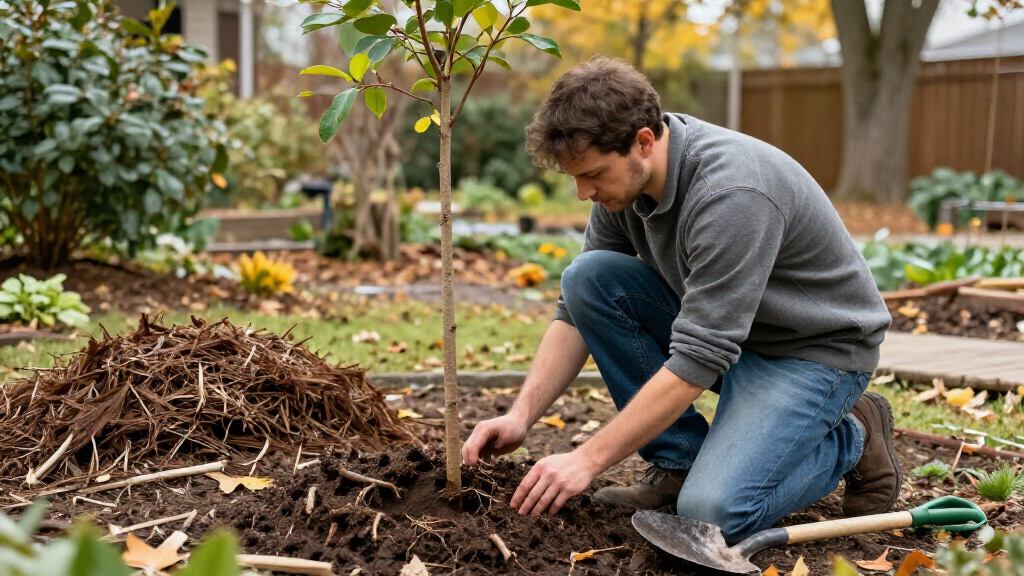
Planting depth is another concern. The root flare—the point where the trunk widens into the roots—should remain visible at or slightly above the soil line, according to the article. It advises finding the flare before digging and making the hole wider than the root ball, but no deeper. Firm soil at the bottom can help prevent the plant from sinking and ending up too deep.
New plantings also need moisture as roots establish. The report advises checking soil near the root ball rather than assuming rainfall is adequate or following a rigid watering schedule: water slowly and deeply when the soil is drying, and wait if it remains wet. For mulch, it recommends a layer about 2 to 3 inches deep over the root zone, with space between the mulch and trunk so the flare remains visible and bark stays uncovered.
Planting Errors Can Persist Below Ground
These practices matter because planting problems may not be obvious at first. According to the report, deep planting can contribute to bark decay and root problems, while untreated circling roots can continue their constrained growth underground. A plant that appears to be settling in may still face conditions that interfere with healthy root development.
Watering and mulch also require attention after the planting itself. Soil that dries out can leave new roots short of moisture, while waterlogged soil is not the goal. Mulch piled against bark can hold moisture near the trunk and conceal the root flare. Checking the soil and keeping the flare exposed are practical ways to spot and address issues early, although the source does not quantify how often these mistakes occur or how much damage they cause.
Popular right now

Samsung 48-Inch S90H OLED 4K Smart TV (2026)

Bose QuietComfort True Wireless Earbuds with Active Noise Cancellation, Black

Vitamix Propel Series 510 Professional-Grade Blender, 3 Programs, Black
As an affiliate, we earn on qualifying purchases.
Why Fall Planting Needs Follow-Up
The report describes fall as a potentially suitable time for planting: cooler weather can make outdoor work more comfortable, and warm soil may give roots time to settle before winter. Those advantages do not remove the need for correct planting and follow-up care. The article focuses on four common errors rather than comparing fall planting with other seasons or offering region-specific timing advice.
Its recommendations center on the root ball and the soil immediately around it. Before planting, inspect roots and locate the root flare; after planting, monitor moisture near the root ball and keep mulch in a shallow, even layer away from the trunk. The supplied source does not identify a specific expert by name or provide research data beyond the gardening guidance in the report.
“The goal is moist soil, not waterlogged soil.”
— Country Living report
Regional Advice and Damage Rates
The source does not give a publication date in the material supplied, identify the advice’s author or cite studies measuring the prevalence or long-term effects of the four mistakes. It also does not provide species-specific or climate-specific instructions, including local planting windows, watering amounts or how to handle severe root problems. Readers may need locally tailored advice for their particular tree, shrub and soil conditions.
Check Roots, Soil and Mulch
For people planting this fall, the steps described in the report are to inspect and loosen circling roots before planting, keep the root flare at or just above the soil surface, and use a wide but not overly deep planting hole. After planting, check soil moisture near the root ball and water when it is drying rather than relying only on rain or a calendar.
Keep mulch in a thin, even layer over the root zone and away from the trunk. The source does not announce a formal follow-up or new guidance; its advice is to monitor conditions during establishment and adjust care to what the soil and plant show.
Key Questions
What are the four fall planting mistakes in the report?
They are leaving circling roots untreated, planting too deeply, not providing enough water during establishment and piling mulch against the trunk.
How can I tell if a tree or shrub is planted too deeply?
Look for the root flare, where the trunk widens into the roots. The report says it should be visible at or slightly above the soil line.
How often should a newly planted tree be watered?
The source does not give a fixed schedule. It recommends checking the soil near the root ball, watering slowly and deeply if it is drying, and waiting if it is still wet.
How should mulch be placed around a new tree?
The report recommends a layer about 2 to 3 inches deep over the root zone, with mulch kept a few inches away from the trunk and bark.
Source: countryliving.com