
High-traffic trail areas teach you to identify edible wild foods like berries, herbs, and greens, which often grow near disturbed soils. These spots are great for practicing plant recognition safely since popular plants like dandelions and strawberries are easy to spot. However, it’s essential to verify safety and avoid plants near trails that might be contaminated. If you stay cautious and observant, you’ll quickly learn how to forage responsibly—there’s much more to uncover if you continue exploring.

Get garden gear delivered free — and shop member deals
- Fast, free delivery on millions of items
- Access to Prime Big Deal Days deals on October 6–7
- Prime Video, Amazon Music and more included
Key Takeaways
- High-traffic areas offer accessible opportunities to identify and learn about edible wild plants safely.
- Recognizable plants like dandelions and strawberries are common teaching tools for beginners.
- Observing plants near trails helps understand environmental impacts and sustainable foraging practices.
- These zones highlight the importance of verifying plant safety to avoid toxic look-alikes and pollutants.
- Practicing in busy areas improves plant identification skills while promoting cautious, responsible foraging.

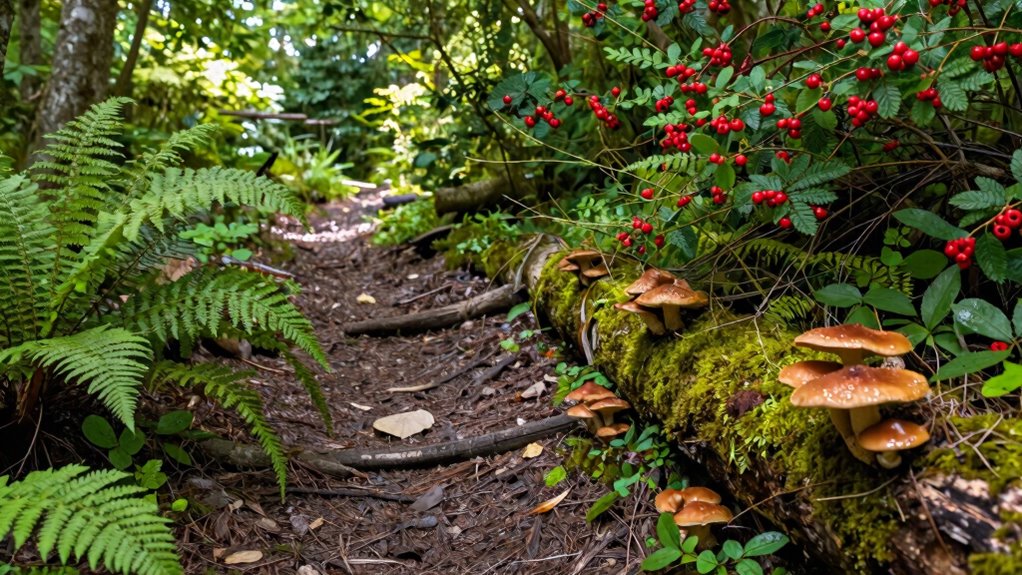
When you hike along trails, you might be surprised by the abundance of wild foods just waiting to be discovered. High-traffic areas tend to draw many people, but they also attract a variety of edible plants that you might overlook at first glance. These spots can teach you a lot about foraging safety and edible plant identification because the more popular the area, the more likely it is that the plants there are well-studied and recognized. That said, it’s essential to approach foraging with caution, especially in areas with heavy foot traffic, as plants may be contaminated or disturbed. Always verify your plant identification with reliable guides, and remember that just because a plant is nearby, it doesn’t mean it’s safe to eat.
In these bustling zones, you’ll notice that many common edible plants grow close to the trail edges—think wild berries, herbs, or greens. These plants often thrive in disturbed soil and are easier to identify because they’re familiar to many foragers. When you’re learning edible plant identification, start with the most recognizable specimens, such as wild strawberries or dandelions. Pay attention to details like leaf shape, flower color, and stem structure to distinguish edible plants from look-alikes. Remember, foraging safety isn’t just about identification but also about understanding any potential toxins or pollutants that could be present, especially in high-traffic areas where runoff or foot traffic might introduce contaminants. Recognizing areas where edible plants grow naturally can help you find safe and sustainable foraging spots. Additionally, being aware of environmental impacts can guide you in selecting foraging locations that support ecological health.
Because these popular spots are accessible and well-trodden, they offer an excellent opportunity to practice your plant identification skills without venturing into more remote or risky environments. Still, always exercise caution: never consume a plant unless you’re 100% sure of its identity, and avoid plants growing next to trails that might be contaminated with chemicals or pollutants. It’s also beneficial to learn about soil quality and how it influences the safety of foraged foods. Harvest only what you need, leaving enough behind for wildlife and to ensure the plant population remains sustainable. Additionally, understanding the impact of foot traffic can help you choose safer foraging locations and minimize your environmental footprint.
wild edible plant identification guide
As an affiliate, we earn on qualifying purchases.
As an affiliate, we earn on qualifying purchases.
Frequently Asked Questions
Are Wild Foods From High-Traffic Areas Safe to Eat?
Wild foods from high-traffic areas are generally unsafe to eat because urban foraging exposes you to pollutants, chemicals, and bacteria. Even if some plants have culinary uses, they may absorb toxins from vehicle emissions, heavy metals, or contaminated soil. Always prioritize safety by avoiding wild foods in busy areas, and instead, seek out plants in cleaner, less polluted environments for foraging and culinary uses.
How Can I Identify Edible Plants Along Busy Trails?
To identify edible plants along busy trails, focus on plant identification skills and always prioritize foraging safety. Look for distinct features like leaf shape, flowers, and stems, and compare them with reliable guides or apps. Avoid plants with warning signs or unusual odors. Stay vigilant about pollution and animal contamination. When in doubt, err on the side of caution, and never eat a plant unless you’re 100% sure it’s safe.
Do Wild Foods Along Trails Contain Harmful Pollutants?
Wild foods along trails can contain harmful pollutants due to pollution risks and plant contamination from vehicle emissions, runoff, and other pollutants. You should be cautious and avoid plants near roads or heavily trafficked areas, as contaminants can accumulate on their surfaces or inside them. To stay safe, wash wild foods thoroughly and consider testing samples if you’re unsure about potential pollutants, ensuring you’re not risking your health.
What Tools Are Best for Foraging in High-Traffic Zones?
In high-traffic zones, you need precise foraging techniques and the right tools to stay safe. Use scissors or pruning shears for gentle harvesting, ensuring minimal plant damage. A small, sharp knife helps with more delicate tasks. Bring a basket or mesh bag to carry your finds. These tools keep your foraging efficient and clean, while blending into busy environments where quick, careful collection is essential for safety and sustainability.
How Do Trail Animals Affect Wild Food Safety?
Trail animals influence wild food safety through their behavior, often contaminating plants with droppings or urine. Their wild animal behavior increases the trail pollution risk, making some foraged foods unsafe to eat. You should be cautious around animal tracks and droppings, and avoid collecting food near recent animal activity. Properly washing and cooking wild foods can reduce risks, but understanding animal behavior helps you make safer foraging choices.
foraging knife with saw and scissors
As an affiliate, we earn on qualifying purchases.
As an affiliate, we earn on qualifying purchases.
Conclusion
As you walk along busy trails, remember these spots are like treasure troves waiting to be discovered. The wild foods you encounter aren’t just snacks—they’re nature’s secret gifts, offering lessons in resilience and abundance. Pay attention to these high-traffic areas; they hold the key to understanding how life flourishes even in the most traveled paths. Embrace this knowledge, for it’s a glimpse into the boundless resilience of nature itself—more miraculous than you could ever imagine.
As an affiliate, we earn on qualifying purchases.
plant safety and identification book
As an affiliate, we earn on qualifying purchases.
As an affiliate, we earn on qualifying purchases.
Fall yard work Picks
leaf blowers
As an affiliate, we earn on qualifying purchases.