To identify a Shaggy Mane (Coprinus comatus), look for tall, white, shaggy columns that quickly mature and turn black and inky. Handle them gently, preferably early in the morning, and use a knife or scissors to cut at ground level. Make sure the mushroom is young and fully white—avoid mature, inky specimens. Proper storage and careful cleaning help keep them fresh. Want to master harvesting and safety tips? Keep exploring for more expert advice.
Key Takeaways
- Recognize Shaggy Mane by its tall, white, shaggy appearance and rapid blackening when mature.
- Harvest early morning when the mushroom is firm, using a knife or scissors at ground level.
- Ensure proper ID by consulting experts or guides, avoiding mature, inky specimens for safety.
- Handle gently, keep dry, and store promptly to maintain freshness; avoid washing until cooking.
- Use young mushrooms in dishes like sautéed, omelets, or pasta, preparing soon after harvesting for best quality.
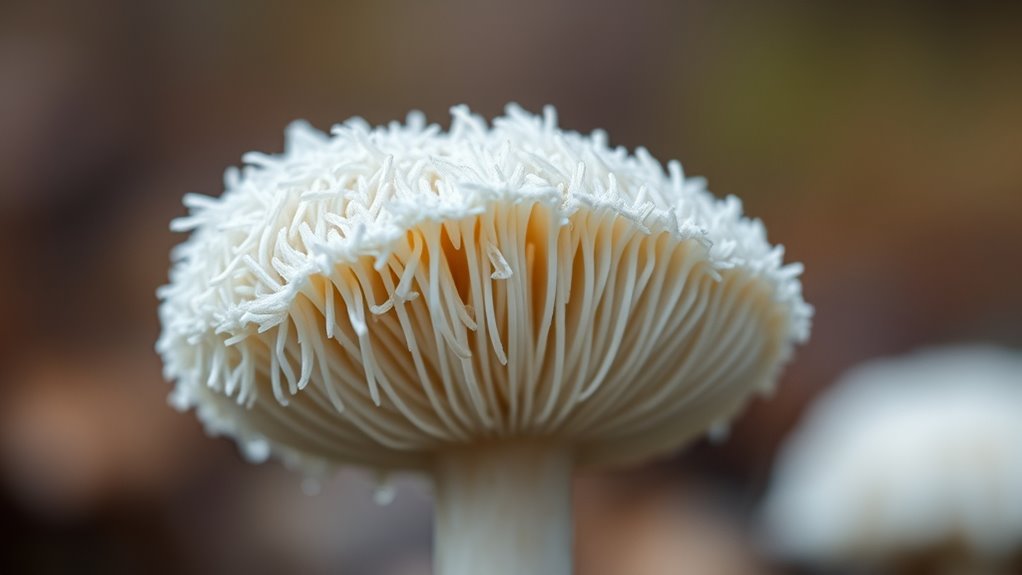
Have you ever come across a mushroom that seems to vanish before your eyes? That’s often the case with the shaggy mane mushroom, also known as Coprinus comatus. These striking fungi look like tall, white, shaggy columns, and they can be elusive when you’re out foraging. To spot them, keep an eye on well-maintained lawns, grassy fields, or open woodlands, especially during spring and fall. When you find one, it’s vital to act quickly because these mushrooms mature rapidly, turning into inky, black messes. Foraging tips are essential here: pick them early in the morning when they’re firm and fresh, and always use a knife or scissors to cut the stem at ground level to prevent them from tearing or damaging the delicate cap. Handle them gently and try to harvest the entire mushroom, including the root, to keep your find intact and fresh for culinary uses.
Once you’ve gathered a good batch, it’s important to identify them correctly. The shaggy mane’s distinctive shaggy, white appearance makes it stand out, but beware of similar-looking toxic species. When in doubt, consult a local mushroom expert or reliable field guide. Proper identification is vital because only young, unopened specimens are suitable for consumption. As they mature, their gills begin to turn black and inky, which is a sign they’re past their prime and no longer good for eating. Proper identification is essential to ensure safety when foraging wild mushrooms. When handling shaggy manes, keep them dry and avoid washing them until you’re ready to cook, as excess moisture can cause spoilage.
In the kitchen, shaggy mane mushrooms are prized for their culinary versatility. They have a mild, slightly nutty flavor that pairs well with a variety of dishes. You can sauté them with butter and garlic, add them to omelets, or toss them into pasta or risottos. Their tender texture makes them perfect for quick stir-fries or even pickling. Because they spoil rapidly once they begin to turn black, it’s best to prepare them soon after harvesting. Always clean them gently with a brush or damp cloth rather than soaking, which can make them slimy. When you handle shaggy manes with care and use proper foraging tips, they become a delightful addition to your culinary repertoire, offering both flavor and a touch of foraged adventure.
Frequently Asked Questions
How Long Does a Shaggy Mane Mushroom Typically Last After Picking?
After picking a shaggy mane mushroom, it typically lasts only a day or two before it begins to spoil. To extend its lifespan, you should focus on mushroom preservation by drying techniques like air drying or using a dehydrator. Properly dried shaggy manes can be stored for months, maintaining flavor and texture for future use. Act quickly and use these preservation methods to enjoy your harvest longer.
Can Shaggy Mane Be Cultivated Indoors Successfully?
Yes, you can successfully cultivate shaggy mane mushrooms indoors, turning your home into a mushroom farm. Think of it as planting a tiny forest in your own space. Use proper indoor cultivation techniques by maintaining high humidity and temperature. Choose ideal growing substrates like composted straw or manure-based mixes. Keep the environment clean and monitor moisture levels, and you’ll soon enjoy fresh shaggy mane mushrooms right from your indoor garden.
Are There Any Look-Alikes That Are Toxic?
Yes, some toxic lookalikes can resemble shaggy manes. To avoid confusion, focus on identification tips like the shaggy, white, shaggy cap that darkens with age and the fragile, hollow stem. Be cautious of inky caps and other white mushrooms with similar shapes. Always double-check features like gills and spore color, and when in doubt, consult an expert to guarantee safe foraging.
What Is the Best Method to Store Shaggy Mane Mushrooms?
Think of mushroom preservation as locking in a fleeting masterpiece. To store shaggy mane mushrooms, gently clean them and place them in paper bags or breathable containers like mesh baskets. Avoid plastic, which traps moisture and causes spoilage. For longer storage, you can refrigerate in a paper-lined container for up to a day or freeze after proper preparation. Proper storage containers guarantee freshness and maintain their delicate flavor.
Is It Safe to Eat Shaggy Mane Raw?
You should avoid eating shaggy mane mushrooms raw because they can pose health risks, such as stomach upset or allergic reactions. While some people consider them edible raw, it’s safer to cook them thoroughly, which breaks down potential toxins and makes them easier to digest. Consuming raw shaggy mane mushrooms increases the chance of encountering harmful bacteria or contaminants, so always cook before eating to guarantee safety and enjoy their full flavor.
Conclusion
Think of the shaggy mane mushroom as a fleeting firework—bright, brief, and mesmerizing. With a little knowledge, you can spot this delicate wonder before it disappears into the background of your foraging adventure. Handle it with care, respect its grace, and it’ll reward you with a taste of nature’s ephemeral beauty. Remember, every mushroom is like a secret whisper from the forest—listen closely, and you’ll learn its story before it fades away.