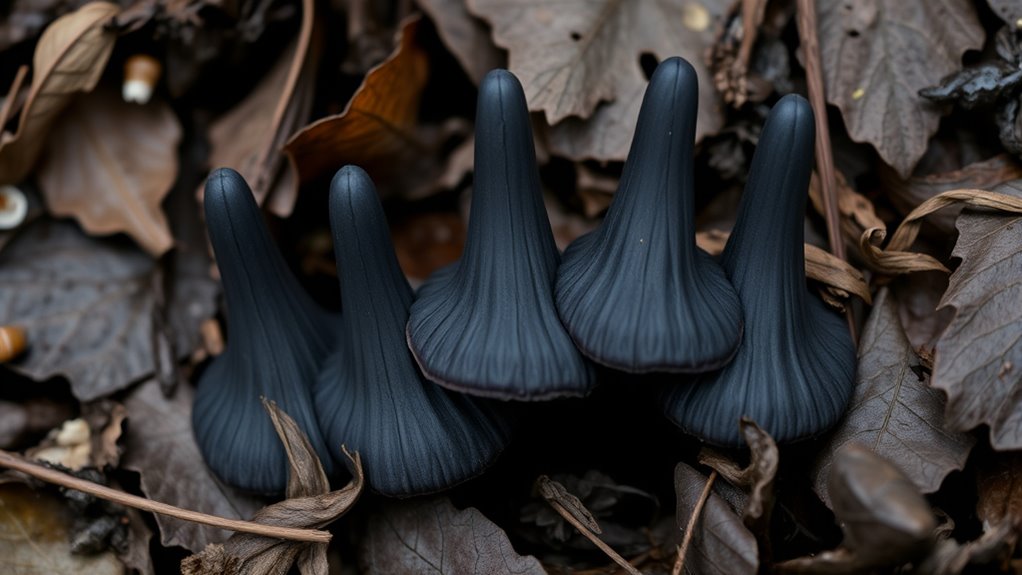
To identify black trumpets in dark leaf litter, look for slender, trumpet-shaped caps that are dark brown to nearly black, often nestled among decomposing leaves or wood debris. They grow in shaded, moist forest floors with rich organic matter. Check that the underside is smooth or slightly ridged, without prominent gills. Their rich, earthy aroma can also help confirm their presence. If you’re curious to learn more about spotting and safely foraging these mushrooms, keep exploring the details.

Get garden gear delivered free with Prime
- Fast, free delivery on millions of items
- Prime Video, Amazon Music and more included
- Member-only deals all year
Key Takeaways
- Look for slender, trumpet-shaped caps that are dark brown to black, nestled among decaying leaves or wood debris.
- Check that the underside is smooth or slightly ridged without prominent gills or pores.
- Confirm the habitat: shaded, moist areas rich in decaying organic matter and leaf litter.
- Use aroma: a rich, smoky, earthy scent indicates black trumpet presence.
- Verify identification with field guides or experts to distinguish from poisonous look-alikes.

Black trumpets are striking, dark-colored mushrooms prized for their rich, smoky flavor. When you come across these fungi in the wild, recognizing them in dark leaf litter is essential to safely and confidently harvest them. They typically grow on the forest floor, often nestled in decaying leaves, mulch, or wood debris. Their slender, trumpet-shaped caps can range from dark brown to almost black, and their stems are usually thin, sometimes slightly curved, and match the cap’s dark hue. Unlike some other mushrooms, black trumpets lack prominent gills or pores underneath; instead, their undersides are smooth or slightly ridged, which can help in identification. As you search, look for their characteristic aroma—rich, smoky, and somewhat earthy—that signals their presence amidst the leaf litter.
Black trumpets are dark, smoky-smelling mushrooms found nestled in leaf litter on the forest floor.
To guarantee you’re harvesting the right mushroom, pay close attention to their habitat and physical features. Black trumpets prefer shaded, moist environments with plenty of decaying organic matter. During foraging, take your time, gently sift through the leaf litter, and scrutinize the shape and color of each candidate mushroom. Be cautious, as some poisonous mushrooms mimic their appearance, so thorough identification is critical. If you’re unsure, consult field guides or experienced foragers before collecting. Remember, never consume a mushroom unless you’re 100% certain of its identity. Additionally, understanding the habitat preferences of black trumpets can greatly improve your chances of finding them.
Once identified, black trumpets are highly valued for their culinary uses. Their smoky, savory flavor enhances a variety of dishes—from sautéed mushrooms to complex sauces and broths. You can chop and add them to pasta, risotto, or even stir-fries, where their umami qualities shine. Many cooks prefer to dry these mushrooms, intensifying their flavor and making them easy to store for later use. Simply slice them thinly and air-dry or use a dehydrator. Rehydrate dried black trumpets in warm water before cooking to recover their full aroma and taste. They also pair well with garlic, herbs, and butter, making them versatile ingredients in your culinary arsenal.
Incorporating black trumpets into your cooking elevates simple recipes with their deep, smoky flavor. Their unique taste and aroma make them a prized ingredient for mushroom enthusiasts. When foraging, follow these tips carefully, and always prioritize safety. Proper identification and handling guarantee you enjoy the full culinary potential of black trumpets while respecting their natural habitat. With practice, you’ll become adept at finding these stunning mushrooms in the wild, revealing a world of flavorful possibilities right from the forest floor.
Frequently Asked Questions
Are Black Trumpets Edible Raw or Only Cooked?
Black trumpets are best enjoyed cooked, as eating them raw isn’t recommended due to their tough texture and potential for digestive discomfort. Cooking enhances their rich, earthy flavor and makes them more palatable for culinary uses. While some might consider trying them raw, it’s safer and more flavorful to include black trumpets in dishes like soups, sauces, or sautés. Cooking releases their full culinary potential and guarantees safety.
Can Black Trumpets Be Cultivated Commercially?
Black trumpet cultivation is possible, though it remains challenging due to their specific habitat needs. About 10% of wild-harvested black trumpets are now cultivated commercially, primarily through controlled environments mimicking their natural conditions. You can engage in black trumpet cultivation by employing specialized commercial harvesting methods, such as substrate inoculation. While not widely commercialized yet, ongoing research aims to make black trumpet mushroom farming more efficient and accessible for growers like you.
How Do Black Trumpets Vary in Taste by Region?
You’ll notice that black trumpets vary in taste by region, influenced by regional flavor profiles and local ecosystems. In some areas, they develop a richer, earthier flavor, perfect for hearty dishes, while in others, they’re milder and more delicate, suited for light sauces. Their culinary uses across regions adapt to these flavor differences, allowing chefs to highlight their unique profiles in everything from soups to gourmet entrees.
What Are Common Look-Alikes That Could Be Mistaken for Black Trumpets?
You should watch out for false black trumpets and ebony mushrooms, as they look quite similar to true black trumpets. False black trumpets tend to have a different texture and may be less fragrant, while ebony mushrooms often have a darker, more rigid appearance. Always check the gills and underside, and avoid mushrooms that have a different stem or cap shape to prevent confusing these look-alikes.
How Long Do Black Trumpets Typically Last After Harvesting?
Like a fleeting whisper in the woods, black trumpets last about 2 to 7 days after harvest if kept cool and dry. Their spore dispersal slows quickly once picked, so eat or preserve them promptly. They thrive in dark, leaf-litter habitats, but their freshness depends on how well you store them. Keep them refrigerated, and you’ll extend their life, letting their smoky aroma linger a little longer.
Conclusion
So, next time you’re rummaging through dark leaf litter, don’t just complain about the mess—look for those elusive black trumpets. With a keen eye and a dash of patience, you might just stumble upon nature’s hidden gems. Who knew something so dark could be so delicious? Remember, in the world of fungi, the real treasure is lurking in the shadows—so get out there and play fungal detective. Happy hunting!
Halloween Picks
halloween
As an affiliate, we earn on qualifying purchases.